
32 Living Room With Dining Table Ideas for Small, Modern and Open Concept Homes
Finding space for a dining table can feel like solving a puzzle when your living room already works overtime. One minute you’re planning movie nights, and the next you’re wondering where everyone will sit during dinner.
I’ve dealt with this challenge more than once, especially in smaller homes and apartments where every square foot matters. The good news? You don’t need a separate dining room to create a stylish and functional eating area.
Whether you’re working with a tiny apartment, an open-concept layout, or a compact family room, the right setup can make your space feel bigger, smarter, and far more organized. Some of these ideas focus on furniture arrangement, while others help define zones without building walls.
Let’s start with the first half of these practical living room dining table ideas.
1. Wall-Hugging Dining Table
A wall-hugging dining table works wonders in a small living room with a dining table. Instead of floating furniture in the center of the room, push the table against a wall and instantly free up valuable floor space.
This setup creates a clean traffic flow while keeping the dining area accessible. It also helps smaller homes avoid that crowded furniture showroom look that nobody asked for.
Why it works:
- Maximizes walking space
- Keeps the room visually open
- Works well in apartments
- Fits narrow layouts
You can add a bench on one side and chairs on the other to save even more room. I particularly like this arrangement in apartment living rooms where every inch matters.
A simple gallery wall or mirror above the table can help define the dining zone without adding bulk. Ever notice how mirrors magically make small spaces feel larger? They’re basically the cheat code of interior design.
2. Foldable Dining Table Setup
A foldable dining table offers flexibility that traditional furniture simply can’t match. You use it when needed and tuck it away when you don’t.
This option works especially well if your living room doubles as an office, entertainment space, or playroom. Small-space living often demands multitasking furniture, and foldable tables answer that call perfectly.
Benefits include:
- Easy storage
- Flexible seating capacity
- Ideal for studio apartments
- Budget-friendly option
Many modern foldable dining tables look surprisingly stylish. Gone are the days when folding furniture screamed “temporary solution.”
Pair the table with lightweight chairs that stack or fold. This approach keeps your living room adaptable while maintaining a polished appearance. FYI, flexibility often beats size when designing compact homes.
3. Compact Round Dining Table
A compact round dining table can transform a cramped living room dining table layout. Unlike rectangular tables, round designs eliminate sharp corners and improve movement around the room.
The circular shape creates a softer visual flow and encourages conversation. Nobody gets stuck at the awkward end seat because there isn’t one.
Key advantages:
- Better traffic flow
- Fits small spaces
- Creates a cozy atmosphere
- Reduces visual clutter
Round dining tables work particularly well in open-concept layouts and smaller apartments. They blend naturally into the room rather than dominating it.
Choose a pedestal base instead of four legs if possible. Pedestal tables often provide more legroom and make the entire setup feel lighter.
4. Window-Side Dining Nook
If your living room has a large window, consider turning that area into a dedicated dining nook. Natural light instantly makes meals feel more enjoyable and helps the space feel welcoming.
People naturally gravitate toward bright areas. Why not let your dining table take advantage of that?
What makes this idea effective:
- Utilizes natural light
- Creates a defined dining zone
- Makes small rooms feel larger
- Enhances daily dining experiences
Add comfortable chairs and simple window treatments. Keep decorations minimal so the sunlight remains the star of the show.
I’ve seen tiny living rooms completely transform simply by moving the dining table closer to a window. Sometimes the best design solution involves rearranging rather than buying.
5. Bench Seating Arrangement
Bench seating remains one of my favorite solutions for a living room with a small dining table. Benches slide completely under the table when not in use, saving valuable floor space.
This arrangement also creates a relaxed and casual atmosphere that works beautifully in family homes.
Reasons to consider benches:
- Saves space
- Seats more people
- Creates a modern look
- Reduces visual bulk
You can combine one bench with a pair of chairs for added flexibility. This mix prevents the dining area from looking too uniform.
A cushioned bench also adds warmth and comfort. Plus, kids tend to love bench seating, which counts as a small parenting win 🙂
6. Corner Dining Zone
Corners often become forgotten spaces filled with random furniture or decorative items that nobody actually uses.
Transforming a corner into a dining area solves that problem while maximizing efficiency. A corner dining setup works particularly well in a small living room with dining table and sofa arrangements.
Corner dining benefits:
- Uses underutilized space
- Keeps the center open
- Creates visual separation
- Supports better room flow
Consider a round table if the corner feels tight. The softer shape helps maintain movement throughout the room.
Add a pendant light above the table to create a distinct dining zone without adding physical barriers.
7. Apartment-Friendly Bistro Table
A bistro table delivers style and practicality in compact apartments. These smaller tables offer enough seating for everyday meals without overwhelming the room.
If you live alone or with a partner, do you really need a six-person dining table taking over the entire living room?
Why bistro tables shine:
- Compact footprint
- Stylish appearance
- Great for couples
- Easy to move
Many modern bistro tables come in wood, marble, or metal finishes that complement various living room styles.
Pair the table with comfortable upholstered chairs to make the area feel intentional rather than temporary.
8. Storage Dining Table
Furniture that serves multiple purposes always earns bonus points in my book.
A storage dining table includes shelves, drawers, or hidden compartments that help reduce clutter while maintaining functionality.
Storage advantages:
- Reduces clutter
- Improves organization
- Maximizes small spaces
- Adds functionality
Store placemats, napkins, chargers, or board games inside the table itself. Keeping essentials nearby makes daily use much easier.
This approach works especially well in apartments where storage remains in constant demand. Let’s be honest—extra storage rarely goes unused.
9. Extendable Dining Table
An extendable dining table gives you the best of both worlds. It stays compact during everyday use and expands when guests arrive.
This solution works beautifully in a living room dining table combo where space remains limited most of the time.
Why homeowners love it:
- Flexible seating
- Saves everyday space
- Great for entertaining
- Available in many styles
Choose a model with a smooth extension mechanism. Nobody wants dinner preparations interrupted by furniture wrestling.
Modern extendable tables often hide expansion leaves internally, creating a cleaner appearance.
10. Minimalist Small Space Layout
Minimalist design pairs perfectly with dining tables in smaller living rooms. Fewer furniture pieces create more breathing room and improve functionality.
The goal isn’t emptiness. The goal is intentionality.
Core minimalist principles:
- Keep only necessary furniture
- Use neutral colors
- Reduce visual clutter
- Prioritize functionality
Choose a streamlined dining table with clean lines and avoid oversized decorative accessories.
This approach makes a tiny living room with dining table feel surprisingly spacious. Sometimes removing one unnecessary piece of furniture creates a bigger impact than adding something new.
11. Dining Table Behind the Sofa
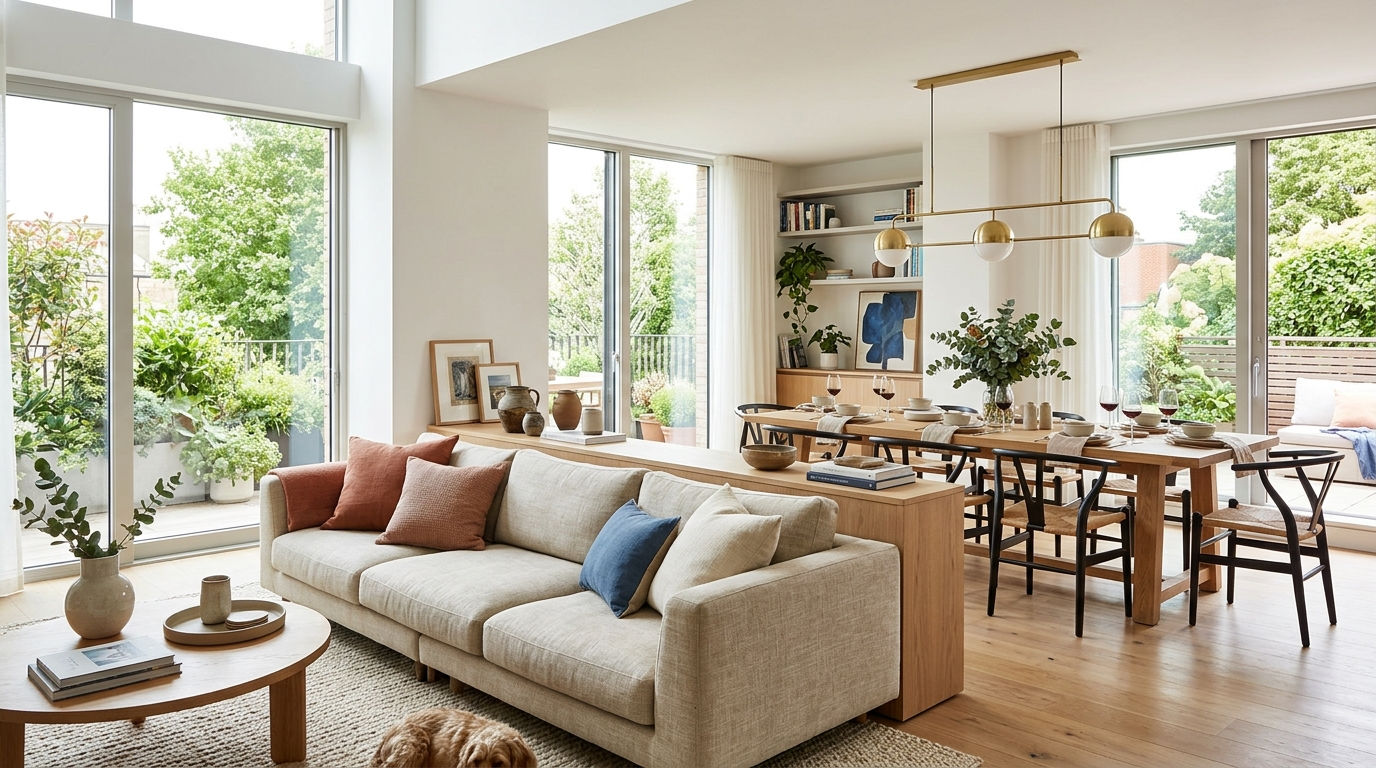
Placing a dining table behind the sofa creates natural separation between living and dining zones. This arrangement works especially well in open floor plans.
The sofa acts as a subtle divider without blocking light or sightlines.
Benefits of this layout:
- Defines functional zones
- Maintains openness
- Improves furniture arrangement
- Creates visual structure
Many designers use this trick in apartments and modern homes because it feels intentional rather than forced.
Keep enough space between the sofa and table to allow comfortable movement.
12. Centered Dining Table Layout
Sometimes the dining table belongs right in the middle of the room. Sounds risky? It can actually work surprisingly well.
A centered table often becomes the focal point of a combined living room and dining area.
Why it works:
- Creates balance
- Improves accessibility
- Establishes a focal point
- Encourages social interaction
Choose a table proportionate to the room size. Oversized furniture quickly turns this idea into a traffic nightmare.
Add a statement light fixture above the table to strengthen the visual anchor.
13. Corner Placement Strategy
Corner placement remains one of the smartest solutions for dining table placement in a living room.
Instead of forcing furniture into central areas, this strategy lets the dining space occupy a dedicated zone.
Advantages include:
- Better traffic flow
- Efficient space usage
- Improved room organization
- Easier furniture arrangement
Use an area rug beneath the table to define the dining section. Rugs create boundaries without constructing walls.
The result feels organized and intentional while preserving openness.
14. Floating Dining Zone
A floating dining zone sits away from walls and furniture while maintaining clear pathways around it.
This concept works particularly well in larger living room layouts where flexibility matters.
Benefits:
- Creates visual balance
- Improves accessibility
- Supports open-concept design
- Enhances functionality
Position the table where people naturally gather rather than forcing it into unused corners.
Good room design often follows behavior patterns rather than strict rules. Ever notice how the best spaces simply feel right? That’s usually why.
15. Sofa and Dining Back-to-Back
Positioning the sofa and dining table back-to-back creates a practical and attractive living room dining table combo.
The arrangement establishes two distinct zones while maintaining an open atmosphere.
Reasons to try it:
- Creates separation
- Maximizes floor space
- Supports open layouts
- Looks professionally designed
This setup works especially well in modern apartments and condos.
Use complementary furniture styles to create visual harmony throughout both zones.
16. Symmetrical Furniture Arrangement
Symmetry creates order. Even small living rooms benefit from balanced furniture placement.
A symmetrical layout positions the dining table, sofa, lighting, and decorative elements in a structured manner.
Key advantages:
- Creates visual calm
- Improves room balance
- Enhances organization
- Supports elegant design
You don’t need perfect mirror-image placement. Aim for visual balance instead.
A symmetrical arrangement often makes rooms appear larger and more polished. Funny how our brains love order even when we pretend to embrace chaos.
17. Open Walkway Layout
One of the biggest mistakes people make when placing a dining table in a living room involves blocking natural pathways. Every room needs clear circulation routes so people can move comfortably from one area to another.
An open walkway layout prioritizes movement without sacrificing functionality. Your furniture should guide traffic, not create an obstacle course.
Why this layout works:
- Improves room flow
- Prevents cramped pathways
- Makes the room feel larger
- Supports everyday convenience
Leave at least a few feet of clearance around the dining table whenever possible. This simple adjustment can completely change how spacious the room feels.
I always recommend walking through the room several times after arranging furniture. If you find yourself zigzagging around chairs, the layout probably needs a few tweaks.
18. TV and Dining Table Layout
Many homeowners struggle to fit a dining table and television into the same room. Fortunately, a smart furniture arrangement can make both coexist peacefully.
The key involves creating visual balance between entertainment and dining zones.
Tips for success:
- Keep sightlines open
- Avoid blocking the TV
- Maintain comfortable seating distances
- Define separate activity zones
Position the dining table perpendicular to the television rather than directly in front of it. This arrangement prevents the room from feeling dominated by one focal point.
For small living rooms with a TV and dining table, choosing furniture with slimmer profiles can help preserve valuable floor space while keeping the room functional.
19. Dining Table as Room Divider
Open-concept homes often need subtle ways to define spaces. A dining table can act as a natural divider between the kitchen and living room without creating visual barriers.
This strategy works particularly well when a dining table sits between the kitchen and living room.
Benefits include:
- Creates distinct zones
- Preserves openness
- Improves functionality
- Enhances visual organization
Instead of adding shelving units or bulky partitions, let the dining table perform double duty.
Many interior designers rely on this approach because it feels effortless and practical. Why add another piece of furniture when the table can already do the job?
20. Table Between Kitchen and Living Area
A dining table placed between the kitchen and seating area creates a logical transition zone. This setup feels especially natural in open-concept homes.
The dining area becomes the bridge connecting cooking, dining, and relaxation.
Advantages:
- Encourages social interaction
- Creates flow between spaces
- Improves accessibility
- Maximizes functionality
Family members can chat while meals are prepared without feeling disconnected from the living room.
This arrangement also helps guests gather comfortably during parties. Nobody likes getting trapped in the kitchen while everyone else hangs out elsewhere.
21. Round Table for Open Concepts
Round dining tables excel in open-concept layouts because they soften the straight lines often found in kitchens and living rooms.
The circular shape encourages conversation and promotes better movement throughout the room.
Why round tables shine:
- Improve traffic flow
- Reduce visual heaviness
- Create a welcoming atmosphere
- Fit multiple design styles
A round dining table in a living room often feels more relaxed than a large rectangular alternative.
Choose a pedestal base whenever possible. It creates additional legroom and gives the entire dining area a lighter appearance.
22. Island Plus Dining Table Combination
Many modern homes include both a kitchen island and a dining table. The challenge lies in making them work together rather than compete for attention.
A thoughtful layout creates harmony between these two essential features.
Best practices:
- Maintain visual consistency
- Coordinate materials
- Leave adequate spacing
- Define each area’s purpose
Use the island for quick meals and meal prep while reserving the dining table for family dinners and entertaining.
This combination delivers maximum functionality without making the space feel crowded.
23. Zoned Open Floor Plan
Creating zones helps open spaces feel organized and intentional. The goal involves defining each area without closing off the room.
Furniture placement often accomplishes this task better than walls.
Ways to establish zones:
- Use area rugs
- Add pendant lighting
- Arrange furniture strategically
- Create visual anchors
A zoned layout allows the living room and dining table to coexist while maintaining their own identities.
The result feels polished and well-designed rather than random. That’s usually the difference between a room that looks expensive and one that looks unfinished.
24. Small Round Table for Apartments
Small apartments benefit enormously from compact round dining tables. Their shape minimizes visual clutter while maximizing functionality.
Round tables also work exceptionally well in tight corners and awkward layouts.
Why apartment owners love them:
- Save space
- Improve circulation
- Create a cozy atmosphere
- Offer versatile placement options
A two-person dining table can comfortably serve everyday needs without overwhelming the room.
Pair it with lightweight chairs that tuck neatly underneath when not in use.
25. Corner Round Table Setup
Combining a corner location with a round table creates one of the smartest dining solutions for small spaces.
The arrangement takes advantage of underused square footage while maintaining excellent flow.
Benefits:
- Maximizes corner space
- Softens room lines
- Supports compact layouts
- Creates intimate dining areas
Add a small pendant light above the table to define the space visually.
This setup works particularly well for apartment living rooms with dining tables where every inch matters.
26. Modern Pedestal Round Table
A pedestal table creates a sleek, contemporary look that works beautifully in modern living rooms.
Without four corner legs competing for attention, the table appears lighter and more elegant.
Reasons to choose one:
- Cleaner appearance
- Better legroom
- Contemporary style
- Improved visual flow
Many modern homeowners prefer pedestal designs because they blend effortlessly into open-concept spaces.
If you love minimalist interiors, this option deserves serious consideration.
27. Round Table Near Seating Area
Placing a round dining table near the seating area creates a connected and inviting environment.
The arrangement encourages conversation while preserving functionality.
Advantages include:
- Supports entertaining
- Creates cohesion
- Improves accessibility
- Enhances comfort
Choose complementary materials and colors so the dining table feels like part of the overall design rather than an afterthought.
This setup often works beautifully in smaller homes where multiple functions share the same room.
28. Modern Black Dining Table
A black dining table instantly adds sophistication and contrast to a living room.
Many homeowners worry that black furniture will feel too heavy. In reality, a well-designed black table often creates striking visual interest.
Why black works:
- Creates contrast
- Adds modern appeal
- Pairs with many colors
- Makes a bold statement
Combine it with lighter walls and neutral furnishings for balance.
A black dining table can become the centerpiece of the room without requiring excessive decoration.
29. Elegant Marble Dining Space
Marble dining tables bring timeless elegance to a combined living and dining room.
The natural veining creates visual texture while maintaining a refined appearance.
Benefits of marble:
- Luxurious appearance
- Unique patterns
- Timeless style
- Strong visual impact
Even a small marble dining table can elevate an entire room.
IMO, few materials create the same sense of sophistication as marble. It feels special without trying too hard.
30. Warm Wooden Dining Area
Wood remains one of the most versatile materials for dining furniture. It adds warmth, character, and natural beauty to any living room.
A wooden dining table works equally well in modern, farmhouse, Scandinavian, and transitional interiors.
Why homeowners love wood:
- Timeless appeal
- Durable construction
- Natural warmth
- Design flexibility
Lighter woods help small spaces feel airy, while darker finishes create depth and richness.
Wood also ages beautifully. Unlike trendy materials, it rarely goes out of style.
31. Grey Living Room Dining Combo
Grey remains one of the most popular colors in interior design because it offers incredible versatility.
A grey living room paired with a dining table creates a calm and sophisticated environment.
Advantages:
- Easy to decorate
- Timeless appearance
- Works with many styles
- Supports layered textures
Add wood accents, greenery, or metallic finishes to prevent the room from feeling flat.
Grey provides an excellent foundation that allows other design elements to shine.
32. Designer Dining Table Styling
The final step involves styling your dining table thoughtfully. Even the most beautiful furniture benefits from intentional decoration.
The goal isn’t clutter. The goal is creating visual interest.
Simple styling ideas:
- Add a centerpiece
- Use decorative trays
- Include fresh greenery
- Layer textures carefully
Avoid filling every inch of the table with accessories. A crowded table quickly loses functionality.
Sometimes a simple vase and a few carefully chosen decorative pieces create the strongest impact. Funny how restraint often looks more expensive than excess, right?
Conclusion
Creating a beautiful living room with a dining table doesn’t require a huge home or a dedicated dining room. The right layout, furniture choices, and styling decisions can transform even the smallest space into a comfortable and functional area for daily living.
Whether you choose a wall-hugging dining table, a compact round table, a foldable solution, or a modern open-concept layout, the best design always supports your lifestyle first. Trends come and go, but practicality never loses its value.
Remember these key takeaways:
- Prioritize traffic flow
- Choose furniture scaled to the room
- Use multifunctional pieces whenever possible
- Create visual zones in open layouts
- Keep styling simple and intentional
At the end of the day, your dining table should make life easier, not more complicated. If a layout helps you enjoy meals, entertain friends, and move comfortably through your home, you’ve already won the design game.
And honestly? That’s far more important than impressing strangers on the internet with a perfectly staged room :/

Sarah Rose writes for EcoGardeningHub, sharing eco home decor ideas, sustainable styling tips, and simple ways to create beautiful, nature-inspired living spaces with a mindful, environmentally friendly approach.