14 Japandi Living Room Sofa Ideas for a Calm, Minimalist Space
You know that feeling when you walk into a living room and your shoulders instantly drop? That quiet, grounded, peaceful vibe where everything feels intentional and nothing screams for attention? That’s the magic of Japandi living room design.
I’ve always loved minimalist interiors, but sometimes Scandinavian style alone feels a bit too crisp, and Japanese interiors can lean super understated. When you blend them? You get Japandi sofas, warm neutral palettes, natural textures, and calm energy all working together. It feels cozy without clutter. Clean without cold.
If you’re planning a living room refresh and want that calm, minimalist space with a low-profile sofa, organic materials, and soft lighting, you’re in the right place. Let’s walk through 14 sofa ideas that actually work in real homes—not just magazine spreads.
1. Zen Linen Haven

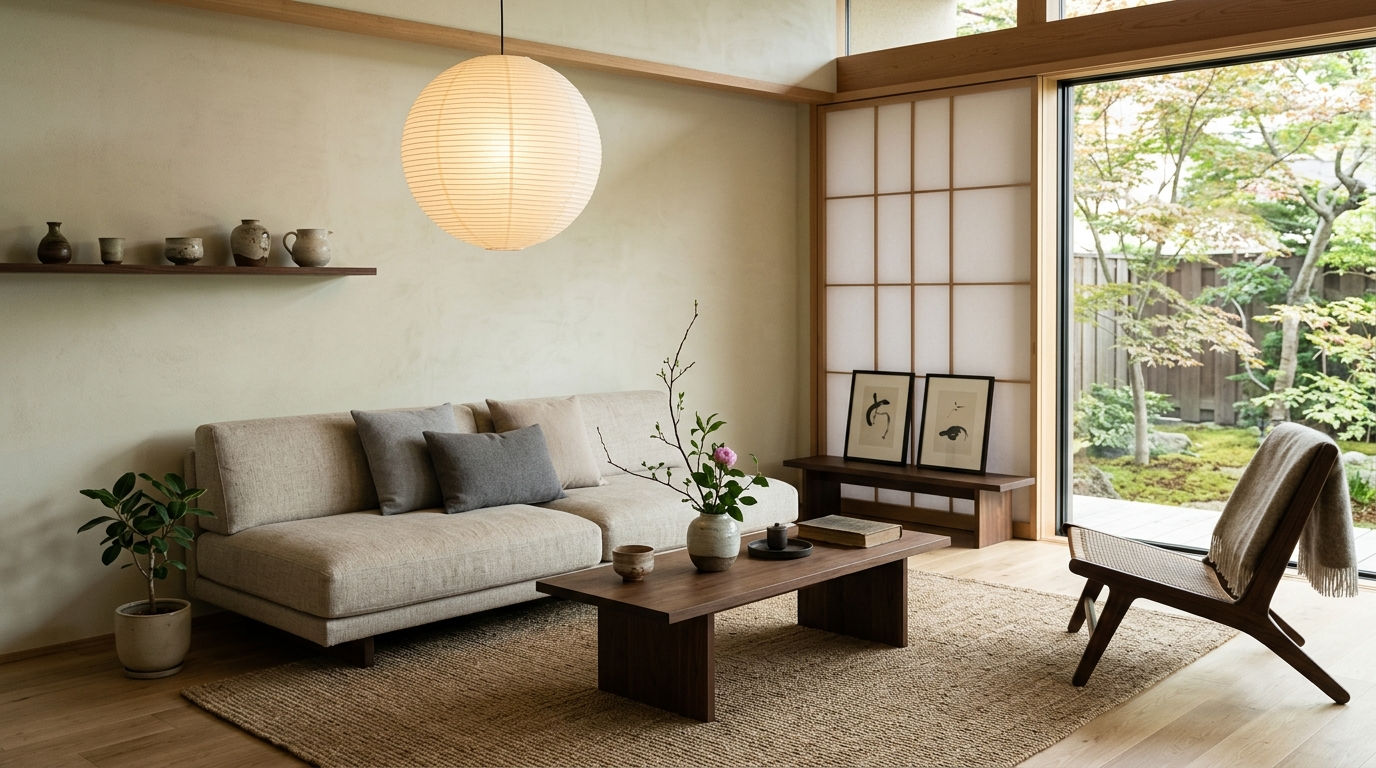
A beige linen sofa instantly sets the tone for a Japandi living room. I love how linen feels relaxed but still refined. It wrinkles a bit, sure—but that softness adds character. Ever noticed how perfect-looking rooms sometimes feel… lifeless?
In this setup, you pair a low-profile linen sofa with light oak flooring, a round wooden coffee table, and sheer curtains that filter natural light. The room feels open, breathable, and grounded.
Why It Works
- Natural linen upholstery softens the space
- Neutral wall colors reflect light beautifully
- Minimal decor styling keeps visual clutter away
- Organic textures add warmth without excess
Stick to warm off-white or creamy beige tones. Add a ceramic vase with dried pampas grass and call it a day. You don’t need 20 throw pillows. You need balance.
If you crave a calm minimalist living room that still feels cozy, this one delivers every time.
2. Earthy Taupe Serenity

Taupe doesn’t get enough love. People overlook it because it sounds boring. It’s not. A taupe fabric sofa gives depth without overpowering your neutral color scheme.
I once swapped a gray couch for taupe in my own space, and the whole room felt warmer overnight. That subtle brown undertone makes a huge difference.
Key Design Elements
- Textured plaster walls for dimension
- Walnut side table for contrast
- Woven jute rug to anchor the room
- Single bonsai plant for Japanese influence
Golden hour light hitting taupe fabric looks unreal. It creates soft shadows and makes the room glow. You keep the layout uncluttered and focus on clean lines.
If you want a Japandi living room sofa idea that feels earthy and grounded, this one nails it without trying too hard.
3. Low-Slung Japanese Lounge

Let’s talk about low-profile sofas. They change everything. When you lower the visual center of gravity in a room, you instantly create a Japanese-inspired living room feel.
A cream modular sofa placed near large windows with wooden slatted screens creates serenity you can’t fake. You don’t need bold art or dramatic lighting. You let the architecture breathe.
Must-Have Features
- Low modular seating
- Tatami-inspired area rug
- Exposed wood ceiling beams
- Stone or ceramic decor accents
This setup feels almost spa-like. It encourages slow mornings and tea rituals instead of Netflix marathons—although let’s be honest, you’ll still binge your shows 🙂
The lower seating also makes small spaces look bigger. Ever noticed how high-backed couches visually shrink a room? Lower profiles solve that instantly.
4. Soft Gray Calm Corner

Gray works beautifully in Japandi interiors—if you choose the right shade. Skip cool blue-gray and go for a warm soft gray sofa.
I love using gray when someone feels nervous about going full beige. It keeps things safe but still minimalist.
Styling Essentials
- Matte black floor lamp with simple lines
- Ash wood shelving
- Thin black-framed artwork
- Neutral textured rug
Soft daylight transforms this setup. The key lies in keeping everything clean and intentional. Don’t overload shelves. Don’t over-accessorize.
You want a peaceful monochrome palette that feels curated, not staged. This approach works especially well in apartments where you want subtle elegance without overpowering the space.
5. Warm Wood Harmony

Wood changes the mood instantly. When you place a beige Japandi sofa against a rich oak accent wall, magic happens.
Warm wood tones bring that Scandinavian warmth, while the minimal styling keeps it rooted in Japanese simplicity.
What Makes It Special
- Oak or walnut panel wall
- Travertine coffee table
- Indoor olive tree
- Layered neutral textiles
The contrast between soft fabric and strong wood grain creates balance. You don’t need bright colors when natural materials carry the design.
IMO, this works best in open-plan living spaces. The wood feature wall anchors the seating area and keeps everything cohesive.
6. Cream & Clay Balance
Cream and clay together feel calm but interesting. A cream-colored sofa against a clay-toned textured wall gives you warmth without visual chaos.
Clay tones bring subtle earthiness. They avoid the harshness of stark white walls.
Design Breakdown
- Clay accent wall
- Linen curtains
- Low wooden bench behind the sofa
- Minimal abstract art
Late afternoon light hitting clay walls looks dreamy. It feels cozy without becoming dark.
If you want something softer than gray but richer than white, clay tones offer that perfect middle ground.
7. Minimal Black Accent Edge

Sometimes you need a little contrast. A light beige sofa with subtle black metal accents adds sophistication.
The trick lies in restraint. Add one matte black side table or slim lamp. Stop there.
Balance Checklist
- Neutral rug
- Floating wood shelves
- Sculptural ceramic vase
- Simple linear lighting
Black grounds the space. It prevents everything from looking washed out.
Ever walked into a fully beige room and felt slightly sleepy? A touch of black fixes that instantly.
8. Natural Light Sanctuary

Natural light carries Japandi design. A bright living room with a soft off-white sectional and floor-to-ceiling windows feels open and airy.
I always prioritize window treatments in these spaces. Sheer curtains soften sunlight without blocking it.
Essentials
- Light oak floors
- Stone planters
- Textured throw blanket
- Minimal coffee table styling
The key lies in openness. Don’t crowd the space with oversized furniture.
If your home gets good daylight, lean into it. Japandi design thrives in bright environments.
9. Textured Neutral Layers
Texture makes minimalism interesting. A sand-colored sofa layered with linen and wool cushions keeps things cozy.
You don’t rely on color. You rely on touch.
Layering Tips
- Boucle accent chair
- Woven baskets
- Plaster-finish wall
- Soft ambient lighting
Layered textures prevent your minimalist living room from feeling sterile. Keep the palette tight, but vary the materials.
This approach works beautifully in colder climates where you want warmth without heavy decor.
10. Dark Wood & Soft Linen
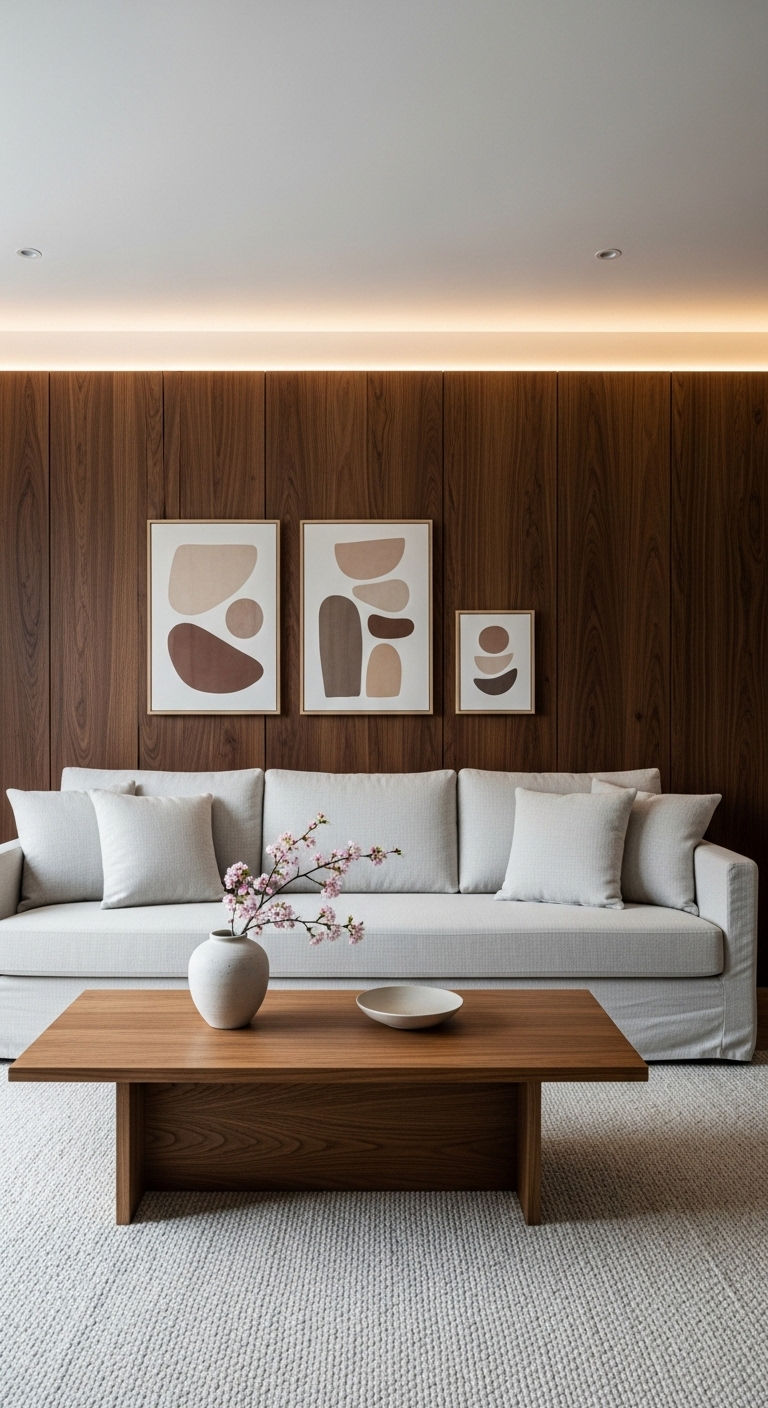
Contrast creates drama without clutter. A light linen sofa against a dark walnut wood wall feels refined and mature.
You create visual depth without adding extra decor.
Design Formula
- Low rectangular wood table
- Muted abstract art
- Wool area rug
- Indirect ambient lighting
The darker background highlights the sofa beautifully. It feels elegant but still grounded in Japandi principles.
This style works great if you want minimalism with a slightly moody edge.
11. Compact Urban Japandi

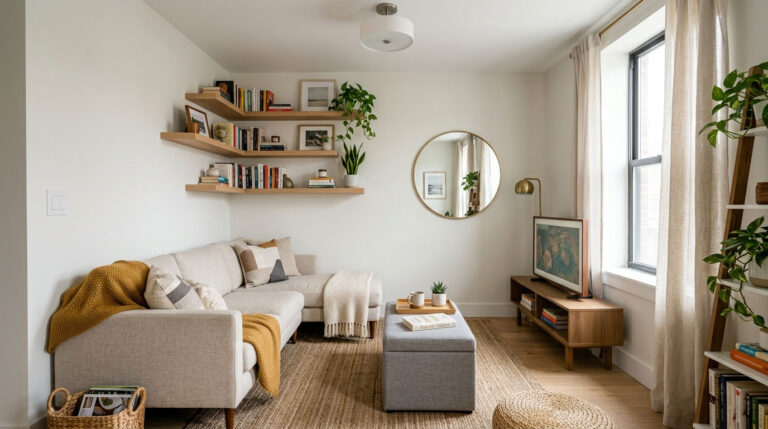
Small apartment? No problem. A slim beige loveseat with open wooden shelving creates a compact Japandi living room that feels spacious.
I’ve seen people cram oversized sectionals into tiny rooms. Please don’t do that :/
Space-Saving Features
- Wall-mounted shelves
- Round woven rug
- Hidden storage bench
- Light color palette
Keep furniture proportional. Choose pieces with visible legs to maintain airflow.
Smart minimalism beats oversized comfort every time in smaller spaces.
12. Stone & Linen Retreat
Concrete-textured walls paired with a cream sofa create a modern Japandi look that feels grounded.
You blend organic modern style with minimalist calm.
Core Elements
- Stone coffee table
- Single branch decor
- Oak flooring
- Soft diffused lighting
This design feels peaceful and architectural. You let materials speak for themselves.
If you want something slightly edgy but still serene, this one checks all the boxes.
13. Scandinavian Simplicity Blend

Japandi wouldn’t exist without Scandinavian influence. A light gray sofa with wooden base blends both worlds seamlessly.
You keep lines clean. You keep decor minimal.
Styling Basics
- Woven pendant light
- Pale wood floors
- Neutral art prints
- Balanced layout
You create harmony through symmetry and restraint.
This works perfectly if you love Nordic interiors but want a softer, more grounded finish.
14. Serene Monochrome Escape

Monochrome doesn’t mean boring. An ivory sofa layered with cream textiles creates depth through shade variation.
You use tone-on-tone styling to keep the space calm but dynamic.
Design Details
- Textured beige walls
- Wooden tray decor
- Golden hour lighting
- Soft organic shapes
Subtle shadow gradients add dimension. You rely on natural light instead of dramatic color.
Ever crave a living room that feels like a quiet retreat after a chaotic day? This is it.
Final Thoughts
Japandi living room sofa ideas focus on calm, balance, natural materials, and intentional design. You don’t need flashy colors or excessive decor. You need:
- Low-profile sofas
- Warm neutral palettes
- Organic textures
- Clean lines
- Natural light
Start with your sofa. Build around it slowly. Remove what doesn’t serve the space.
Minimalism doesn’t mean empty. It means thoughtful.
So, which idea feels like your vibe? Zen linen or dark wood contrast? Either way, your calm minimalist space waits on the other side of a few smart choices.

Sarah Rose writes for EcoGardeningHub, sharing eco home decor ideas, sustainable styling tips, and simple ways to create beautiful, nature-inspired living spaces with a mindful, environmentally friendly approach.