How to Style a Sofa: A Beginner’s Guide to Cushions, Throws, and More
A sofa can be perfectly sized, beautifully upholstered, and structurally flawless — and still look completely underwhelming in a room. The difference between a sofa that looks “fine” and one that looks like it was styled by a designer almost always comes down to the accessories: the cushions, the throws, the small deliberate choices that transform a piece of furniture into a focal point.
The good news is that sofa styling isn’t a talent you’re born with. It’s a set of learnable principles — a handful of rules about proportion, colour, texture, and placement that, once you understand them, you can apply to any sofa in any room.
This guide covers everything a beginner needs to know: how to choose and arrange cushions, how to use throws without making your sofa look like a jumble sale, how to work with colour and pattern, and the small finishing touches that pull a whole look together. By the end, you’ll have a clear, practical framework for styling your sofa with confidence.
Why Sofa Styling Matters More Than You Think
Your sofa is almost certainly the largest piece of furniture in your living room. It commands more visual attention than any other element — more than your rug, your coffee table, or your wall art. How it looks sets the tone for the entire space.
A bare sofa, even a beautiful one, often looks stark or unfinished. The right accessories soften it, add personality, signal warmth, and make the space feel genuinely lived-in rather than showroom-sterile. Done well, sofa styling also creates a sense of visual layering — depth and dimension that makes a room feel considered and intentional rather than assembled at random.
This matters whether you’re decorating for yourself, preparing a home for sale, or simply trying to make your living room feel more like home. Styling a sofa is one of the highest-impact, lowest-cost ways to upgrade the feel of an entire room.
Part One: Cushions
Cushions are the single most powerful styling tool available for a sofa. They add colour, texture, scale, and personality. They also, when chosen poorly, can make an otherwise beautiful sofa look chaotic or generic. Getting them right is a skill — and it starts with understanding a few core principles.
How Many Cushions Do You Actually Need?
This is the question most beginners get wrong in both directions. Too few cushions and the sofa looks bare. Too many and it starts to resemble a cushion shop display — overwhelming, untouchable, and slightly absurd.
The right number depends on the size of your sofa:
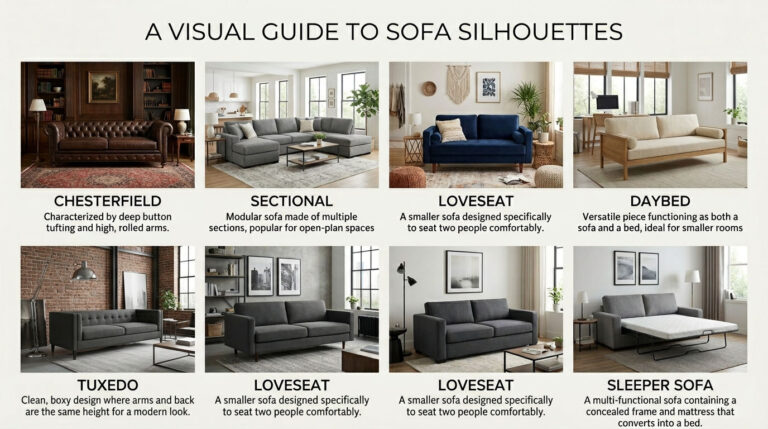
Loveseat or 2-seater: 2 to 4 cushions. Any more and there’s no room for anyone to actually sit.
Standard 3-seater: 3 to 5 cushions. An odd number almost always looks more natural and less staged than an even, perfectly symmetrical arrangement.
Large 3-seater or 4-seater: 5 to 7 cushions. With more sofa to fill, you have more room to layer sizes and vary textures.
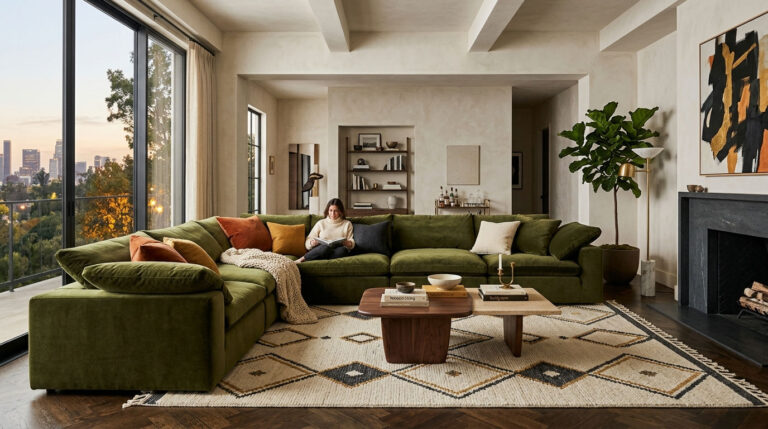
Sectional: 6 to 10 cushions depending on the configuration. Sectionals benefit from treating each section slightly separately while maintaining an overall cohesive palette.
These are starting points, not rigid rules. A minimalist might be perfectly happy with two large cushions on a 3-seater. A maximalist might pile eight cushions on a loveseat and make it look intentional. What matters is that the arrangement feels deliberate — not accidental.
The Rule of Odd Numbers
Interior designers lean heavily on odd numbers when grouping objects — and cushions are no exception. Three cushions, five cushions, seven cushions: odd arrangements create a natural, asymmetric balance that feels relaxed and organic. Even numbers, particularly pairs, can feel rigid and corporate unless the style you’re going for is deliberately formal and symmetrical.
If you’re working with an even number of cushions, break the symmetry in some other way — vary the sizes, mix the textures, or offset the arrangement slightly to one side.
Choosing Cushion Sizes
Variety in cushion size is what gives a sofa arrangement depth and visual interest. Using only one size looks flat. A well-styled sofa typically layers at least two, often three, different sizes.
The most common approach works in descending size order, from back to front:
Large cushions (55 x 55 cm / 22 x 22 inches or larger) — placed at the back or sides, these form the visual anchor of the arrangement. They fill the sofa’s back height and create a solid foundation.
Medium cushions (45 x 45 cm / 18 x 18 inches) — layered in front of the large cushions, slightly overlapping. These are the workhorses of most sofa arrangements.
Small or rectangular cushions (30 x 50 cm / 12 x 20 inches) — placed at the front, these add a finishing layer and visual interest. Rectangular lumbar cushions are particularly useful for breaking up a row of square cushions and adding contrast.
The key is layering: each size sitting slightly in front of and overlapping the size behind it. This creates depth — the cushions look intentionally curated rather than just placed.
Mixing Patterns and Textures: The Formula That Works
This is where most beginners feel overwhelmed — and where most styling mistakes happen. The fear of mixing patterns leads people to buy all their cushions in the same fabric, which results in a flat, dull arrangement. The solution is a simple formula that professional stylists use constantly:
One solid, one pattern, one texture.
- Solid cushions are your anchor. They provide visual rest and let the other elements breathe. Choose a colour that appears elsewhere in the room — in your rug, your walls, or your curtains — to tie the look together.
- Patterned cushions add personality and energy. Stripes, geometrics, florals, abstract prints — choose one or two that contain colours already present in your palette. The pattern doesn’t need to match anything exactly; it just needs to share some colour DNA with the rest of the room.
- Textured cushions add the tactile dimension that flat fabrics can’t. Boucle, velvet, linen, knit, embroidered, or fringed cushions catch light differently and add a layer of richness. These are often the cushions people reach out to touch.
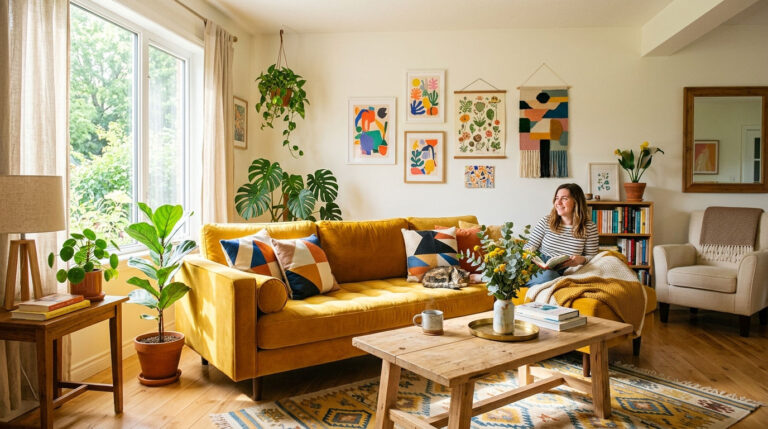
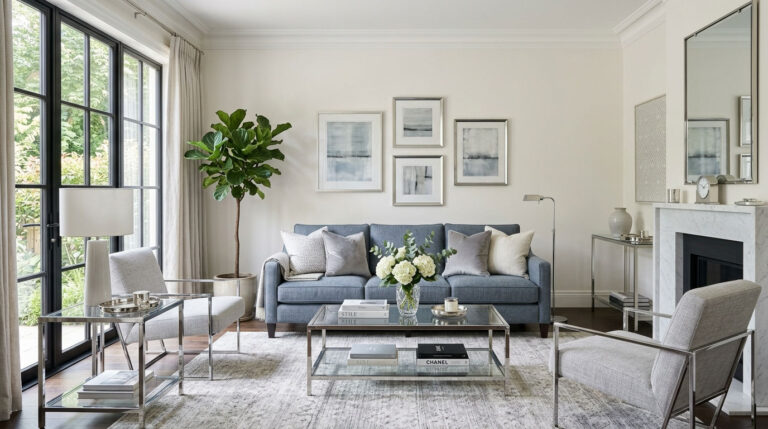
A practical example: a navy sofa might be styled with two large solid cream cushions at the back, two medium geometric cushions in navy and mustard in the middle, and one small boucle cushion in warm white at the front. Five cushions, three types, one cohesive palette.
Colour Principles for Cushion Selection
You don’t need to match cushions to your sofa — in fact, perfectly matching cushions tend to look boring and overly coordinated. The goal is harmony, not uniformity.
A few approaches that reliably work:
Contrast: Choose cushions in a colour that sits opposite your sofa colour on the colour wheel. Navy sofa with amber or mustard cushions. Green sofa with dusty rose or terracotta cushions. Contrast creates energy and visual interest.
Tone-on-tone: Choose cushions in shades of the same colour family as your sofa, but in varying depths. A grey sofa with charcoal, mid-grey, and soft silver cushions. Sophisticated and calm.
Neutral base, accent pops: Keep most cushions in neutrals (cream, white, oatmeal, warm grey) and introduce one or two in a bold accent colour. The neutrals provide calm; the accents provide personality.
Draw from the room: Look at the other colours in your room — your rug, your curtains, your art — and choose cushion colours that echo them. This creates cohesion and makes the sofa feel like it belongs in the space rather than sitting separately from it.
Cushion Arrangements: Practical Examples
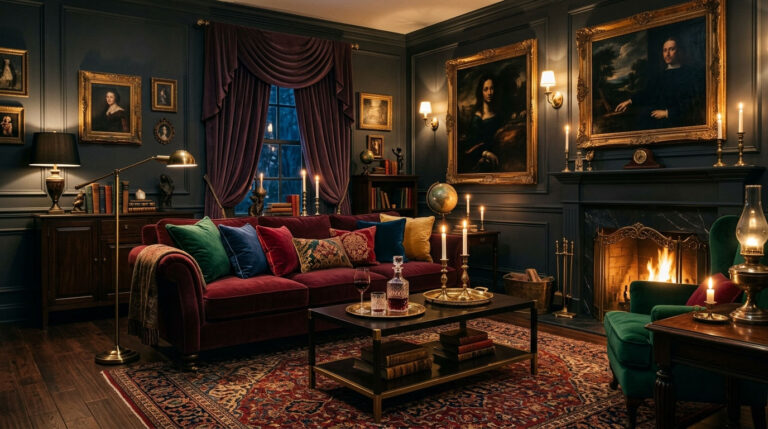
Symmetrical arrangement — identical cushions on each end, with a different cushion in the centre. Works well in formal, traditional spaces. Creates a sense of order and calm.
Asymmetrical arrangement — varying cushions placed with intention but without mirroring. More relaxed and contemporary. Works beautifully in casual or Bohemian interiors.
Staggered depth — large cushions at the back, medium cushions overlapping them slightly, small cushion leaning in front. This is the most common professional approach and the most reliably good-looking.
The lean — rather than placing all cushions bolt upright, allow some to lean slightly against others. It looks effortless and relaxed — far more natural than a rigid, perfectly upright row.
Part Two: Throws
A well-placed throw is one of the simplest and most transformative styling tools available. It adds texture, colour, warmth, and a sense of comfort that cushions alone can’t quite achieve. It signals that the sofa is a place to settle into rather than just sit on.
The key word is “placed.” A throw that looks like it was dropped randomly onto a sofa looks messy. A throw that has been positioned with intention looks effortlessly stylish. The difference between the two is smaller than you’d think.
Choosing the Right Throw
Before worrying about placement, make sure your throw is the right choice for your sofa in the first place.
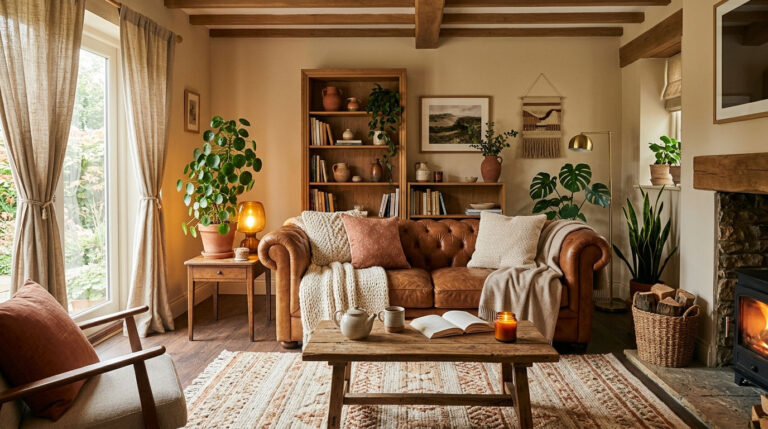
Material matters. A chunky knit throw adds warmth and texture — perfect for autumn and winter, or for a cosy, relaxed aesthetic. A linen or cotton throw is lighter and more breathable — better suited to warmer climates or a more minimal look. A faux fur or sherpa throw is indulgent and dramatic — a real statement piece. A woven or Aztec throw in cotton adds pattern and a global, Bohemian dimension.
Size matters. A throw that’s too small looks like a face cloth on a sofa. Standard throw sizes are typically 125 x 150 cm (50 x 60 inches) to 150 x 200 cm (60 x 80 inches). For a 3-seater sofa, a larger throw gives you more to work with and looks more generous. For a loveseat, a standard size is fine.
Colour and texture should complement, not compete. Your throw is part of the same visual story as your cushions. It doesn’t need to match exactly — it shouldn’t, in fact — but it should share at least one colour with your cushion palette. Texture contrast works well: if your cushions are smooth velvet, a chunky knit throw adds a pleasing contrast. If your cushions are textured boucle, a smooth linen throw balances them.
How to Place a Throw: Three Methods That Work
The Casual Drape — This is the most popular and forgiving technique. Fold the throw loosely in thirds lengthwise, then drape it over one arm of the sofa, allowing it to fall naturally toward the seat. Don’t over-arrange it. The goal is to look like you just set it down after using it — effortless and lived-in. This works on almost any sofa style.
The Corner Tuck — Drape the throw across the corner of the sofa where the arm meets the seat cushion, allowing it to spill onto both surfaces. Particularly effective on sectionals and L-shaped sofas, where the corner is otherwise a dead zone that can look awkward.
The Layered Fold — Fold the throw neatly into a rectangle approximately one-third the width of the sofa, then lay it across one end of the seat cushions. This creates a clean, structured look that works well in more formal or minimal interiors. Less relaxed than the casual drape, but more polished.
What to avoid: draping the throw symmetrically across the entire back of the sofa (it looks like a sofa cover, not a styling choice) or leaving it in a crumpled heap in the corner (which just looks untidy regardless of intent).
Seasonal Throw Swapping
One of the underused advantages of throws is how easily they allow you to refresh your sofa’s look seasonally without spending much money.
In autumn and winter, lean into chunky knits, faux fur, rich colours (burnt orange, deep green, burgundy, camel), and heavier weights. In spring and summer, swap to lighter linens, cottons, and softer tones (sage, dusty blue, warm white, soft terracotta). The same sofa can feel like two completely different pieces just by changing the throw — and by extension, the entire room can shift mood with minimal effort and cost.
Part Three: Colour, Pattern, and Cohesion
Getting your cushions and throws right in isolation isn’t enough. They need to work together — and with the rest of the room. This is where colour strategy becomes important.
Build Around a Palette, Not Individual Pieces
The most common styling mistake beginners make is shopping for individual pieces they love without considering how they’ll relate to each other. The result is a collection of cushions that each look fine on their own but don’t cohesively belong together.
The solution is to define a palette first — typically three to four colours — and then choose all your accessories within that palette.
A practical approach:
- Choose a dominant colour — usually the colour of your sofa itself, or the most prominent colour in your rug or largest piece of art.
- Choose a secondary colour — a complementary or contrasting tone that appears in smaller quantities. This is often where your most striking cushions or throw will live.
- Choose one or two accent colours — used sparingly in small cushions, trim, or pattern details. These add punch without overwhelming.
- Add neutrals freely — cream, white, warm grey, and natural linen act as visual breathing room between stronger colours.
Once you have your palette, shop within it. Even if individual pieces have slightly different shades or patterns, they’ll read as cohesive because they share the same colour DNA.
How to Mix Patterns Without Chaos
Mixing patterns confidently is one of the hallmarks of a well-styled room. It’s also one of the things beginners find most intimidating. The secret is scale variation.
When mixing patterns, vary the scale of each one:
- One large-scale pattern — a bold geometric, a wide stripe, a large botanical print
- One medium-scale pattern — a smaller geometric, a classic check, a subtle repeat
- One small-scale or near-solid pattern — a fine texture, a minimal print, or something that reads almost as a solid from a distance
All three patterns should share at least one colour in common. That shared thread is what ties them together visually even when the patterns themselves are quite different.
What to avoid: mixing multiple patterns at the same scale in the same colour family. This creates visual noise and confusion rather than intentional layering.
The Role of Texture in a Monochromatic Scheme
If you prefer a calmer, more neutral colour scheme — all creams, all greys, all whites — texture becomes your primary styling tool. Without colour variation, you need textural variation to prevent the arrangement from looking flat and bland.
A monochromatic sofa styled well might include: a smooth linen cushion, a boucle cushion, a velvet cushion, a chunky knit throw, and perhaps one embroidered or fringe-trimmed cushion. Same colour family throughout, but so much tactile and visual variety that the arrangement is anything but boring.
Part Four: The Finishing Touches
Cushions and throws do most of the heavy lifting, but the sofa doesn’t exist in isolation. A few additional elements can lift the overall look from styled to genuinely impressive.
The Tray and Coffee Table Relationship
What sits on your coffee table in front of the sofa is part of the same visual composition. A tray on the coffee table creates an organised grouping for small objects — a candle, a small plant, a decorative object or two — and anchors the space in front of the sofa.
The styling principle for a tray: vary the heights of the objects within it. A tall candle next to a small plant next to a flat coaster or book creates visual movement. All objects the same height reads as flat and uninteresting.
The items on the coffee table should echo at least one colour from the sofa’s cushion palette to maintain cohesion.
Side Tables and Lamps
A side table at one or both ends of the sofa serves both function and style. A lamp on the side table does something specific: it creates warm, localised light that makes the sofa area feel intimate and cosy in a way that overhead lighting rarely achieves. In the evening, a well-placed lamp beside a sofa transforms the whole atmosphere of a room.
Choose a lamp with a shade that diffuses rather than concentrates light. Warm-toned bulbs (2700K to 3000K) are almost always more flattering and inviting than cool or daylight bulbs.
The Rug as Foundation
If your sofa sits on a rug — which it often should in an open-plan or large living room — the rug is the foundation of the entire seating area. It visually groups the furniture together and defines the zone.
The most common rug sizing mistake is going too small. A rug that only sits under the coffee table and doesn’t reach the sofa’s front legs looks disconnected and oddly placed. Ideally, the front legs of the sofa should sit on the rug. This anchors the sofa into the space rather than leaving it floating on bare floor.
Wall Art and the Sofa’s Backdrop
What hangs above the sofa affects how the sofa looks, even though technically it’s not part of the sofa at all. Art hung too high disconnects from the sofa and creates an awkward gap. Art hung too low crowds the sofa and feels claustrophobic.
The general guideline: hang art so that its centre point is roughly 57 to 60 inches (145 to 152 cm) from the floor — which is approximately eye level for most adults standing up. Above a sofa, the bottom edge of the artwork or gallery wall should sit roughly 6 to 8 inches (15 to 20 cm) above the top of the sofa’s back cushions.
For gallery walls above a sofa, lay the arrangement out on the floor first until you’re happy with it, then transfer it to the wall. This prevents multiple unnecessary nail holes and ensures the proportions are right before committing.
Plants: The Underrated Sofa Companion
A plant placed near or beside a sofa does something that no cushion or throw can: it introduces organic shape, natural colour, and a sense of life. Even a single plant — a trailing pothos on a side table, a tall fiddle-leaf fig in the corner behind the sofa — adds a dimension of warmth and vitality that instantly makes a room feel more welcoming.
If you struggle to keep plants alive, high-quality artificial plants have improved enormously in recent years and are a perfectly legitimate alternative for the purposes of styling.
Common Sofa Styling Mistakes to Avoid
Even with the best intentions, a few errors come up repeatedly. Here’s what to watch out for:
All cushions the same size — creates a flat, uniform look that lacks depth and visual interest. Always layer at least two sizes.
Too many cushions in the same pattern — even beautiful patterns become oppressive when repeated without variation. Mix pattern with solid and texture.
A throw draped symmetrically across the whole sofa — looks like a protective cover rather than a styling choice. Drape it casually to one side instead.
Cushions that match the sofa exactly — produces a look that’s monotone and flat. Choose cushions that complement rather than match.
Ignoring the rest of the room — the sofa doesn’t exist in isolation. Cushion colours and throw textures should echo elements already present in the room.
Styling the sofa once and never refreshing it — over time, the same arrangement becomes invisible to you and stale to guests. Rotate cushions seasonally, swap the throw, move things around. It costs nothing and can completely refresh the room’s feel.
A Simple Framework to Remember
If you take only one thing from this guide, let it be this framework — it works for virtually any sofa in any room:
3 cushion sizes (large at back, medium in middle, small in front) 3 cushion types (one solid, one pattern, one texture) 1 throw (complementary colour, contrasting texture, casually draped to one side) 1 palette (three to four colours, drawn from the room, applied across all elements)
Apply that framework consistently and your sofa will look intentionally styled rather than accidentally assembled — every time.
Final Thoughts
Styling a sofa well is part instinct, part formula, and part practice. The instinct develops over time as you train your eye. The formula is what this guide has given you. The practice comes from actually trying things — arranging cushions, swapping throws, standing back and looking, moving things again.
The most important thing to remember: there are no permanent decisions here. Cushions can be repositioned. Throws can be changed. Colours can be swapped. Unlike buying the sofa itself, styling it is endlessly adjustable, completely reversible, and almost entirely low-stakes.
So try things. See what works. Trust your instincts when something looks right — and trust them equally when something looks off. With the principles in this guide as your foundation, you have everything you need to style your sofa with confidence, creativity, and a genuinely personal touch.

Sarah Rose writes for EcoGardeningHub, sharing eco home decor ideas, sustainable styling tips, and simple ways to create beautiful, nature-inspired living spaces with a mindful, environmentally friendly approach.