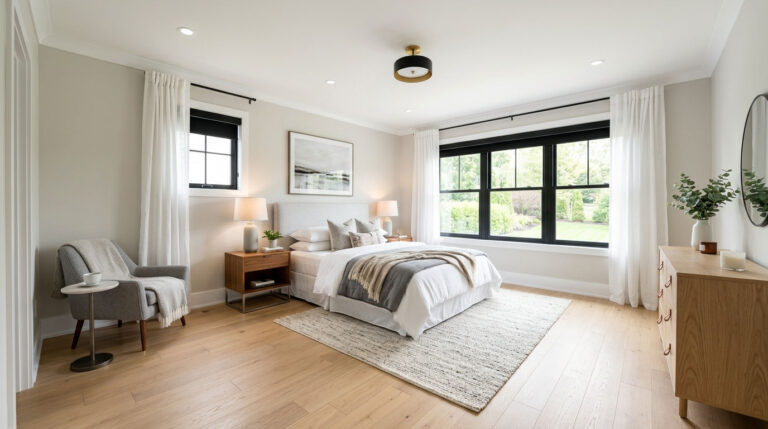
How to Do a Board and Batten Accent Wall in a Bedroom (Complete DIY Guide)
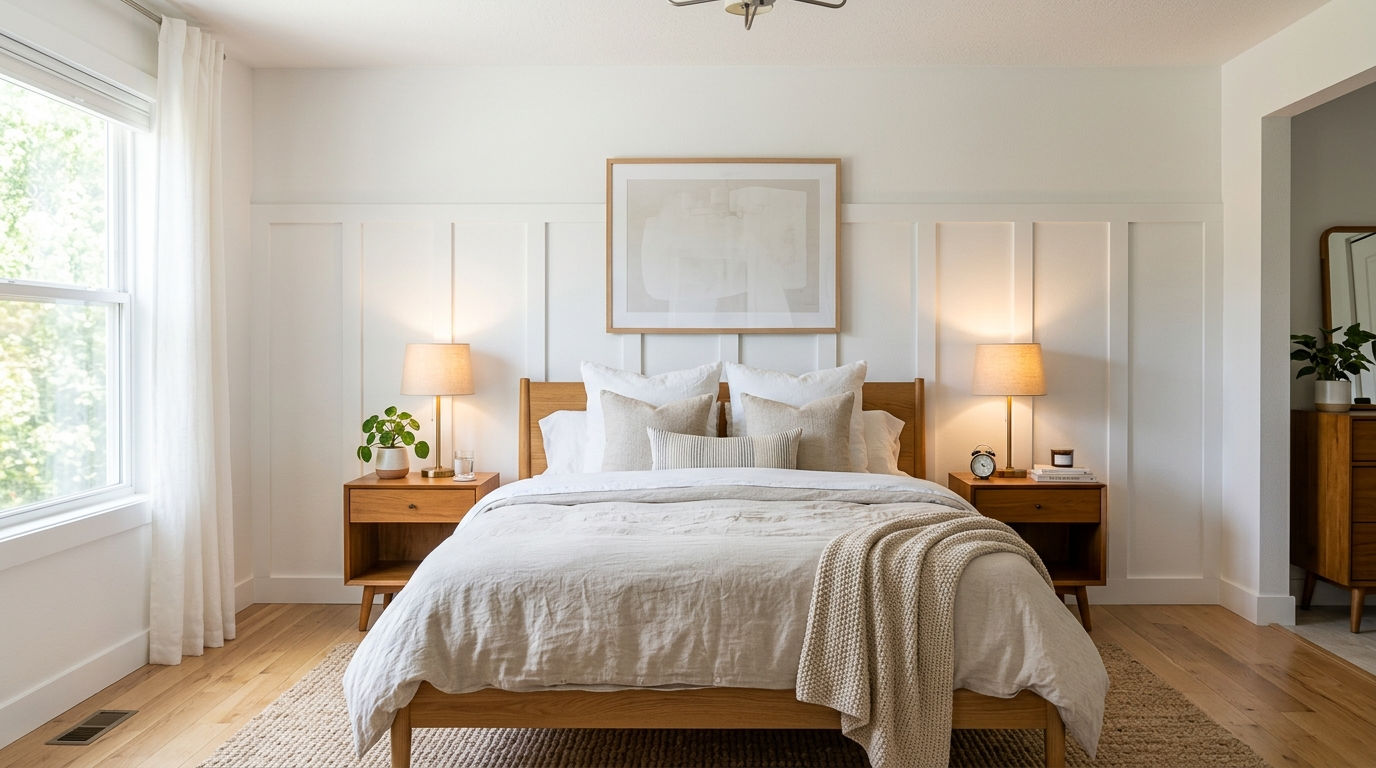
If you’ve been scrolling through home décor inspiration lately, chances are you’ve come across a stunning board and batten accent wall. This classic architectural detail has made a massive comeback — and for good reason. It’s affordable, achievable for most skill levels, and it completely transforms the look and feel of a bedroom. In this step-by-step guide, you’ll learn exactly how to plan, build, and finish a board and batten accent wall in your bedroom from start to finish.
What Is a Board and Batten Accent Wall?
Board and batten is a style of wall treatment that uses vertical or horizontal strips of wood (called “battens”) applied over a flat wall surface to create a paneled, geometric pattern. Traditionally used on exterior siding and barn walls, it has evolved into one of the most popular interior design trends for bedrooms, living rooms, entryways, and dining rooms.
The result is a wall that looks custom, textured, and intentional — like something you’d see in a high-end designer home. But the secret is that it’s surprisingly simple and budget-friendly to DIY.
Why Add a Board and Batten Wall to Your Bedroom?
Before diving into the how-to, here’s why so many homeowners are choosing this upgrade:
- Adds architectural character to rooms that feel flat or builder-grade
- Increases perceived home value with a polished, custom look
- Works with any design style — from farmhouse and cottagecore to modern and minimalist
- Highly customizable in terms of height, spacing, and paint color
- Relatively low cost compared to other renovation projects
- A satisfying weekend DIY project that delivers dramatic results
Tools and Materials You’ll Need
Tools
- Measuring tape
- Pencil
- Level (a long level of at least 4 feet is ideal)
- Miter saw or circular saw
- Nail gun (a brad nailer is preferred) or hammer and finishing nails
- Stud finder
- Caulk gun
- Sandpaper (120 and 220 grit)
- Paint roller and brushes
- Painter’s tape
- Safety glasses and ear protection
Materials
- MDF boards or pine boards (common widths: 1×4, 1×3, or 1×6 depending on your preferred look)
- Construction adhesive or liquid nails
- Finishing nails (1.5–2 inch)
- Wood filler or spackling compound
- Primer
- Paint (semi-gloss or satin finish recommended for walls)
- Caulk (paintable latex caulk)
Pro Tip: MDF (medium-density fiberboard) is the most popular choice for interior board and batten because it’s smooth, easy to cut, inexpensive, and paints beautifully. However, if you’re in a humid climate or adding this to a room that sees moisture, opt for solid pine instead.
Step 1: Plan Your Design and Measurements
Planning is the most important step. Rushing into cutting before you’ve mapped out your layout will cost you time, materials, and sanity.
Decide on the Style
There are a few common board and batten configurations:
- Full wall: Battens run from floor to ceiling
- Half wall (wainscoting style): A horizontal cap rail sits at chair-rail height (typically 32–42 inches from the floor), with vertical battens below
- Upper accent only: Battens applied above a chair rail, reaching up to the ceiling
- Grid pattern: A more contemporary look using both horizontal and vertical battens to create rectangles
For a bedroom, the half-wall or full-wall styles are most popular. A full-wall treatment with equal spacing tends to look especially dramatic behind a bed.
Measure Your Wall
Measure the total width and height of your accent wall. Write these numbers down — you’ll refer to them repeatedly.
For a vertical batten layout, determine:
- The width of your battens (typically 2–4 inches)
- The number of spaces between battens
- The spacing between each batten (usually between 6 and 18 inches — more spacing feels modern; tighter spacing feels more traditional)
Calculate Spacing
Here’s a simple formula for even spacing:
- Decide how many battens you want
- Subtract the total width of all battens from the wall width
- Divide the remaining width by the number of spaces (which is the number of battens plus 1)
Example: A 10-foot (120-inch) wall with 3-inch wide battens and 8 battens total:
- 8 battens × 3 inches = 24 inches total batten width
- 120 – 24 = 96 inches of open space
- 96 ÷ 9 spaces = approximately 10.6 inches between each batten
Sketch your layout on paper or use a free design tool like Canva or RoomSketcher before committing. This visualization step is worth every minute.
Step 2: Gather Your Materials and Prep the Room
Once you have your measurements and layout finalized, it’s time to shop.
Calculate How Much Wood You Need
- For horizontal rails (top and bottom): measure the full width of the wall (you’ll need at least a top and bottom horizontal board)
- For vertical battens: measure the height of the wall (or the height of the wainscoting section) and multiply by the number of battens
Add 10–15% extra material to account for mistakes, cuts, and waste.
Prep the Room
- Remove furniture from the area or push it to the center
- Remove any outlet covers, switch plates, or fixtures on the accent wall
- Patch any large holes in the existing wall with spackle and let it dry
- Sand any rough patches smooth
- Wipe the wall down with a damp cloth to remove dust and grease
Step 3: Paint the Base Wall Color
Here’s a pro tip that will save you hours of cutting in later: paint the wall before installing the boards.
Apply your chosen paint color directly to the bare wall. This way, when you nail the battens on top, any small gaps between the board and wall will show the same color underneath — no need to carefully cut in with a brush around every single board edge later.
Apply at least two coats of paint and let it dry completely before moving on.
Step 4: Find and Mark Your Studs
Use a stud finder to locate the studs behind the drywall. Mark each stud location at the top and bottom of the wall with a light pencil mark. Studs are typically 16 inches apart.
Knowing your stud locations helps you:
- Anchor horizontal rails securely into the wall framing
- Plan your batten placement so at least a few land on studs for extra stability
Step 5: Install the Horizontal Rails
Most board and batten designs start with horizontal boards at the top and bottom of the treatment area. These create a “frame” and give the vertical battens something to terminate against cleanly.
Bottom Rail
The bottom rail typically sits directly on top of the baseboard or flush with the floor. If you have existing baseboard molding, you can either remove it and reinstall it on top of the bottom rail later, or simply butt your bottom rail up against it.
Cut your board to the full width of the wall. Apply a bead of construction adhesive to the back, press it against the wall, and nail it into the studs (or into the wall if adhesive alone is sufficient for your material weight).
Use your level to make sure the rail is perfectly horizontal before the adhesive sets.
Top Rail
For a half-wall (wainscoting) design, snap a chalk line or use your level to draw a perfectly horizontal line at your desired height across the wall. Install your top cap rail along this line.
For a full-wall design, the top rail goes right at the ceiling or just below the crown molding.
Step 6: Cut and Install the Vertical Battens
Now for the satisfying part — installing the battens.
Cut All Boards First
Measure the height of the space between your top and bottom rails (or floor to ceiling for a full treatment). Cut all vertical battens to this length. It’s faster to cut them all at once before installing.
Mark Your Batten Positions
Using your previously calculated spacing, lightly mark the position of each batten on the wall with a pencil. Use a level to draw a faint vertical line at each mark — this ensures your battens go on perfectly straight.
Install Each Batten
For each batten:
- Apply a thin, consistent bead of construction adhesive down the back of the board
- Press the board firmly against the wall, aligning it with your pencil line
- Check that it’s plumb (perfectly vertical) with your level
- Nail it in place with your brad nailer — typically 2–3 nails along the length of each batten
Work your way across the wall from one side to the other, maintaining consistent spacing.
Note on outlets and switches: When a batten falls near an electrical box, you may need to cut a notch or plan your spacing to work around it. You can also purchase electrical box extenders if your battens add thickness that pushes the box face too far back.
Step 7: Fill All Nail Holes and Gaps
Once all your boards are installed, inspect every inch of the wall. You’ll likely find:
- Nail holes from your brad nailer
- Small gaps between the boards and the wall (common on uneven walls)
- Seams where boards meet at corners or transitions
Fill Nail Holes
Use wood filler or lightweight spackling compound to fill every nail hole. Apply with your finger or a small putty knife, let it dry, then sand flush with 120-grit sandpaper.
Caulk All Edges
This step is what separates a DIY look from a professional finish. Run a thin bead of paintable latex caulk along:
- Both long edges of every vertical batten
- The top and bottom edges of all horizontal rails
- Any inside corners
Immediately after applying the caulk, run a damp finger along the bead to smooth it into a clean, concave line. Wipe away any excess with a damp rag.
Let the caulk dry completely (usually 1–2 hours, though check your product’s label).
Step 8: Prime and Paint the Boards
Now it’s time to bring the whole look together with paint.
Prime First
Apply a coat of primer over all the new wood boards. MDF is especially thirsty for primer on its cut edges, so make sure those are well coated. Let the primer dry completely and lightly sand with 220-grit sandpaper for an ultra-smooth surface.
Paint the Boards
Apply your chosen wall paint color over the boards. Because you already painted the wall the same color, you now have a much easier job — just paint the boards themselves without worrying about the wall behind.
Apply two coats, allowing proper drying time between coats. A small 4-inch foam roller works great for the flat faces of the boards, while an angled brush handles the edges.
Step 9: Reinstall Outlet Covers and Clean Up
Once the paint is fully dry (wait at least 24 hours before handling), reinstall all outlet covers and switch plates. Step back and take it all in.
Remove any painter’s tape, return furniture to the room, and enjoy your gorgeous new accent wall.
Board and Batten Design Tips for Bedrooms
Choose the Right Wall
The wall behind your bed (the headboard wall) is the classic choice for an accent wall. It frames the bed, draws the eye, and creates a cohesive focal point in the room.
Pick the Right Color
White and off-white are the most popular choices because they brighten the room and let the dimensional texture of the boards do the visual work. But don’t be afraid of:
- Deep navy or forest green for a moody, dramatic look
- Warm greige or taupe for a cozy, neutral feel
- Black for a bold, contemporary statement
- Two-tone treatments where the wall above the cap rail is a different color than below
Consider the Scale
In a small bedroom, use narrower battens (2–3 inches) with wider spacing to avoid overwhelming the space. In a larger room with high ceilings, wider battens (4–6 inches) and tighter spacing create a grander, more traditional feel.
Add Lighting for Drama
Picture lights, wall sconces, or even LED strip lighting behind or below the battens can add incredible depth and ambiance, especially at night.
Common Mistakes to Avoid
- Skipping the caulk step: This is the single biggest thing that separates a polished result from an obviously DIY one. Always caulk.
- Not checking for level and plumb: Boards that aren’t perfectly straight will be immediately noticeable once painted.
- Forgetting to prime MDF edges: Unprimed MDF edges soak up paint unevenly and can swell with moisture. Always prime thoroughly.
- Rushing the paint drying time: Handling boards before paint is fully cured leads to chips, dents, and fingerprints in your fresh finish.
- Not accounting for outlets: Plan your batten layout around existing electrical boxes, or you’ll end up with awkward placements.
How Much Does a DIY Board and Batten Accent Wall Cost?
The cost depends on the size of your wall, the type of wood, and whether you already own the tools. Here’s a general estimate for a typical 10-foot bedroom accent wall:
| Item | Estimated Cost |
|---|---|
| MDF boards (boards + rails) | $40–$80 |
| Construction adhesive | $5–$10 |
| Finishing nails / brad nailer rental | $10–$30 |
| Caulk and wood filler | $10–$15 |
| Primer and paint | $25–$50 |
| Total | $90–$185 |
Compare that to hiring a contractor, which for the same wall could run $500–$1,500 or more depending on your area — and you can see why this is one of the best ROI home improvement projects you can tackle.
Frequently Asked Questions
How long does it take to install a board and batten accent wall?
For a standard bedroom accent wall, plan for a full weekend project. Day one for painting, measuring, cutting, and installing the boards. Day two for filling, caulking, priming, and painting. If you’re experienced with DIY projects, you may be able to complete it in a single long day.
Can I do board and batten over existing wallpaper?
It’s not recommended. Wallpaper can cause the boards to not adhere properly, and the adhesive can damage the paper if you ever want to remove it. It’s best to remove any wallpaper before starting.
Do I need a nail gun?
A nail gun makes the job significantly faster and easier, but it’s not strictly required. You can hammer finishing nails by hand and use a nail set to sink them below the surface. The construction adhesive alone provides much of the holding power.
Can I do board and batten on a wall with a textured finish?
Yes, though you may need to use more construction adhesive to fill any gaps between the board and the uneven surface. Heavily textured walls may benefit from a skim coat of joint compound first to create a smoother surface.
What’s the difference between board and batten and shiplap?
Shiplap consists of horizontal planks that interlock with a slight groove or gap between each board, covering the entire wall surface. Board and batten is a trim treatment applied over an existing wall, with visible wall space between each vertical board. Both are popular accent wall styles, but they create very different looks.
Final Thoughts
A board and batten accent wall is one of those rare DIY projects that looks like it required professional skill but is genuinely achievable for a motivated homeowner. The key is in the planning, the patience to do the prep work properly, and the small finishing details — especially caulking — that elevate the result from amateur to stunning.
Whether you go bold with a dark, dramatic color or keep it clean and classic with crisp white boards, this is one upgrade your bedroom will thank you for. Grab your tape measure, mark up that wall, and get building.

Sarah Rose writes for EcoGardeningHub, sharing eco home decor ideas, sustainable styling tips, and simple ways to create beautiful, nature-inspired living spaces with a mindful, environmentally friendly approach.