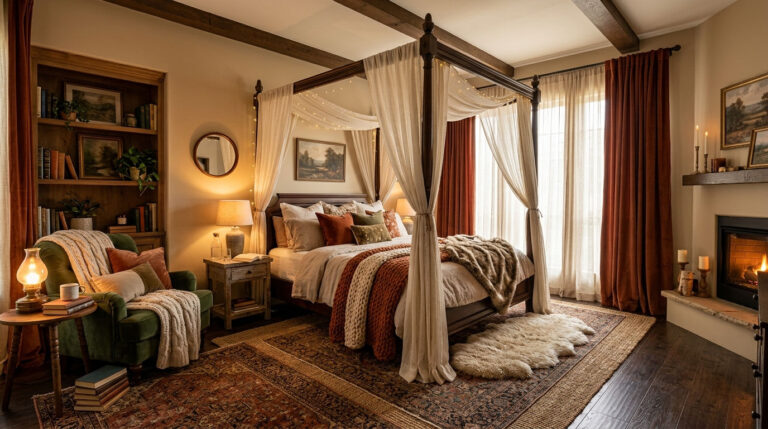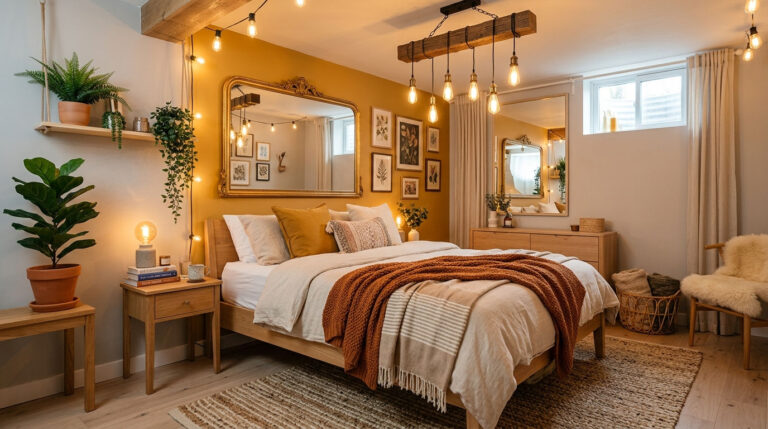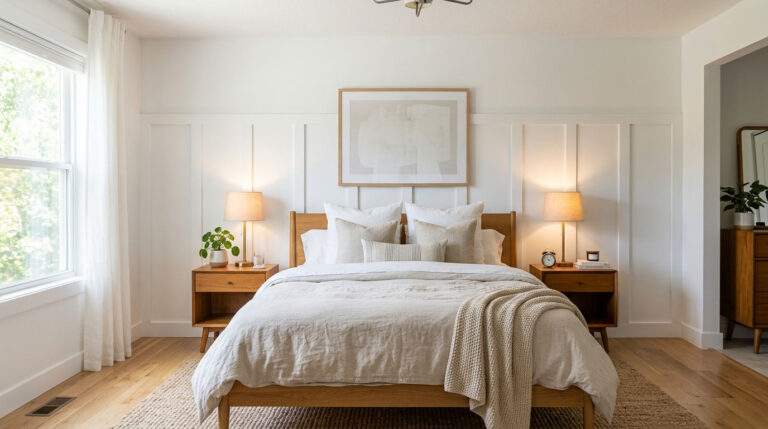
What Size Rug Should You Use Under a Queen Bed? The Complete Guide
Ask any interior designer what the single most frequent decorating mistake they see in bedrooms, and the answer is almost always the same: the rug is too small.
A rug that’s undersized for the bed it anchors is one of those things that’s hard to articulate but immediately visible. The room feels off. The furniture looks like it’s floating. The space feels unfinished, even when everything else is beautifully chosen. Yet it’s a mistake that happens constantly — largely because people underestimate just how much floor a queen bed and its surrounding furniture actually occupies, and because they’re working from guesswork rather than a clear framework.
This guide exists to end the guesswork entirely.
Whether you’re furnishing a bedroom from scratch, replacing an old rug that never quite looked right, or simply trying to understand why your room feels slightly off despite your best efforts, you’ll find a complete, practical answer here. We’ll cover the exact rug sizes that work best with a queen bed, how to position them correctly, how room size affects your choice, what to consider beyond dimensions, and how to avoid the expensive mistakes that send people back to the store.
Let’s start with the basics.
Understanding the Queen Bed’s Footprint
Before we can talk about rugs, we need to talk about the bed itself — specifically how much floor space a queen bed actually commands.
A standard queen mattress measures 60 inches wide by 80 inches long — that’s 5 feet by 6 feet 8 inches. But the mattress dimensions alone don’t tell the full story. When you account for the bed frame (which typically adds 2–4 inches on each side), the headboard (which usually sits against a wall), and the nightstands that flank the bed on either side, the entire furniture grouping can easily span 8 to 9 feet in width and 7 to 8 feet in length.
This is why so many people get the rug size wrong. They measure the mattress, add a little, and end up with a rug that’s still significantly smaller than what the space actually requires. A rug sized to the mattress and nothing else will always look small and visually disconnected from the rest of the room.
The rug’s job isn’t just to sit under the bed — it’s to anchor the entire bedroom furniture grouping as a unified, intentional arrangement. Understanding this principle is the key to getting the size right every time.
The Golden Rule of Bedroom Rugs
Before we get into specific dimensions, here is the single most important rule to internalize:
You should always be able to see the rug, and your feet should always land on it when you get out of bed.
If the rug disappears almost entirely under the bed, it isn’t doing its job. If you step out of bed in the morning and your feet hit cold hardwood or tile instead of soft rug, the rug isn’t large enough. These two simple tests — visual presence and tactile function — will tell you everything you need to know about whether a rug is working in a bedroom.
The specific measurements below are built around this principle.
The Best Rug Sizes for a Queen Bed: A Complete Breakdown
The Gold Standard: 8′ × 10′ Rug
An 8 × 10 foot rug is, without question, the most recommended and most versatile rug size for a queen bed. It is the choice that interior designers default to most frequently, and for good reason — it works beautifully across the widest range of bedroom sizes and furniture configurations.
How it works with a queen bed:
When an 8×10 rug is positioned correctly under a queen bed — slid underneath so that approximately two-thirds of the rug extends beyond the foot of the bed — you’ll have roughly 18 to 24 inches of rug showing on each side of the bed and a generous 2 to 3 feet of rug exposed at the foot. This is precisely the amount needed to feel intentional and grounded.
The sides of the rug that flank the bed provide a soft landing strip for your feet every morning. The exposed section at the foot of the bed creates a visual anchor that ties the furniture grouping together. Nightstands sitting beside the bed will rest partially or fully on the rug, which further unifies the arrangement.
Room size this works best in: Bedrooms that are approximately 11×12 feet or larger. In a room this size, the 8×10 rug will have several inches to a foot of bare floor showing between the rug’s edge and the wall on the sides — this breathing room is essential. A rug that runs wall-to-wall looks like carpet, not like a thoughtfully placed rug.
The takeaway: If you have a queen bed in a medium to large bedroom and you want one clear, confident answer — an 8×10 rug is it.
The Luxurious Choice: 9′ × 12′ Rug
A 9×12 rug is the upgraded, more generous option — and in the right room, it looks absolutely spectacular.
With a 9×12, the rug extends even further on all sides of the queen bed. Nightstands sit fully on the rug rather than partially. There is more visual mass on the floor, which makes the room feel more grounded, intentional, and furnished. If you have a seating area at the foot of the bed — an ottoman, a bench, a pair of chairs — a 9×12 can bring all of those elements into the rug’s embrace, unifying the entire room in a way that feels genuinely luxurious.
Room size this works best in: Master bedrooms and larger primary bedrooms of 12×14 feet or more. In a smaller room, a 9×12 may feel overwhelming or leave insufficient bare floor between the rug’s edge and the walls.
The takeaway: If you have a larger bedroom and want a high-end, designer look, size up to a 9×12. You’re unlikely to regret it.
The Compromise Choice: 5′ × 8′ Rug
A 5×8 rug is the smallest size that can work with a queen bed — and it works best when used as a runner at the foot of the bed rather than positioned under it.
In this configuration, the rug sits beyond the foot of the bed entirely, creating a soft landing zone when you step out from the end. It doesn’t extend along the sides of the bed at all, which means stepping out of bed sideways puts you on bare floor. It’s a visually lighter treatment that can work in very small rooms or when budget is a significant constraint.
Some designers also use a 5×8 paired with a runner on each side of the bed in lieu of a single large rug — this three-rug arrangement can look intentional and eclectic in the right aesthetic context.
Room size this works best in: Small bedrooms of 10×10 feet or less, where a larger rug would dominate the floor space too aggressively.
The takeaway: A 5×8 is a compromise. It can work, but it requires intentional placement and looks best in very small rooms. In most queen-bed bedrooms, sizing up to an 8×10 is worth the investment.
What About a 6′ × 9′ Rug?
A 6×9 falls between the 5×8 and 8×10 — it’s a somewhat awkward in-between size that is harder to place well. In most cases, it’s too large to use purely as a foot-of-bed runner and not quite large enough to properly anchor the full bed grouping the way an 8×10 does.
If you find a 6×9 at a compelling price or in a perfect pattern, it can work — but you’ll need to position it carefully, pushing it well under the bed so the sides have maximum exposure. Think of it as a smaller 8×10 placement rather than a larger 5×8 placement.
Runner Rugs: A Creative Alternative
Two runners — one on each side of the bed — placed alongside the queen bed is a design approach that has grown significantly in popularity, particularly in bohemian, Scandinavian, and eclectic interiors.
Each runner is typically 2.5 to 3 feet wide and 7 to 8 feet long, positioned to run along the length of the bed on each side. The result is a soft landing zone on both sides without a single large rug dominating the floor. The bare floor between the runners and at the foot of the bed is visible, which works beautifully in rooms with gorgeous hardwood floors that deserve to be seen.
This approach is also often more affordable — two well-priced runners can cost less than a single large area rug in the same style.
Best aesthetic fit: Eclectic, boho, Scandinavian minimalist, or layered global-style bedrooms. Less appropriate for traditional, formal, or contemporary clean-lined rooms where a single unified rug reads more polished.
How Room Size Affects Your Rug Choice
Room dimensions are one of the most important factors in choosing rug size — perhaps more important than the bed size itself. Here’s a practical framework:
Small bedroom (10×10 or smaller) In a truly small bedroom, an 8×10 rug may simply not fit properly — it would leave less than 6 inches of bare floor between the rug edge and the wall, which looks cramped. Options here include a 5×8 at the foot of the bed, two runners on the sides, or an 8×10 pushed mostly under the bed with just the foot and sides showing.
Medium bedroom (11×12 to 12×14) This is the sweet spot for an 8×10 rug. It will fit with comfortable breathing room on all sides and provide ideal coverage around the queen bed. This is the most common bedroom size in residential homes, which is exactly why the 8×10 is the most commonly recommended rug size.
Large bedroom (12×14 or larger) A large bedroom can easily accommodate a 9×12 or even a larger rug. In a very large room, an 8×10 can actually look too small — a room that’s significantly bigger than the rug makes the rug look like it was placed there as an afterthought. Size up to 9×12 in these rooms.
Master bedroom with a seating area If your bedroom has a seating area — a loveseat, a pair of chairs, a chaise — you generally have two options: one very large rug (9×12 or larger) that unifies the bed and the seating area under a single rug, or two separate rugs — one anchoring the bed and one defining the seating area. The second approach requires more floor space between the two zones to avoid a cluttered look.
How to Position a Rug Under a Queen Bed
Getting the size right is only half the equation. Placement matters just as much.
The Two-Thirds Rule
The most universally recommended placement is to slide the rug under the bed so that roughly two-thirds of the rug is visible beyond the foot of the bed. This means the rug extends generously at the foot — the area you walk through most often — while the portion under the bed anchors the furniture without being entirely hidden.
In practical terms: if you’re using an 8×10 rug (120 inches long), you’d slide approximately 40 inches under the bed, leaving 80 inches exposed. Since the queen bed is 80 inches long, this means the rug extends about 40 inches beyond the foot of the mattress. That’s a generous, intentional placement that looks designed rather than accidental.
Centering Side to Side
The rug should be centered on the bed from left to right. With an 8-foot-wide rug and a 5-foot-wide queen mattress (plus roughly 2 inches of frame on each side), you’ll have approximately 21 inches of rug showing on each side. That’s a comfortable, proportional amount — enough to step onto comfortably but not so much that it looks like the rug is running away from the bed.
Nightstand Placement
One of the ongoing debates in interior design is whether nightstands should sit on or off the rug. Both approaches can look intentional, but the general guideline is: at least the front legs of the nightstand should be on the rug. This visually connects the nightstand to the bed as part of a unified furniture grouping. Having nightstands entirely off the rug — separated from the bed by a gap of bare floor — makes them look like unrelated pieces rather than a cohesive arrangement.
Beyond Dimensions: Other Factors to Consider
Size is the most critical factor in choosing a bedroom rug, but it isn’t the only one. Here are several additional considerations that significantly affect how the rug looks and functions.
Pile Height and Texture
Low pile rugs (flatweave, kilim, Moroccan boucherouite) — Easy to clean, don’t interfere with bed frame legs, work well under high-traffic paths. Great for modern, boho, or eclectic bedrooms.
Medium pile rugs — The most versatile option for bedrooms. They feel soft underfoot without being so plush that furniture legs sink unevenly.
High pile and shag rugs — Incredibly luxurious underfoot — stepping onto a thick, plush rug first thing in the morning is genuinely one of life’s small pleasures. However, high-pile rugs can make furniture placement uneven and are harder to vacuum. They work best when the bed legs don’t sit heavily on the rug.
Material
Wool — The premium choice for bedroom rugs. Naturally soft, durable, soil-resistant, and temperature-regulating. Wool rugs look beautiful for decades. The trade-off is cost — wool rugs are significantly more expensive than synthetic options.
Cotton — Affordable, machine-washable (in smaller sizes), and lightweight. Less durable than wool but a great budget choice.
Synthetic (polypropylene, nylon, polyester) — The most affordable category. Modern synthetic rugs can look remarkably similar to wool and are often more stain-resistant. Durability varies widely by quality.
Jute and natural fibers — Beautiful and organic-looking, but rough underfoot — not ideal for a bedroom where you’ll walk barefoot. Better suited to living rooms and entryways. Can be used as a base layer under a softer rug.
Color and Pattern
In a bedroom, the rug is one of the largest color statements in the room. A few principles worth knowing:
Light-colored rugs make a room feel more open and airy. They’re also more likely to show dirt and stains — a practical consideration if you eat in your bedroom or have pets.
Dark-colored rugs make a room feel cozier and more intimate, and they’re significantly more forgiving with stains and traffic marks. A deep burgundy, forest green, or navy rug can anchor a bedroom dramatically.
Patterned rugs add visual interest and personality. A Persian or Oriental rug brings warmth and history. A geometric pattern adds modern energy. The key is making sure the rug’s colors echo at least one or two of the room’s other tones.
Solid rugs are the most versatile and work in the widest range of bedroom styles. They allow other elements — bedding, art, curtains — to be the visual focus.
Rug Pad: Non-Negotiable
A rug pad under your bedroom rug is not optional — it’s essential. A quality rug pad:
- Prevents the rug from sliding on hard floors (important for safety)
- Adds additional cushion underfoot
- Protects your floor from dye transfer
- Extends the life of the rug by reducing friction wear
- Keeps the rug looking flat and smooth rather than bunching or wrinkling
Choose a rug pad that’s approximately 1 inch smaller than your rug on all sides so it doesn’t peek out from the edges. Felt-and-rubber combination pads offer the best combination of grip and cushion.
The Painter’s Tape Test: How to Check Before You Buy
One of the most practical tips in interior design is devastatingly simple: before purchasing any rug, use painter’s tape to mark out the exact dimensions on your bedroom floor.
Here’s how to do it:
- Measure and mark the center point of where your bed sits (or will sit) on the floor
- Using a tape measure and painter’s tape, mark out the full dimensions of the rug you’re considering — centered on the bed’s position
- Step back and assess: Does the taped area look too small? Too large? Does it leave comfortable space between the edges and the walls?
- Slide temporarily under your bed frame to simulate proper placement
- Live with it for a day before committing
This five-minute exercise prevents the single most expensive and frustrating rug mistake: buying a rug, bringing it home, unrolling it, and realizing it’s the wrong size. Rugs are heavy, awkward to return, and often non-refundable from online retailers. The painter’s tape test takes almost no time and eliminates almost all risk.
Where to Shop for Bedroom Rugs at Every Budget
Once you know your size, knowing where to shop saves you time and money.
Budget-friendly options (under $200 for an 8×10):
- Ruggable — washable rugs in a wide range of styles; great for bedrooms where spills happen
- IKEA — consistently affordable, particularly their flatweave and wool-blend options
- Amazon basics and home brands — quality varies widely; read reviews carefully and look for high review counts
- Wayfair during sales — regular deep discounts on large rugs, especially around major holidays
Mid-range options ($200–$600 for an 8×10):
- Loloi Rugs — perhaps the best value-to-quality ratio in the market; beautiful designs that photograph like much more expensive rugs
- Rugs USA — frequent 70–80% off sales that bring mid-range rugs to budget pricing
- West Elm — stylish, well-made options with regular sale events
- Anthropologie — beautiful, distinctive designs; watch for their frequent sale events
Investment pieces ($600+ for an 8×10):
- Restoration Hardware — high-quality construction and timeless designs
- Serena & Lily — beautiful coastal and natural-fiber options
- Vintage and antique dealers — a genuine vintage Persian or Turkish rug is often one of the best investments in home décor; it only appreciates with age, and the quality of antique wool is frequently superior to modern production
Thrift stores and Facebook Marketplace — Don’t overlook secondhand options. Large, high-quality rugs are among the best thrift store finds. People offload them constantly during moves, renovations, and style changes. A $30 thrift store rug in the right size and color can look extraordinary in the right room.
Common Mistakes to Avoid
Going too small — As emphasized throughout this guide, this is the most common mistake by far. When in doubt, size up.
Not accounting for furniture placement — A rug that looks right with just the bed may look wrong once you add nightstands, a bench, or other pieces. Consider the full furniture arrangement when sizing.
Ignoring the room’s proportions — A very large rug in a small room looks like wall-to-wall carpet. Leave at least 18–24 inches of bare floor between the rug’s edges and the walls for a properly proportioned look.
Choosing pattern before size — Fall in love with a size first, then find the pattern you love in that size. Many people do the opposite and end up with a beautiful rug that’s the wrong size because it only came in limited dimensions.
Skipping the rug pad — A rug that slides, bunches, or shows uneven wear is a rug that’s being destroyed prematurely. Always use a rug pad.
Centering the rug in the room instead of under the bed — A bedroom rug should be centered on the bed, not on the room. The bed is the anchor; the rug should be oriented to it.
Quick Reference: Rug Size Guide for Queen Beds
| Rug Size | Best For | Bedroom Size |
|---|---|---|
| 5′ × 8′ | Foot of bed placement; very small rooms | Up to 10×10 ft |
| 6′ × 9′ | Transitional size; works with careful placement | 10×11 to 11×12 ft |
| 8′ × 10′ | Most recommended; gold standard choice | 11×12 ft and up |
| 9′ × 12′ | Luxurious look; anchors seating areas too | 12×14 ft and up |
| Two runners | Creative alternative; shows off beautiful floors | Any size |
Final Thoughts: Size Up and Never Look Back
If there is one takeaway from this entire guide, let it be this: when it comes to bedroom rugs, bigger is almost always better — and the cost of going slightly larger is almost always worth it.
A properly sized rug transforms a bedroom from a collection of furniture into a cohesive, intentional room. It grounds the bed as a focal point, protects your floors, softens the acoustic environment, and provides that small daily luxury of stepping onto something soft and warm when you wake up.
For a queen bed in most standard bedrooms, an 8×10 rug is your clearest, most confident answer. If your room is large or you want something more generous, step up to a 9×12. Use the painter’s tape test before you buy. Invest in a rug pad. And when your instinct is to choose the smaller, more affordable size — size up.
Your feet in the morning will thank you.

Sarah Rose writes for EcoGardeningHub, sharing eco home decor ideas, sustainable styling tips, and simple ways to create beautiful, nature-inspired living spaces with a mindful, environmentally friendly approach.