How to Make a Sofa More Comfortable: Simple Fixes That Actually Work
Not every sofa feels the way it should. Some start out comfortable and gradually lose that quality as cushions compress and frames settle. Others were never quite right — too firm, too soft, too deep, too shallow — but you bought them anyway, and now you’re living with the consequences. And some sofas are genuinely well-made but just need a few adjustments to suit your body and your habits.
Whatever the reason your sofa isn’t delivering the comfort it should, the solution is rarely “buy a new one.” In most cases, a targeted fix — sometimes costing very little — can transform the way a sofa feels. The key is diagnosing the actual problem accurately and choosing the right remedy for it.
This guide walks through every major sofa comfort issue, from sagging cushions and a too-firm seat to poor lumbar support and the wrong sofa position in the room. Each section gives you practical, tested solutions — starting with the simplest and most affordable, and working toward the more involved.
Start Here: Diagnose the Problem First
Before reaching for a solution, it’s worth being specific about what’s actually wrong. “Uncomfortable” covers a lot of territory, and the fix for a sofa that’s too firm is completely different from the fix for one with a sagging seat or poor back support.
Ask yourself:
- Is the sofa too firm — does it feel hard and unyielding, like sitting on a wooden bench?
- Is the sofa too soft — do you sink in so deeply that getting up requires effort?
- Are the cushions sagging or flattened — have they lost the shape and support they once had?
- Is there poor lumbar support — does your lower back ache after sitting for more than 20 or 30 minutes?
- Is the seat too deep — do your legs stick out at an awkward angle, or do you find yourself perching at the edge?
- Is the seat too high or too low — does it feel awkward to sit down or stand up?
- Does the sofa feel uncomfortable in a particular position — lying down, sitting upright, or leaning to one side?
Identifying the specific complaint makes it much easier to find the right solution. Work through the sections below that match your situation.
Fix 1: Revive Flattened or Sagging Cushions
This is the most common sofa comfort complaint, and fortunately one of the most fixable. Cushions lose their shape and support over time as the fill material — foam, down, or fibre — compresses under repeated use. The result is a sofa that feels lower, softer, and less supportive than it did when new.
Rotate and Flip Your Cushions Regularly
This sounds almost too simple — but it works, and most people don’t do it. Cushions wear unevenly because people tend to sit in the same spots. Rotating cushions end-to-end and flipping reversible cushions over distributes the wear more evenly, extending their lifespan and maintaining their shape significantly longer.
Make this a monthly habit. It takes two minutes and costs nothing.
Restuff the Cushions
If rotation isn’t enough and the cushions have genuinely lost volume, restuffing is the most direct solution. Depending on what’s inside your cushions, you have a few options:
For foam-filled cushions: The foam core has likely compressed or degraded. The best solution is to replace it entirely with a higher-density foam. High-density upholstery foam (1.8 lb per cubic foot or higher) is available from upholstery suppliers and can be cut to the exact dimensions of your existing cushion cover. This is a genuinely transformative fix — a sofa with replaced foam often feels almost new.
To measure: remove the cushion cover, measure the existing foam in length, width, and height, and order a replacement cut to those dimensions. Fitting the new foam back into the cover is easier with a helper — wrap the foam in a thin layer of Dacron (polyester wadding) before inserting to give it a softer, fuller profile.
For down or feather-filled cushions: Down compresses and redistributes over time, leaving cushions flat and lumpy. Adding a top-up of loose feathers or down from a specialist supplier restores volume. Alternatively, mixing in some new polyester fiberfill gives the cushion more body without the full cost of loose down.
For polyester fiberfill cushions: These are the most likely to flatten quickly. Restuffing with fresh fiberfill is inexpensive and straightforward — open a seam, add new fill, resew. Consider mixing in some higher-quality materials (a little foam, some Dacron) to give the cushion more long-term resilience than pure polyester alone.
Add a Cushion Topper or Sofa Pad
If restuffing feels like too much work, or if you rent and can’t modify the sofa, a cushion topper is the fastest and most accessible fix. These are padded inserts — available in memory foam, latex, or high-density foam — that sit inside the cushion cover on top of the existing fill, adding instant volume and support.
Look specifically for sofa cushion inserts rather than bed mattress toppers — the dimensions and density are calibrated differently. Many are available pre-cut in standard cushion sizes, or can be trimmed with scissors to fit your specific cushions.
The result isn’t quite the same as replacing the foam entirely, but it’s significantly better than living with flat cushions — and it’s reversible.
Fix 2: Add a Seat Cushion or Mattress Topper for the Whole Sofa
If the issue isn’t just the cushions but the sofa seat itself — the base feels too firm, too low, or generally uncomfortable across the whole sitting surface — a sofa seat cushion or thin topper placed across the entire seat area is an effective solution.
Memory Foam Sofa Toppers
Memory foam toppers designed for sofas are available in standard widths (typically 2 to 4 inches thick) and provide a uniform layer of cushioning across the seat. Memory foam is particularly good at distributing pressure evenly, which makes it effective for people who find firm sofas uncomfortable on their hips and thighs.
The downside: memory foam retains heat, which can make extended sitting in warm weather feel uncomfortable. Gel-infused memory foam toppers address this somewhat by dispersing heat more effectively.
Latex Toppers
Natural latex is a strong alternative to memory foam. It provides firm, responsive support — it pushes back against pressure rather than conforming to it the way memory foam does. This makes it an excellent choice for people who feel they sink too deeply into memory foam. Latex is also naturally cooler and more breathable.
High-Density Foam Pads
A simpler and usually more affordable option is a cut piece of high-density foam placed across the seat area. This is particularly effective on older sofas where the seat base has sagged or the original foam has completely given up. Measure the seat width and depth, order a piece of foam cut to size, and either slip it under the existing cushions or place it directly on the seat base beneath the cushion covers.
Fix 3: Fix a Sagging Sofa Base
Sometimes the problem isn’t the cushions at all — it’s the sofa’s base. When the platform beneath the seat cushions sags or collapses (usually because the webbing or support structure has stretched or broken), no amount of cushion work will solve the problem. You need to address the base itself.
Check the Support Webbing
Most sofas use interlaced elastic webbing across the seat frame to support the cushions from below. Over time, this webbing stretches, snaps, or loses tension — and when it does, even perfectly good cushions will sag because there’s nothing firm beneath them to support them.
To check: remove the seat cushions and press down on the seat base with your hand. If it feels soft and gives significantly, or if you can see loose or broken webbing, this is your problem.
DIY Webbing Repair
Replacing seat webbing is a moderate DIY project — within the reach of anyone reasonably handy. Upholstery webbing and the tools to attach it (a webbing stretcher and heavy-duty staple gun) are available from upholstery suppliers. The process involves removing the old webbing, stretching new webbing tightly across the frame, and stapling it in place in an interlaced pattern.
There are many video tutorials available that walk through this process step by step. For a sofa you’re otherwise happy with, this repair can add many more years of comfortable use.
The Plywood Board Fix
For a faster, lower-effort solution: cut a piece of 6mm to 12mm plywood to the dimensions of the sofa’s seat base and slide it beneath the seat cushions on top of the sagging webbing. This immediately creates a firm, even surface that stops the cushions from sinking.
The result is a noticeably firmer seat — which may be exactly what you need, or may be too firm depending on your preference. If the latter, place a thin foam pad on top of the plywood before the cushions to soften it slightly. This combination is one of the most effective quick fixes for a sagging sofa base.
Fix 4: Improve Lumbar Support
Lumbar support — the support provided to your lower back by the sofa’s back cushions — is where many sofas fall short. A sofa that doesn’t adequately support the natural inward curve of your lower spine causes you to slouch, which leads to lower back ache during and after sitting.
Add a Dedicated Lumbar Cushion
A lumbar cushion — a small, firm cushion placed at the small of your back — is the quickest fix for poor back support. Unlike regular decorative cushions, lumbar support cushions are specifically shaped and densely filled to hold the lower back in a neutral, supported position.
Look for cylindrical or contoured designs in memory foam or high-density foam rather than soft fiberfill. The cushion should feel firm and supportive, not soft and yielding.
Placement matters: the cushion should sit at the small of your back — roughly at waist height — not in the middle of your back or high between your shoulder blades.
Reshape Back Cushions
On some sofas, the back cushions have flattened or shifted position so that the lumbar area is no longer supported the way it was when the sofa was new. Restuffing back cushions (see Fix 1) can help restore the original profile.
Additionally, check that back cushions are positioned correctly. On many sofas, they should sit with the more densely filled section at the bottom — if cushions have been placed upside down over time, the lumbar support is in completely the wrong place.
Consider a Sofa Back Wedge
For sofas that are simply too deep (a common problem with generous, modern designs), a foam wedge placed along the back of the seat encourages you to sit closer to the back cushion without perching at the edge. This reduces the gap between your lower back and the back support — effectively making the seat shallower without any modification to the sofa itself.
These wedges are available commercially or can be cut from a piece of foam to the exact dimensions needed.
Fix 5: Address a Sofa That’s Too Firm
A sofa that’s too firm is most commonly the result of high-density foam that hasn’t had time to break in, or a frame-supported seat that provides very little give. It can also occur when a plywood board has been inserted to fix sagging (see Fix 3) without adequate cushioning on top.
Give It Time to Break In
New sofas — particularly those with high-density foam or firm inner springs — often feel harder than they will once broken in. The foam needs time to respond to your body heat and weight. For a genuinely new sofa, give it four to six weeks of regular use before deciding it’s too firm. Sit on it daily, across different sections, to break in the foam evenly.
Add a Soft Topper Layer
If break-in time isn’t the issue, adding a layer of softer material on top of the existing foam is the most direct fix. A thin Dacron (polyester wadding) layer placed inside the cushion covers, on top of the existing foam, adds softness without significantly altering the cushion’s structure. This is a technique upholsterers use regularly when clients want slightly softer cushions without a full restuff.
Cut the Dacron to the cushion’s dimensions, wrap it around the foam core, and refit the cover. The result is noticeably softer while the foam core still provides underlying support.
Replace with Softer Foam
If the sofa is very new and genuinely far too firm for your preference — or if adding Dacron isn’t enough — replacing the foam with a lower-density, higher-ILD (Indentation Load Deflection) rated foam gives you precise control over the final softness. Work with an upholstery foam supplier who can advise on specific foam grades for your desired feel.
Fix 6: Address a Sofa That’s Too Soft
The opposite problem — a sofa so soft you sink into it and struggle to get up — is equally frustrating and surprisingly fixable.
Add the Plywood Board
As described in Fix 3, a piece of plywood cut to the sofa’s seat dimensions and placed beneath the cushions immediately firms up a too-soft seat. This is the fastest and most effective fix for a sofa that bottoms out or feels unstable when you sit.
Replace with Higher-Density Foam
If the cushions themselves are the source of the softness (rather than the base), replacing the foam core with a higher-density, firmer grade of foam is the definitive fix. Specify a firm or extra-firm grade when ordering from an upholstery foam supplier.
Use a Sofa Insert Board
Commercial sofa saver boards — essentially pre-cut plywood panels designed specifically for this purpose — are available online and in furniture stores. They slot beneath the seat cushions and immediately provide a firmer base. Less DIY than cutting your own plywood, and often available in standard sofa widths.
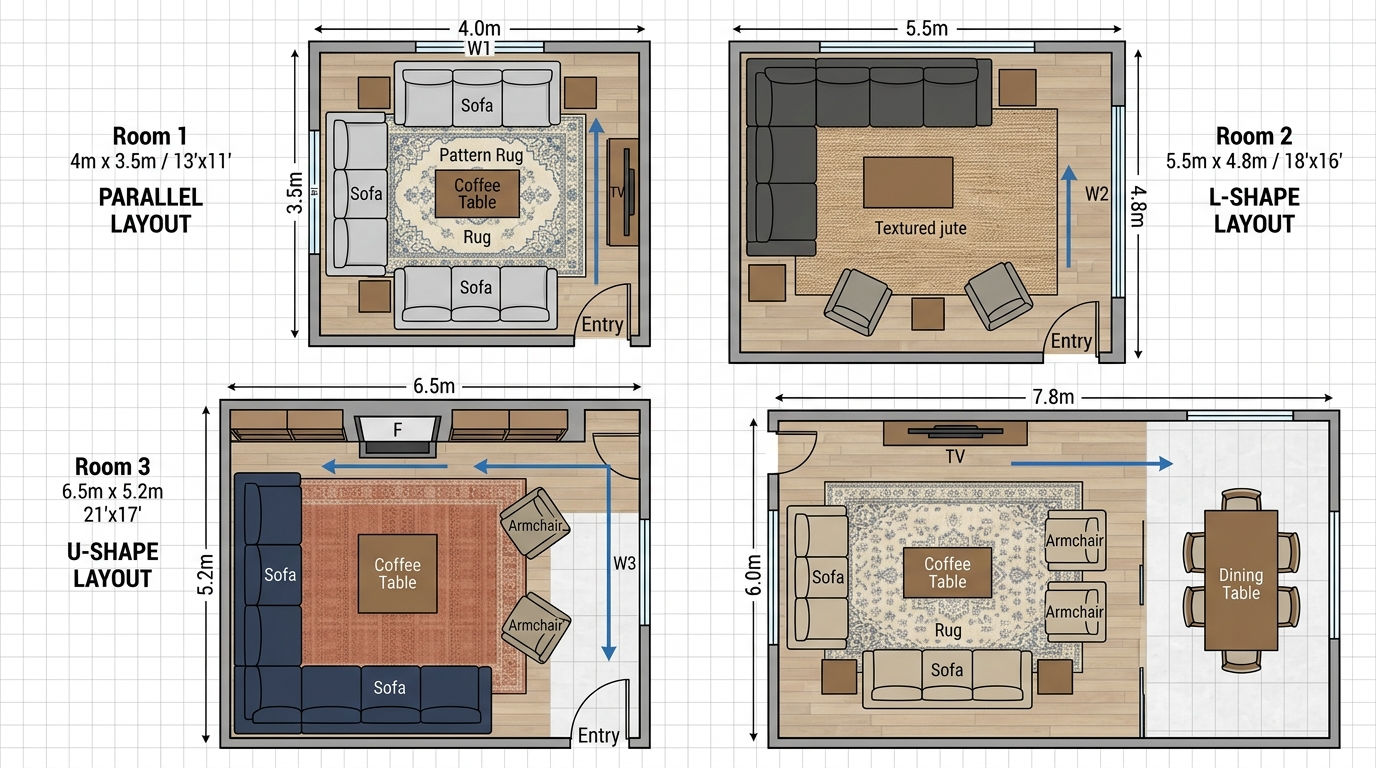
Fix 7: Reposition the Sofa in the Room
This one surprises people — but sofa placement significantly affects how comfortable it feels to use. A sofa in the wrong position in the room encourages awkward postures, poor sightlines, and constant neck strain. None of these are problems with the sofa itself, but they dramatically affect the experience of sitting on it.
Check the Distance from the TV
If you watch television from your sofa, the viewing distance matters for both neck comfort and eye strain. The recommended viewing distance for a standard 55-inch TV is roughly 7 to 8 feet (210 to 240 cm). Sitting closer forces you to look up or turn your neck at an angle; sitting further requires squinting and leaning forward.
If repositioning the sofa closer or further from the screen isn’t possible, consider adjusting the height of the TV instead.
Check the Relationship to Light Sources
A sofa positioned directly in front of a window can be uncomfortable during certain times of day as sunlight hits your face or creates glare on screens. Repositioning at an angle to the window — or adding curtains or blinds to manage the light — can make the same sofa feel much more pleasant to sit on.
Consider the Floor Surface
Sofas on hard floors (timber, tile, stone) can vibrate and shift subtly with movement, which feels subtly unsettling over time. Adding a rug beneath and in front of the sofa not only anchors it visually but dampens vibration and can make the sitting experience noticeably more stable and comfortable.
Fix 8: Upgrade Your Cushions and Throws for Comfort
Sometimes the simplest fixes are the most effective. The cushions and throws you add to a sofa aren’t just decorative — they can meaningfully improve how the sofa feels to sit on.
Add More Cushions for Back Support
Extra cushions placed against the back of the sofa can compensate for back cushions that don’t fill the frame fully. This is particularly useful on sofas with very high backs where a gap exists between the top of the back cushion and the top of the sofa frame.
Fill that gap with cushions — whether decorative or purpose-bought — and you’ll immediately feel more supported when leaning back.
Choose Cushion Fills Wisely
Not all cushions feel the same to lean against. For back cushions, a firmer fill (high-density foam or a foam-and-feather blend) provides better support than soft polyester fill, which collapses without resistance. For seat cushions used as additional layers, a firmer fill again provides more sustained support over longer sitting sessions.
Use a Throw for Temperature Comfort
Temperature comfort is a real and often overlooked aspect of sofa comfort. Leather sofas that feel cold in winter, or fabric sofas in a poorly heated room, are genuinely uncomfortable regardless of their structural qualities.
A good throw — particularly a heavier knit or fleece in winter — addresses this immediately. In summer, a lighter cotton or linen throw can add a layer of comfort between bare skin and certain fabrics that feel warm or slightly abrasive.
Fix 9: Replace the Legs to Adjust Seat Height
Sofa legs are removable on most sofas — and replacing them with taller or shorter legs is a simple modification that can meaningfully change how comfortable the sofa is to use.
When the Sofa Is Too Low
A sofa that sits very low to the ground can be difficult to get out of, particularly for older users or anyone with knee or hip issues. If the sofa is otherwise comfortable but getting up requires significant effort, replacing the legs with taller ones is an effective and often inexpensive fix.
Replacement sofa legs are widely available in a range of heights, styles, and materials. Most attach with a standard screw fitting and require no specialist tools. Raising the seat height by even 2 to 3 inches can make a significant difference to ease of use.
When the Sofa Is Too High
A sofa that’s too tall for a shorter person means their feet may not rest comfortably on the floor, which places strain on the thighs and lower back. Shorter replacement legs address this — or simply ensure there’s a footrest or ottoman in front of the sofa for leg support.
Fix 10: Consider Professional Reupholstering for Structural Issues
If you’ve worked through the fixes above and the sofa still isn’t comfortable — or if the frame itself has shifted, broken, or warped — professional reupholstering or frame repair may be the most cost-effective long-term solution.
A skilled upholsterer can:
- Replace all foam in seat and back cushions to exact specifications
- Repair or replace seat webbing and support structures
- Re-tie spring systems that have loosened or broken
- Reshape the sofa’s profile if the frame has shifted
Reupholstering is not cheap — for a large sofa, it can run to several hundred pounds or dollars — but compared to replacing a sofa you otherwise love, it’s often excellent value. The quality of a reupholstered sofa is frequently better than what was there originally, particularly when working with a specialist who uses quality materials.
Get at least two or three quotes before committing, and ask specifically about the materials being used — foam density, webbing type, and any frame repairs included.
A Quick Diagnostic Guide
Not sure which fix applies to your situation? Use this as a starting point:
Cushions feel flat and lifeless → Rotate cushions, then restuff or replace foam cores (Fix 1)
Whole seat feels saggy and low → Check and repair base webbing, or add plywood board (Fix 3)
Lower back aches after sitting → Add a lumbar cushion, check back cushion positioning (Fix 4)
Sofa feels too hard → Add Dacron layer inside cushion covers, give it time to break in (Fix 5)
Sofa feels too soft, hard to get up → Add plywood base board, replace with firmer foam (Fix 6)
Neck or back aches after watching TV → Check and adjust sofa position relative to screen (Fix 7)
Sofa feels cold in winter → Add a throw and cushions, check room temperature and positioning (Fix 8)
Hard to sit down or get up → Replace legs with taller or shorter options (Fix 9)
Sofa structurally compromised → Get a professional upholsterer’s assessment (Fix 10)
Final Thoughts
A comfortable sofa isn’t an accident — it’s the result of the right materials, the right support structure, and the right relationship between the sofa and the person sitting on it. When that relationship breaks down, the solution is almost never to replace the sofa immediately. It’s to understand what’s gone wrong and apply the right fix.
Most sofa comfort problems are more solvable than they first appear. Flat cushions, sagging bases, poor back support, wrong seat height — all of these have practical, affordable remedies that can be implemented at home without specialist skills or tools.
Start with the simplest fix that matches your diagnosis. Many people find that rotating their cushions, adding a lumbar pillow, and placing a thin foam topper under the seat cushions is all it takes to transform a sofa they were about to give up on into one they’re genuinely happy with.
Your sofa has more life in it than you think. Give it a chance before you replace it.
.

Sarah Rose writes for EcoGardeningHub, sharing eco home decor ideas, sustainable styling tips, and simple ways to create beautiful, nature-inspired living spaces with a mindful, environmentally friendly approach.