What to Look for When Buying a Sofa: 10 Things Every Beginner Should Know
Buying a sofa for the first time feels deceptively simple. You walk in, you sit on something comfortable, you like the color, you buy it. A few months later, the cushions are sagging, the fabric is pilling, and you’re wondering where it all went wrong.
Here’s the truth most furniture stores won’t tell you: sofas are one of the most complex purchases you’ll make for your home. They involve hidden structural decisions, material trade-offs, and sizing calculations that aren’t obvious on the showroom floor. A sofa that looks perfect in the store can feel completely wrong once it’s in your living room — and returning a large piece of furniture is rarely simple or cheap.
The good news? Knowing what to look for before you buy changes everything. This guide walks you through the 10 most important things every first-time sofa buyer should check — so you end up with a piece you’ll genuinely love for years.
1. Measure Everything — Twice
This sounds obvious. It is obvious. And yet it remains the single most common mistake first-time sofa buyers make.
Before you look at a single sofa, grab a tape measure and record three sets of dimensions:
Your room. Measure the total floor area and note where other pieces of furniture sit. A sofa that fills the room wall-to-wall will feel cramped and make the space unusable. As a general rule, leave at least 18 inches between your sofa and the coffee table, and at least 30 to 36 inches for main walkways around the room.
The sofa’s footprint. This means the full width, depth (from front of cushion to back of frame), and height. Don’t just measure the seat — measure the full piece including armrests and any protruding legs. Depth matters more than most people realize: a sofa that’s too deep will throw off the proportions of the entire room.
Your doorways, hallways, and staircases. This step is critical and frequently overlooked. Before you fall in love with any sofa, measure every entry point the sofa has to pass through to reach its destination. Include the height of doorframes, the width of hallways, and the angle of any corners or staircase turns. Many beautiful sofas have ended up stuck in stairwells or returned to the store because the buyer skipped this step.
Pro tip: use painter’s tape on your floor to mark out the sofa’s exact footprint. Live with it for a day before buying. You’ll quickly discover whether the size feels right in the actual space.
2. Understand the Frame — It’s the Skeleton of Everything
The upholstery is what you see. The frame is what determines whether your sofa lasts three years or thirty. Most buyers never think to ask about it.
A sofa frame should be made from kiln-dried hardwood — species like oak, beech, ash, or maple. Kiln-drying removes moisture from the wood, which prevents warping, cracking, and joint separation over time. If a salesperson can’t tell you what the frame is made from, that’s a red flag.
Here’s what to avoid:
Particleboard and MDF — These engineered wood products are cheap, heavy, and structurally weak under the kind of stress a sofa frame endures daily. They don’t hold screws well and tend to fail at the joints first.
Green or unseasoned wood — Wood that hasn’t been properly dried will warp as it loses moisture, causing the frame to twist and the joints to weaken.
Staple-only construction — The joints of a sofa frame should be glued, screwed, and reinforced with corner blocks. Frames held together by staples alone will loosen and wobble far too quickly.
The best way to test a frame in-store: pick up one corner of the sofa a few inches off the ground and let go. A well-built frame will sit flat and steady. A poorly built one may wobble or twist slightly. You can also press down on the arms — they should feel solid and immovable, not flex under pressure.
3. Check the Cushion Fill — Not All Softness Is Created Equal
Soft, inviting cushions are often the first thing that draws you to a sofa. But how a cushion feels on day one tells you almost nothing about how it will feel in two years.
The three most common cushion fills each behave very differently over time:
High-density foam is the workhorse of quality sofa cushions. Look for foam with a density of at least 1.8 pounds per cubic foot — higher density means slower compression and better shape retention. Budget sofas often use low-density foam that compresses and loses its shape within months. Always ask about the foam density if you can.
Foam wrapped in down or feathers combines structure with softness. The foam core keeps its shape, while the down wrap gives it a plush, luxurious feel. This is a popular choice in mid-range to high-end sofas. The trade-off is that down-wrapped cushions tend to need regular fluffing and plumping to maintain their appearance.
Pure down or feather fill is extremely soft and enveloping — the kind of cushion you sink into completely. It’s also the highest maintenance: it requires consistent fluffing, and over time it can flatten and lose volume. If you love the look but not the upkeep, a foam-and-down blend is the smarter compromise.
Loose fill (polyester fiber or shredded foam) is found in the most budget-friendly sofas. It’s soft initially but compresses and lumps quickly. Generally best avoided if longevity is a priority.
When testing cushions in the store, press firmly down on the seat and then let go. Quality foam should spring back within a second or two. If it takes longer, or the indentation lingers, the foam density is likely too low.
4. Choose the Right Upholstery for Your Life
The material covering your sofa isn’t just a style choice — it’s a practical one that will affect your daily life. The right upholstery depends on who you live with, how you use the sofa, and how much time you’re willing to spend on maintenance.
Here’s a quick breakdown of the most common options:
Microfiber and performance fabrics are the most practical choices for busy households. They’re tightly woven, which resists stains and pet hair, and most can be cleaned with water or mild detergent. If you have young children or pets, this category should be your starting point.
Natural fabrics (cotton, linen) are breathable and beautiful, with a relaxed, lived-in quality. The trade-off is vulnerability to staining and fading. They’re best suited to lower-traffic spaces or households without young children and pets.
Leather is exceptionally durable and surprisingly easy to wipe clean. Quality leather develops a rich patina over time and can last decades with proper conditioning. The downsides: it’s expensive, temperature-sensitive (cold in winter, warm in summer), and vulnerable to scratching from pet claws.
Velvet is the most visually stunning option — its pile creates a depth and richness that no flat fabric can match. It’s also the most high-maintenance: it marks from pressure, attracts pet hair, and requires careful cleaning. Best reserved for lower-traffic spaces where aesthetics take priority.
Faux leather is a budget-friendly alternative that’s easy to clean and vegan-friendly. The quality varies enormously — cheaper versions crack and peel within a few years, while better-quality PU leather can hold up reasonably well.
Whatever material you choose, look for a rub count (also called the Martindale or Wyzenbeek count) on the product listing. This measures how many rubs the fabric can withstand before showing wear. For a family sofa, aim for at least 15,000 double rubs. Heavy-duty use calls for 25,000 or more.
5. Think About the Style — And Whether It Fits Your Space
A sofa isn’t just furniture — it sets the visual tone for the entire room. But style is more than just picking something that looks pretty on its own. The key is how it interacts with your existing space.
Consider these questions before committing to a style:
Does the scale match the room? A sprawling sectional can look magnificent in a large, open-plan living area and completely overwhelming in a small apartment. A dainty two-seater can feel elegant in a cozy study and lost in a large room. Scale is everything.
Does it complement your existing pieces? Your sofa will live alongside your coffee table, rug, shelving, and wall art. It doesn’t need to match exactly, but it should belong to the same visual family. A sleek, angular modern sofa will fight against heavily ornate traditional furniture.
Legs matter more than you think. The height and style of a sofa’s legs dramatically affect its visual weight. Tall, tapered legs lift a sofa off the floor and make a room feel airier. Short or absent legs create a grounded, heavier look. Neither is wrong — but they create very different atmospheres.
Consider the silhouette, not just the color. Colors can be repainted, cushion covers can be swapped, and accessories can be changed. The silhouette of the sofa — its overall shape, arm height, back height — is permanent. Prioritize getting the shape right above all else.
Common sofa styles and where they work best:
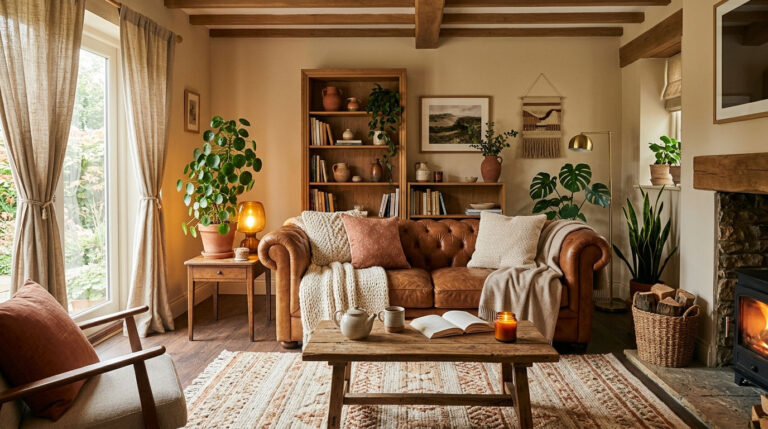
- Chesterfield — Classic, tufted, formal. Works beautifully in traditional, eclectic, or maximalist interiors.
- Mid-century modern — Clean lines, tapered legs, modest depth. Ideal for contemporary and Scandinavian spaces.
- Sectional — Generous, casual, great for families. Needs a large room to avoid feeling overwhelming.
- Lawson / Track arm — Relaxed and versatile. Works in almost any setting, which is why it’s the most common style.
- Camelback — Arched back with a distinctive silhouette. Traditional and formal; a statement piece.
6. Decide Between Fixed and Removable Cushion Covers
This is a small detail with big practical implications — and most first-time buyers don’t think to check it until it’s too late.
Fixed covers are sewn directly onto the cushion and cannot be removed. They’re common on very sleek, structured sofas where the tailored look is part of the design. The downside: if you spill something significant, or if the fabric becomes stained or worn, cleaning or replacing it is much harder.
Removable covers zip off and can be machine washed (check the care label) or taken to a professional cleaner. For families with children or pets, this is a genuine quality-of-life upgrade. Some manufacturers even sell replacement covers, meaning you can change the look of your sofa without buying a new one.
Before you buy, find out whether the cushion covers are removable and, if so, whether they’re machine-washable. It’s the kind of detail that seems trivial until you’re facing a stubborn stain at 10pm.
7. Evaluate Seat Depth and Back Height for Your Body
A sofa can look perfect and still be deeply uncomfortable for your body type. This is one reason why sitting on a sofa in person — before buying — is always preferable to purchasing based on photos alone.
Seat depth is the distance from the front edge of the cushion to the back cushion. Standard seat depth ranges from 20 to 24 inches. Here’s the key: when you sit down, your back should rest comfortably against the back cushion with your feet flat on the floor (or close to it). If the seat is too deep, you’ll either perch at the edge with your back unsupported, or sink back and have your legs sticking out at an awkward angle. If it’s too shallow, taller people will feel cramped.
As a rough guide: shorter people (under 5’4″) tend to prefer seat depths of 20 to 22 inches. Taller people (5’8″ and above) are usually more comfortable with 22 to 24 inches or more.
Back height determines how your neck and shoulders are supported. A high-back sofa provides full head and neck support — great for watching TV or anyone who likes to lean back fully. A low-back sofa creates a more open, casual look and keeps sight lines cleaner in an open-plan space, but offers less support for longer sitting sessions.
Seat height (from floor to top of cushion) affects how easy the sofa is to get in and out of. Standard sofa seat height is around 17 to 18 inches. Lower is more casual and loungy; higher is easier for older users or anyone with knee or hip issues.
Spend at least five minutes sitting on any sofa you’re seriously considering. Sit the way you actually sit at home — curled up, leaning back, whatever your natural posture is. A sofa that feels right immediately is almost always a better choice than one that “looks better” but feels awkward.
8. Think About Long-Term Maintenance and Care
Every sofa requires some level of care. The question is how much you’re willing to commit to — and whether you’ve planned for it before buying.
Here are the maintenance realities of each major material type:
Fabric — Vacuum regularly to prevent dust and debris from embedding in the fibers. Treat stains quickly with the appropriate cleaner (always test on a hidden area first). Some fabrics fade with sun exposure, so consider placement relative to windows.
Leather — Wipe down with a damp cloth regularly. Condition every six to twelve months with a quality leather conditioner to prevent drying and cracking. Keep out of direct sunlight. Treat scratches with leather repair kits.
Velvet — Brush regularly with a soft-bristled brush to maintain the pile and prevent crushing. Blot spills immediately — never rub. Use a velvet-specific cleaner for stains. Steam can help restore crushed pile.
Cushions — Regardless of material, rotate and flip cushions regularly (if reversible) to ensure even wear. Fluff down-filled cushions daily to maintain their shape.
Also check the cleaning code on the product tag or listing:
- W — Clean with water-based cleaners
- S — Solvent-based cleaners only (no water)
- WS — Either water or solvent cleaners are safe
- X — Professional cleaning only; no liquid cleaners
Knowing the cleaning code before you buy helps you assess both the ongoing maintenance demands and the cost of keeping the sofa in good condition.
9. Set a Realistic Budget — And Understand What You’re Paying For
Sofa pricing spans an enormous range, from a few hundred dollars to tens of thousands. Understanding what drives price — and where compromises are acceptable — helps you spend wisely.
Under $500 — At this price point, compromises are inevitable. You may find acceptable sofas in this range, but frame quality, foam density, and fabric durability are likely to be lower. Treat a sofa in this range as a short-term solution (two to five years) rather than a long-term investment.
$500 to $1,500 — This is the sweet spot for most buyers. In this range, you can find sofas with solid hardwood frames, decent foam cushions, and quality upholstery. Many reputable mid-market brands operate comfortably in this bracket.
$1,500 to $3,000 — You start to see significantly better construction, more durable materials, and better craftsmanship. Leather sofas in this range tend to use top-grain leather. Fabric options include higher rub-count performance fabrics.
$3,000 and above — At this level, you’re often looking at handcrafted or semi-custom pieces, full-grain leather, eight-way hand-tied springs, and genuinely heirloom-quality construction. For the right buyer, this is money very well spent.
The general principle: buy the best quality you can afford. A $1,200 sofa that lasts 15 years costs less per year than a $400 sofa you replace every three. Factor in the long-term cost of ownership, not just the sticker price.
Also consider: many higher-end furniture retailers offer financing or payment plans. If the choice is between a low-quality sofa bought outright or a higher-quality one on a sensible payment plan, the latter is almost always the better decision.
10. Research the Brand and Check the Warranty
The furniture industry has a significant number of brands that look impressive in marketing but produce underwhelming products. Before committing to a purchase, spend 20 minutes doing due diligence on the manufacturer.
Read reviews from verified buyers — not the testimonials on the brand’s own website. Look for reviews that mention the sofa after one, two, or three years of use. This is where honest feedback about durability, cushion compression, and fabric wear shows up.
Ask about the warranty. A quality sofa should come with at minimum:
- A frame warranty of 10 years or more (some manufacturers offer lifetime frame warranties)
- A cushion warranty of 2 to 5 years
- A fabric warranty of 1 to 3 years against manufacturing defects
Warranties are about more than just coverage — they’re a signal of how confident the manufacturer is in their own product. A brand that offers only a 1-year warranty on everything is telling you something.
Check the return and delivery policy. Large furniture pieces are expensive and complicated to return. Before you buy, understand the exact policy: Is there a return window? Who pays for return shipping? Is there a restocking fee? What happens if the sofa arrives damaged?
Look for certifications. Reputable manufacturers often have third-party certifications for foam safety (look for CertiPUR-US certified foam, which means the foam has been tested for harmful chemicals), sustainable wood sourcing (FSC certification), or textile safety (OEKO-TEX certification for fabrics).
Bringing It All Together: A Quick Pre-Purchase Checklist
Before you finalize any sofa purchase, run through this checklist:
- Have you measured your room, the sofa’s footprint, and every doorway and hallway it needs to pass through?
- Do you know what the frame is made from, and is it kiln-dried hardwood?
- Have you asked about the foam density in the cushions?
- Is the upholstery material appropriate for your household (pets, kids, allergies)?
- Have you checked the rub count on the fabric?
- Are the cushion covers removable and washable?
- Have you sat in the sofa for at least five minutes to assess seat depth, back height, and overall comfort?
- Do you know the cleaning code and understand the maintenance requirements?
- Is the price in line with the quality of materials and construction?
- Have you read independent reviews and checked the warranty terms?
If you can answer yes to every item on this list, you’re in an excellent position to make a confident, well-informed purchase.
Final Thoughts
Buying a sofa as a beginner doesn’t have to be overwhelming. It just requires asking the right questions — questions that most salespeople won’t volunteer answers to unless you know to ask.
The frame, the foam, the fabric, the fit: these four elements determine whether a sofa becomes a beloved centerpiece of your home or a source of daily frustration. Get them right, and everything else — the color, the style, the accessories — is the enjoyable part.
Take your time. Sit in it. Measure twice. And don’t be afraid to walk away from anything that doesn’t feel exactly right. The perfect sofa is out there. Now you know exactly what you’re looking for.

Sarah Rose writes for EcoGardeningHub, sharing eco home decor ideas, sustainable styling tips, and simple ways to create beautiful, nature-inspired living spaces with a mindful, environmentally friendly approach.