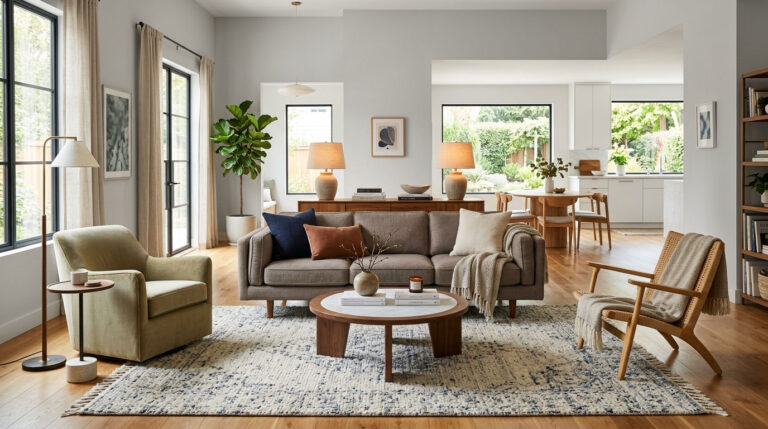
Sofa Materials Guide: Fabric vs Leather vs Velvet – Which Is Right for You?
Buying a sofa is one of the most significant investments you’ll make for your home. It’s the centerpiece of your living room, the seat of family movie nights, lazy Sunday afternoons, and impromptu nap sessions. But while most people spend hours debating color or leg style, the single most important decision — one that affects how your sofa looks, feels, and lasts — is the material.
Fabric, leather, and velvet each bring a completely different personality to a room. They perform differently under pressure, behave differently with pets and kids, and age in strikingly different ways. The wrong choice can mean years of frustration. The right one? A sofa you’ll genuinely love for a decade or more.
This guide breaks down everything you need to know about the three most popular sofa materials, so you can walk into any furniture store (or scroll through any online shop) with total confidence.
Why Sofa Material Matters More Than You Think
Most buyers focus on style first — the silhouette, the color, the legs. Material tends to be an afterthought. But here’s the truth: a beautifully designed sofa in the wrong fabric will disappoint you within a year, while a simple, well-upholstered piece in the right material can look stunning for decades.
Sofa material affects:
- Durability — How well it holds up to daily use, sunlight, and general wear
- Comfort — How it feels against your skin in different seasons
- Maintenance — How easy (or painful) it is to clean
- Aesthetics — The visual texture, sheen, and overall feel it adds to a room
- Cost — Both upfront and long-term
With that in mind, let’s dig into each option.
Fabric Sofas: The Versatile All-Rounder
Fabric sofas are the most common type on the market — and for good reason. The category is enormously diverse, covering everything from sturdy cotton canvas to soft chenille, woven polyester blends, linen, wool, and microfiber. That variety makes fabric sofas adaptable to almost any lifestyle or aesthetic.
Types of Fabric Upholstery
Before comparing fabric to leather or velvet, it’s worth knowing that “fabric” isn’t a single material. Here are the most common options:
Cotton and Linen — Natural, breathable, and comfortable in warm weather. They have a casual, relaxed look. The downside: they wrinkle, stain easily, and tend to pill over time. Best for low-traffic rooms or homes without pets and small children.
Polyester and Microfiber — Synthetic fabrics that are significantly more durable and stain-resistant than natural fibers. Microfiber, in particular, is tightly woven, which makes it hard for dirt and pet hair to penetrate. This is often the best practical choice for busy households.
Blended Fabrics — Many upholstery fabrics combine natural and synthetic fibers to get the best of both worlds: the softness of cotton with the durability of polyester.
Wool and Tweed — Highly durable, warm, and textured. Great for traditional or Scandinavian interiors. Naturally stain-resistant to some degree, though they can attract lint and pet hair.
Pros of Fabric Sofas
Variety is unmatched. Fabric sofas come in virtually every color, pattern, and texture imaginable. If you want a dusty rose floral print or a deep forest green geometric weave, fabric is your best bet. This makes it easy to match existing décor or make a bold statement.
Comfortable in all seasons. Unlike leather, fabric doesn’t become cold and stiff in winter or warm and sticky in summer. It maintains a consistent, neutral temperature against your skin.
Generally more affordable. While high-end fabric sofas can be expensive, the category as a whole offers more entry-level options than genuine leather. You can find a well-made fabric sofa for a fraction of the cost of a quality leather piece.
Softer and more forgiving. Fabric naturally gives and breathes in a way that leather and some velvets don’t, making it especially comfortable for long sitting sessions.
Cons of Fabric Sofas
Stains are a real concern. Many fabrics — especially lighter colors and natural fibers — are vulnerable to spills. Without a protective treatment, a glass of red wine can become a permanent feature of your sofa.
Fading over time. Fabric exposed to direct sunlight will fade. If your sofa is near a window, this is something to plan for.
Pet hair and lint. Certain fabrics — particularly those with looser weaves — are magnets for pet hair, which can be tedious to remove.
Odor absorption. Fabric holds onto smells more readily than leather. In homes with pets or smokers, this can become an issue.
Best For
Fabric sofas work best for people who value comfort, variety, and affordability. They’re ideal for bedrooms, formal sitting rooms, or any space where the sofa isn’t under constant heavy use. Microfiber or performance fabric options make them workable even for families with kids and pets.
Leather Sofas: The Timeless Investment Piece
Leather has been used in furniture upholstery for centuries, and there’s a reason it has never gone out of style. A high-quality leather sofa projects confidence, sophistication, and permanence. It’s the material equivalent of a tailored suit.
Types of Leather
Not all leather is created equal, and understanding the differences will help you avoid overpaying — or being disappointed by a cheaper product.
Full-Grain Leather — The highest quality leather available. Made from the outermost layer of the hide, it retains the natural grain and develops a beautiful patina over time. It’s durable, breathable, and ages magnificently. It’s also the most expensive.
Top-Grain Leather — Slightly more processed than full-grain, with the surface sanded to remove imperfections. Still high quality and more uniform in appearance. Most premium leather sofas use top-grain leather.
Corrected-Grain / Genuine Leather — A lower grade with the surface heavily processed and embossed with an artificial grain pattern. More affordable, but less breathable and less likely to age well.
Bonded Leather — The lowest tier. Made by bonding leather scraps with polyurethane onto a fabric backing. Often peels and cracks within a few years. Avoid it if longevity is a priority.
Faux Leather (PU Leather) — Not real leather at all, but a synthetic alternative that mimics the look. Much cheaper, vegan-friendly, and easier to clean — but it doesn’t breathe and tends to crack over time. Best for budget buyers with ethical considerations.
Pros of Leather Sofas
Exceptional durability. Full-grain and top-grain leather, when properly cared for, can last 20 to 30 years. It resists punctures and abrasion better than most fabrics, and it doesn’t pill or fray.
Easy to clean. Spills sit on the surface of leather rather than soaking in immediately. A quick wipe with a damp cloth takes care of most messes. This makes leather a surprisingly practical choice for messy households.
Ages beautifully. Quality leather develops a patina over time — a rich, slightly worn character that many people find more attractive than the original. The more you use it, the better it looks. Fabric simply can’t do this.
Hypoallergenic. Leather doesn’t trap dust mites, pet dander, or allergens the way fabric does. This is a significant benefit for allergy sufferers.
Timeless style. Leather transcends trends. Whether your interior is mid-century modern, industrial, or classic traditional, there’s a leather sofa that fits.
Cons of Leather Sofas
Temperature sensitivity. This is leather’s biggest drawback. In winter, it’s cold and stiff until it warms up. In summer, it can become uncomfortably warm and sticky against bare skin. This is a serious consideration in hot or very cold climates.
High upfront cost. Quality leather is expensive. A genuine top-grain or full-grain leather sofa is a significant investment, often costing several times more than a comparable fabric piece.
Requires maintenance. Leather needs to be conditioned every 6 to 12 months to prevent drying, cracking, and fading. Skip this step and it will show.
Scratching. Pets with claws can damage leather surfaces. While some marks add to the patina, deep scratches are difficult to repair.
Limited color options. Leather is most commonly available in neutral tones — black, brown, tan, white, gray. Bold colors and patterns are rare and often look forced.
Best For
Leather sofas are ideal for adults-only households, minimalists, allergy sufferers, and anyone who wants a sofa that will genuinely improve with age. They make a particularly strong statement in modern, industrial, or classic traditional interiors. If you’re willing to make the investment and do the maintenance, a leather sofa can be the last sofa you ever buy.
Velvet Sofas: The Bold Statement Maker
Velvet has experienced a dramatic resurgence in recent years, and it’s not hard to see why. Nothing else delivers quite the same sense of luxury, depth, and visual drama. A well-chosen velvet sofa can elevate an entire room from pleasant to extraordinary.
Traditionally, velvet was made from silk — incredibly luxurious, but delicate and expensive. Today, most velvet upholstery is made from cotton, polyester, or a blend. Each has different performance characteristics, but all share velvet’s defining feature: a short, dense pile that creates a distinctive sheen and texture.
Types of Velvet
Cotton Velvet — The most traditional option. Soft, breathable, and rich in texture. It tends to crush and show marks more easily than synthetic options, but many people love the casual, lived-in look this creates.
Polyester Velvet — More durable and stain-resistant than cotton. Holds its pile better and is less prone to crushing. A smart choice for sofas that will see regular use.
Crushed Velvet — The pile is intentionally twisted or pressed in multiple directions to create a shimmery, multidimensional effect. More of a statement piece — not for everyone, but spectacular when it works.
Velvet Blends — A mix of cotton and polyester, aiming to capture the softness of cotton with the resilience of polyester.
Pros of Velvet Sofas
Unrivaled visual impact. Velvet’s pile creates an effect called “luster” — it appears to change color and depth depending on the angle of light and the direction of the pile. No other material does this. In the right room, a velvet sofa is genuinely breathtaking.
Incredibly soft to the touch. Running your hand across a good velvet sofa is one of life’s small pleasures. It’s dense and plush in a way that other fabrics simply aren’t.
Color richness. Velvet saturates color in a way that flat fabrics can’t match. A navy velvet sofa is a completely different proposition from a navy linen sofa. The depth and richness are incomparable. This makes velvet an excellent choice if you want a bold, jewel-toned piece.
Temperature neutral. Like other fabrics, velvet doesn’t get cold in winter or uncomfortably warm in summer. It maintains a comfortable, neutral feel.
Great for formal spaces. In a dining room, library, home office, or formal sitting room, velvet conveys elegance and intentionality.
Cons of Velvet Sofas
Marks easily. This is velvet’s most significant practical drawback. Because velvet has a pile, pressure — from sitting, leaning, or even brushing — leaves visible marks. These marks often disappear with a gentle brush or steam, but it requires attention. In high-traffic areas, this can feel like a constant battle.
Difficult to clean. Water can stain velvet if applied incorrectly, creating watermarks. Most velvet upholstery should be cleaned with a dry or specialist method. Spills need to be blotted immediately and carefully.
Not ideal for pets. Pet hair clings to velvet’s pile aggressively, and claws can snag or damage it. If you have cats or dogs, velvet requires extra vigilance.
Can feel heavy in small or casual spaces. Velvet has a formality and weight to it that can feel out of place in relaxed, casual, or minimalist interiors. Context matters a great deal.
Fading. Like other fabrics, velvet is vulnerable to sun fading, especially in rich, saturated colors. Keep it away from direct sunlight.
Best For
Velvet sofas shine in formal rooms, bedrooms, home offices, and reading nooks — spaces where aesthetics take priority over heavy practical use. They’re a perfect choice for design-conscious buyers who want to make a statement and are willing to put in a little extra care. In pet-free, lower-traffic environments, a velvet sofa can be the most stunning piece in the room.
Head-to-Head Comparison: Fabric vs Leather vs Velvet
To make the choice clearer, here’s a direct comparison across the most important criteria:
Durability
Leather wins. Quality leather outlasts both fabric and velvet by a significant margin. Fabric comes second — microfiber and synthetic blends hold up very well. Velvet, particularly cotton velvet, is the most delicate of the three.
Ease of Cleaning
Leather wins again. Spills wipe off with minimal effort. Fabric — especially microfiber — is a close second. Velvet is the most demanding to clean properly and is least forgiving of spills.
Comfort
Fabric and velvet tie. Both are soft, temperature-neutral, and pleasant against bare skin. Leather is comfortable too, but its temperature sensitivity gives it a disadvantage.
Aesthetic Impact
Velvet wins. Nothing creates quite the same visual drama. Leather comes second for its timeless elegance. Fabric offers the most variety, but individual pieces rarely have the visual impact of a well-chosen leather or velvet sofa.
Maintenance
Leather is the easiest day-to-day, though it requires periodic conditioning. Fabric and microfiber are low-maintenance choices too. Velvet requires the most consistent attention.
Pet-Friendliness
Microfiber fabric wins. Its tight weave resists pet hair and claw damage. Leather is a mixed bag — easy to clean, but vulnerable to scratching. Velvet is the least pet-friendly option.
Value for Money
Fabric offers the best value at most price points. Leather is a better long-term investment if you can afford the upfront cost. Velvet sits in the middle — premium in feel, moderate in price.
How to Choose: Matching Material to Your Life
The right material depends entirely on your specific circumstances. Here are some practical scenarios to guide your decision:
If you have young children: Look for performance fabric or microfiber. Choose a medium tone — neither too light (shows every mark) nor too dark (shows dust and pet hair). Consider a sofa cover or choose an option with removable, washable covers.
If you have pets: Microfiber fabric is your safest bet. Leather can work if your pets don’t have claws, but is risky otherwise. Avoid velvet entirely unless you’re committed to constant maintenance.
If you live alone or with a partner and prioritize style: This is where leather or velvet can truly shine. Without the daily pressures of kids and pets, you can afford to prioritize aesthetics and choose the material that makes your heart sing.
If you have allergies: Leather is the clear winner. It doesn’t trap allergens, dust mites, or pet dander the way fabric and velvet do.
If you’re on a budget: Fabric offers the widest range at every price point. A quality microfiber sofa can look and perform beautifully without breaking the bank.
If you’re a design enthusiast: Consider velvet in a jewel tone (deep emerald, sapphire blue, dusty pink) for a sofa that becomes the focal point of the entire room.
If you want a forever sofa: Invest in full-grain or top-grain leather. It will outlast anything else and look better as it ages.
Tips for Buying Any Sofa
Regardless of which material you choose, a few universal principles apply:
Always sit in it before you buy. Photos can be deceiving. The way a sofa feels in person — the depth of the seat, the firmness of the cushions, the angle of the back — matters enormously.
Check the frame. The best upholstery in the world won’t save a sofa with a weak frame. Look for kiln-dried hardwood (oak, beech, or ash) and avoid frames made from particleboard or stapled corners.
Ask about the fill. High-quality cushions use high-density foam, sometimes wrapped in down or feather for a plush feel. Lower-density foam compresses quickly and loses its shape.
Consider custom upholstery. Many furniture makers offer made-to-order sofas in the fabric of your choice. This gives you far more control over quality and color than buying off-the-shelf.
Read the care label. Look for the cleaning code. “W” means water-safe. “S” means solvent-only. “WS” means both work. “X” means professional cleaning only. This tells you a lot about how practical the material is before you commit.
Final Verdict
There’s no single “best” sofa material — the right choice depends entirely on how you live, what you value, and what kind of space you’re furnishing.
Choose fabric if you want versatility, comfort, and good value. Go for microfiber if practical concerns top your list.
Choose leather if you want longevity, ease of cleaning, and timeless style — and you’re ready to invest both financially and in regular maintenance.
Choose velvet if aesthetics are your priority and you’re willing to treat your sofa with a little extra care. The payoff — in terms of sheer visual impact — is genuinely unmatched.
Whatever you decide, buy the best quality you can afford within your chosen category. A sofa is a daily-use piece of furniture, not a decorative object. The right one will make your home feel more comfortable, more beautiful, and more like you — for years to come.

Sarah Rose writes for EcoGardeningHub, sharing eco home decor ideas, sustainable styling tips, and simple ways to create beautiful, nature-inspired living spaces with a mindful, environmentally friendly approach.