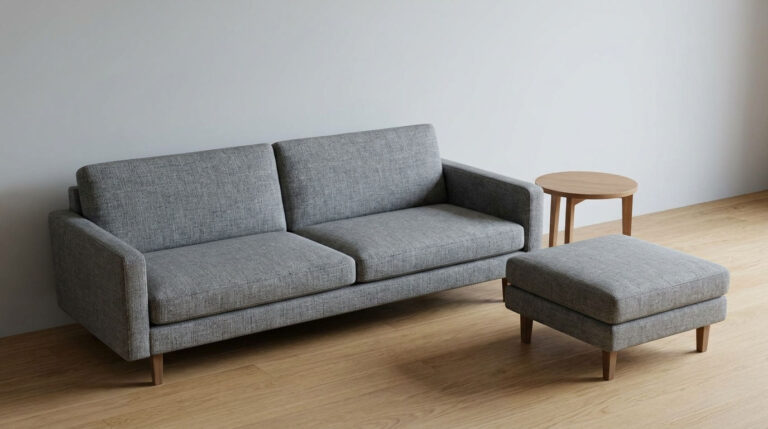
How to Choose the Right Sofa for Your Living Room: A Complete Beginner’s Guide
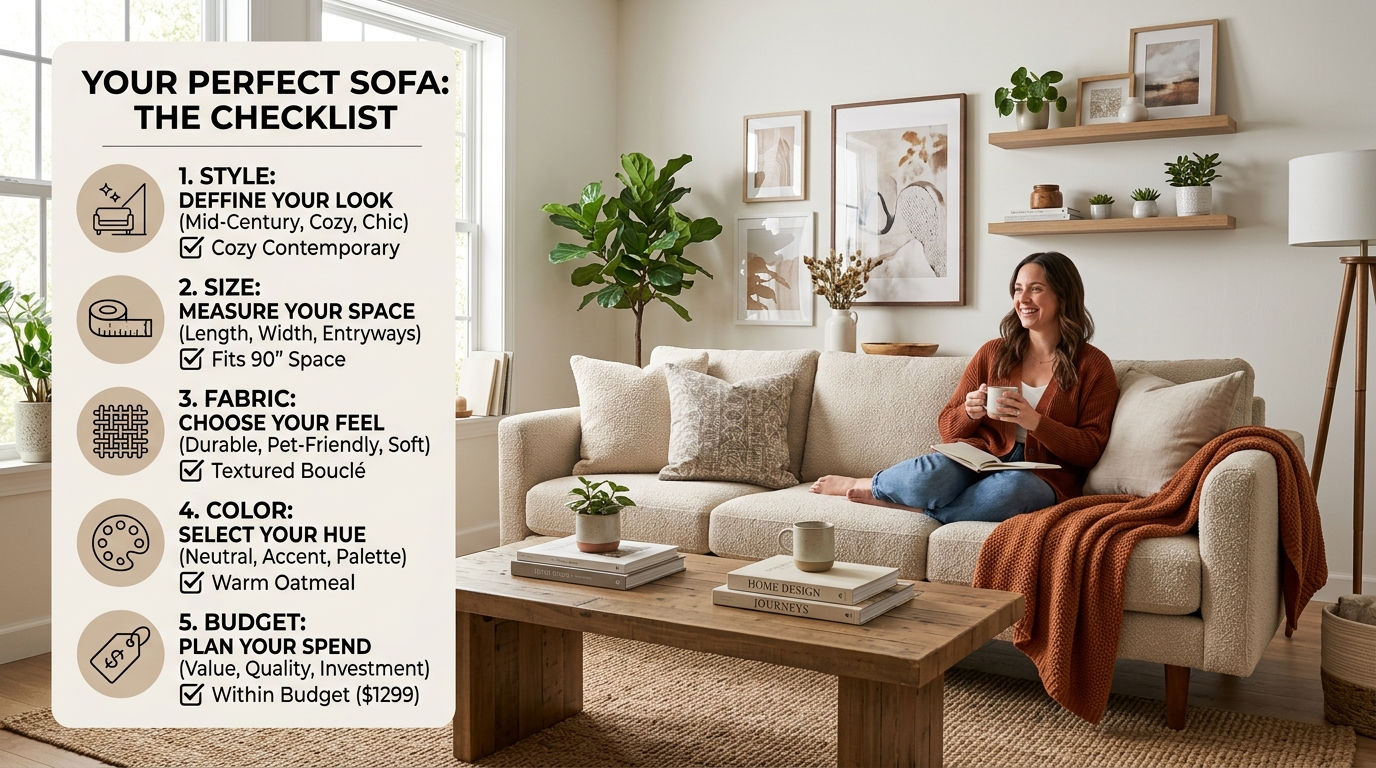
Choosing a sofa should be exciting. It is one of the few furniture purchases where you get to combine practicality with genuine personal expression — a piece that will anchor your living room, shape how the space feels, and be used every single day for years to come.
And yet, for most people, the process is quietly stressful. There are too many options, too many variables, and too much riding on the decision to feel entirely confident. Buy the wrong sofa and you will be living with that mistake for a long time.
This guide exists to take the guesswork out of it. Step by step, it will walk you through every decision you need to make — from measuring your room and choosing the right size, to picking the best fabric for your lifestyle and understanding what actually makes a sofa worth the money. By the end, you will know exactly what you are looking for and why.
Step 1: Start With Your Room, Not the Sofa
The most common sofa-buying mistake is falling in love with a sofa before measuring the room it needs to fit in. This leads to sofas that are too large, too small, or positioned awkwardly because there was no other option.
Start with your room. Always.
Measure the space accurately
Before you look at a single sofa, grab a tape measure and note down the following:
- The full length and width of the room
- The width and height of every doorway, hallway, and staircase the sofa will need to travel through on delivery day
- The position of windows, radiators, plug sockets, and any built-in features
- The dimensions of your existing furniture — especially your TV unit, coffee table, and any armchairs
Identify the sofa zone
In most living rooms, the sofa does not fill the entire room — it occupies a defined seating zone. If you use a rug to anchor that area, measure the rug space. That is the zone your sofa needs to work within.
Allow for walkways
Leave a minimum of 75 cm to 90 cm of clear space between the sofa and any adjacent wall, furniture, or high-traffic pathway. This is the minimum comfortable clearance for walking through without squeezing. In busy family homes, aim for 90 cm or more.
Use masking tape on the floor
Once you have a rough idea of sofa size, use masking tape to mark out its exact footprint on your floor. Live with those markings for a day. Walk around them, sit in the area, see how the space feels. It is the simplest and most effective way to test a sofa size before committing.
Step 2: Choose the Right Sofa Size
Once you know your room’s dimensions and have defined the seating zone, you can begin thinking about sofa size in a more informed way.
Standard sofa sizes at a glance
| Sofa Type | Typical Width | Seats |
|---|---|---|
| Loveseat | 120–150 cm | 2 (intimate) |
| 2-Seater | 130–180 cm | 2 |
| 3-Seater | 175–230 cm | 3 |
| 4-Seater | 230–270 cm | 4 |
| L-Shaped / Corner | 220–300 cm per arm | 4–6+ |
| U-Shaped | 300+ cm | 6–8+ |
The two-thirds rule
One of the most reliable guidelines in interior design is the two-thirds rule: your sofa should ideally take up no more than two-thirds of the wall it sits against. So if your wall is 360 cm wide, your sofa should be no wider than roughly 240 cm. This leaves breathing room on either side and keeps the room feeling balanced rather than blocked.
Do not ignore depth
Width gets all the attention when it comes to sofa size, but depth is equally important. A sofa that is 100 cm deep will eat into your floor space significantly more than one that is 85 cm deep, even if the width is identical. In smaller rooms, prioritise a shallower depth to preserve as much floor space as possible.
Seating capacity vs comfort
A sofa labelled as a 3-seater may technically seat three adults, but the actual experience of sitting three across depends heavily on the seat width and arm design. If you regularly need to seat three comfortably, measure the total seat width (the distance between the inner edges of the arms) and divide by three. Anything below 50 cm per person will feel snug.
Step 3: Decide on the Right Sofa Type for Your Lifestyle
The shape and configuration of your sofa should be driven by how you actually live — not just how the room looks on a mood board.
For small rooms and apartments
A compact 2-seater or loveseat is the obvious starting point, but do not automatically assume smaller is always better. A sofa that is too small can make a room look sparse and unresolved. In small rooms, focus on getting the proportions right rather than simply going as small as possible.
Modular sofas are worth considering for smaller homes, particularly for renters. They are delivered in sections (making narrow doorways and tight staircases far easier to navigate) and can be reconfigured as your life or living situation changes.
For families with children
Prioritise durability, ease of cleaning, and generous seating capacity. A large 3-seater, a corner sofa, or a sectional will give everyone enough room without the sofa feeling overwhelmed.
Avoid light-coloured fabrics unless you choose a performance fabric specifically designed to resist stains. Fixed upholstery tends to be harder to clean than removable covers — more on this in the fabric section below.
For people who host frequently
If you regularly have guests to stay overnight, a sofa bed is worth serious consideration. Quality varies enormously, so prioritise the mattress thickness and mechanism. A pull-out sofa bed with a proper mattress will make a guest comfortable; a click-clack fold-flat mechanism on a thin cushion will not.
For homes that host large groups for evenings and gatherings, a U-shaped or large sectional configuration provides the most seating and naturally creates a conversation-friendly layout.
For people living alone or as a couple
You have the most flexibility. A well-chosen 2-seater or 3-seater will suit most everyday needs, and you can prioritise design and aesthetic more freely without needing to balance the preferences of a larger household.
For home cinema or TV rooms
Comfort above all else. Deep-seat sofas, recliners, or chaise-end configurations are designed for extended periods of sitting and will significantly outperform more formal, upright styles for this purpose.
Step 4: Choose the Right Fabric and Upholstery
Fabric choice is where practical needs and personal taste intersect most directly. The wrong fabric for your lifestyle will leave you with a sofa that looks tired, stained, or worn within a few years. The right one will age gracefully and stay looking good for a decade or more.
Fabric (Woven Textiles)
Woven fabric is the most popular sofa upholstery choice. It comes in an enormous variety of textures, patterns, and finishes — linen, cotton blends, velvet, boucle, chenille, and more.
Velvet is luxurious, soft, and visually striking. It works beautifully in formal or maximalist interiors. It is less practical for homes with pets (it attracts hair) or young children (it marks easily with moisture), but it is more durable than many people expect and tends to recover well from light crushing.
Boucle is having a significant moment in interior design. Its looped, textured surface adds warmth and tactile interest to any room. It is reasonably durable but can snag and pill over time, particularly with pets in the house.
Linen and cotton blends offer a relaxed, natural look and feel. They breathe well and suit casual, organic interiors. They do crease and can mark with liquids, so they require more care than synthetic alternatives.
Performance fabrics (often polyester blends or treated weaves) are the most practical choice for family homes. They are engineered specifically to resist stains, moisture, and wear, and many are indistinguishable from natural fabrics in appearance and feel. If you have children, dogs, or a history of spills, start here.
Leather and Faux Leather
Leather is one of the most durable upholstery options available. Genuine leather develops a patina over time, becoming more characterful with age rather than looking worn. It is easy to wipe clean, resistant to liquid absorption, and exceptionally long-lasting in quality grades.
The trade-off is cost — quality leather sofas are expensive — and temperature. Leather can feel cold in winter and warm in summer, which some people find uncomfortable.
Faux leather (also called PU leather or vegan leather) offers the look at a lower price point, but it does not age in the same way. Cheaper faux leather can crack and peel over time, so look for higher-quality versions if you want longevity.
What to Consider Before Choosing a Fabric
Ask yourself these questions before deciding:
- Do you have pets? If yes, avoid velvet and boucle, and look for tight weaves or leather.
- Do you have young children? If yes, prioritise performance fabrics or leather, and consider removable, machine-washable covers.
- Do you eat or drink on the sofa? If yes, stain resistance is non-negotiable.
- How much sunlight does your living room get? Fabrics in direct sunlight will fade. Darker colours and fade-resistant fabrics are worth considering for south-facing rooms.
- Do you run hot or cold? Leather and velvet retain temperature; linen and cotton breathe more freely.
Step 5: Understand Sofa Construction and Quality
A sofa’s appearance can be deceiving. Two sofas that look almost identical from the outside can have very different lifespans depending on what is inside them. Understanding the basics of sofa construction will help you identify quality before you commit.
The Frame
The frame is the skeleton of the sofa and the foundation of its longevity. Kiln-dried hardwood (typically beech or oak) is the gold standard. It is strong, resistant to warping, and capable of lasting 15 to 20 years or more with proper care.
Softwood frames are less durable and more prone to warping. Plywood and engineered wood are used in mid-range sofas and are adequate for most everyday use, but will not outlast solid hardwood. Avoid sofas with plastic or metal frames unless the design specifically calls for it and quality is confirmed by the manufacturer.
When testing a sofa in a showroom, lift one front leg a few inches off the floor. If the opposite rear leg lifts at the same time, the frame is well constructed. If the frame flexes or twists, the joinery is weak.
The Suspension
The suspension system sits across the frame and supports the seat cushions. There are two main types:
Sinuous spring (S-springs or zigzag springs) run in an S-shape across the seat. They are used in most mid-range sofas and provide good support and durability at a reasonable cost.
Eight-way hand-tied coil springs are considered the highest quality suspension method. Each individual coil spring is hand-tied in eight directions, creating a deeply supportive, resilient seat. Sofas with this construction are more expensive but significantly more comfortable and longer-lasting.
Webbing is also used in some lower-cost sofas. It provides basic support but tends to sag over time, particularly in the seat centre.
The Cushion Fill
The material inside the cushions affects both comfort and how well the sofa holds its shape over time.
High-density foam provides firm, supportive seating that holds its shape reliably. It is practical and durable, though some people find it less plush than softer alternatives.
Foam with a fibre wrap adds a layer of soft polyester fibre around a foam core, combining support with a softer surface feel. This is one of the most popular choices in mid-range sofas.
Feather and down filling creates an exceptionally luxurious, soft seat. However, feather cushions require regular plumping to maintain their shape and can feel uneven if neglected. They are best suited to sofas that are used by adults who are willing to maintain them.
Memory foam conforms to the body’s shape and provides excellent pressure relief. It is often found in higher-end sofas and sofa beds.
Step 6: Think About Comfort Before You Think About Style
It is very easy to be seduced by a sofa’s appearance and overlook how it actually feels. A sofa that looks stunning but is uncomfortable to sit on for more than twenty minutes is a poor investment.
When you test a sofa — in a showroom or, if buying online, as soon as it arrives — pay attention to these things:
Seat height. The ideal seat height allows your feet to rest flat on the floor with your knees at roughly a 90-degree angle. Sofas that are too low make it hard to get up; sofas that are too high leave your legs dangling.
Seat depth. Deep seats (95 cm or more) encourage lounging and feel relaxed but can be uncomfortable if you prefer to sit upright. Shallower seats (around 80 to 85 cm) are better for sitting upright, reading, or working from the sofa.
Back support. Sit against the back and notice where it hits your spine. A well-designed sofa back should support the lumbar region naturally. If you feel unsupported or have to lean forward to be comfortable, the sofa is not right for your body.
Arm height. Armrests that are too high force your shoulders up; armrests that are too low provide no support. Ideally, the arm height should allow your arm to rest comfortably with your shoulder relaxed.
Sit in it for at least ten minutes. Do not just perch. Sit fully, shift position, lie across it briefly if you plan to do that at home. A sofa that feels fine for thirty seconds may reveal its flaws after five minutes.
Step 7: Choose a Style That Suits Your Interior
Once the practical decisions are made — size, type, fabric, construction — you can turn your full attention to style. At this point, you will likely have a much shorter list of options, which makes the aesthetic choice considerably easier.
Match the sofa to the room’s existing tone
Consider the overall feel of your living room. Is it formal or casual? Minimal or maximalist? Modern or traditional? Light and airy or warm and rich?
Your sofa should feel like a natural extension of that existing tone — not a jarring contrast to it. A deeply tufted Chesterfield in oxblood leather will feel odd in a bright Scandinavian-inspired room. A low-profile modular in pale boucle will look lost in a dark, maximalist interior.
This does not mean the sofa has to blend into the background. A statement sofa in a bold colour or distinctive silhouette can be a deliberate and beautiful design choice. But it should be a considered one.
Neutral vs statement
Neutral sofas — in beige, grey, cream, oatmeal, or taupe — are the safe and enduring choice. They are easy to live with, easy to restyle around, and tend to date less quickly than bolder options.
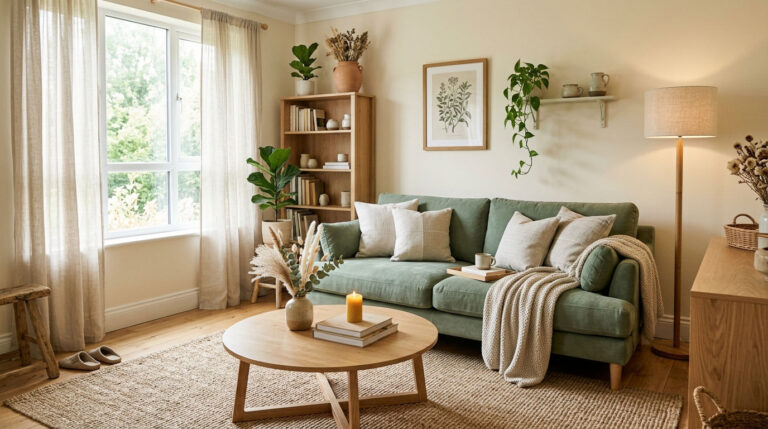
Statement sofas — in forest green, deep teal, rich terracotta, blush pink, or midnight blue — can transform a room and give it real personality. The risk is that your taste may change, or the colour may feel limiting when you want to update cushions, rugs, or curtains. Mitigate this by choosing a statement colour you genuinely love and have loved consistently for years rather than one you are currently excited about.
Consider the sofa’s legs
Sofa legs have a significant impact on how the overall piece looks and feels in a room. Legs that raise the sofa off the floor create a lighter, more airy feel — particularly valuable in smaller rooms where visible floor space makes the room feel larger. Sofas that sit close to the floor or have no visible legs feel heavier and more grounded, which suits larger, more formal spaces.
Step 8: Set a Realistic Budget
Sofa prices vary enormously — from a few hundred pounds for a flat-pack option to tens of thousands for bespoke, handmade pieces. Understanding what different price points actually get you will help you make a more informed decision about where to spend.
Budget sofas (under £500)
At this price point, construction will inevitably involve compromises. Frames may be softwood or engineered wood, suspension may be webbing or basic springs, and fabrics may be lower-grade polyester blends. This does not mean budget sofas are worthless — a well-chosen budget sofa from a reputable brand can last several years and look perfectly presentable. But go in with realistic expectations.
Mid-range sofas (£500–£1,500)
This is where the quality picture improves significantly. Hardwood or plywood frames become more common, suspension systems are more robust, and fabric choices are wider and of better quality. Many excellent, long-lasting sofas live in this price bracket.
Upper-mid and premium sofas (£1,500–£4,000)
At this level, you are looking at solid hardwood frames, quality coil spring or sinuous spring suspension, high-density foam with fibre wrapping, and fabric options including genuine leather, velvet, and premium performance weaves. These sofas are built to last 10 to 15 years with normal use.
Luxury and bespoke (£4,000+)
Handmade construction, eight-way hand-tied springs, the finest materials, and in many cases full customisation of dimensions, fabric, and finish. These are investment pieces.
A note on cost-per-year
It is worth thinking about sofa cost in terms of years of use rather than upfront price. A £300 sofa that lasts 3 years costs £100 per year. A £1,200 sofa that lasts 12 years costs £100 per year too — but with significantly better comfort and aesthetics throughout. In most cases, spending more upfront on a better-quality sofa is the more economical decision in the long run.
Step 9: Think About Practicalities Before You Order
Before placing your order, run through this final checklist to avoid common but costly oversights.
Delivery access
Measure every point between your front door and your living room — doorways, hallways, stair widths, landing turning radii. The diagonal depth of the sofa (the measurement from one corner to the opposite corner when tilted) is usually the critical figure for navigating tight turns. Ask the retailer for this measurement if it is not listed.
If you live in a flat above ground floor level or have particularly narrow access, contact the retailer before buying to confirm the delivery is feasible.
Lead times
Many sofas, particularly those ordered in a specific fabric or configuration, are made to order and can take 8 to 16 weeks to arrive. Factor this into your timeline if you are furnishing a new home or working to a deadline.
Trial periods and returns
Some retailers offer a home trial period — typically 30 to 100 days — during which you can return the sofa if it is not right. This is particularly valuable when buying online, where you cannot test the sofa before it arrives. Always check the returns policy before ordering.
Warranty
Quality sofas should come with a warranty of at least 1 year, and many reputable manufacturers offer 5, 10, or even 25-year frame guarantees. Check what is covered — frame, springs, foam, fabric — and for how long.
Common Sofa-Buying Mistakes to Avoid
Buying without measuring. The most frequent and most preventable mistake. Always measure first.
Prioritising looks over comfort. A sofa you cannot comfortably sit in for an hour is a failed purchase, no matter how beautiful it is.
Choosing fabric without considering your lifestyle. White linen in a house with three children and a Labrador is optimism bordering on delusion. Be honest with yourself.
Not thinking about delivery access. Many buyers discover on delivery day that the sofa cannot get through the front door. Measure every access point in advance.
Rushing the decision. A sofa is a significant investment that you will use every day for years. Take your time, visit showrooms, sit on as many sofas as you can, and do not let yourself be pressured by a sale deadline.
Buying the floor model without checking condition. If you buy a showroom sample, inspect it thoroughly for wear, staining, or structural issues before agreeing to the sale.
Your Sofa-Buying Checklist
Use this checklist to make sure you have covered every key decision before purchasing:
- Room measured, including doorways and access routes
- Sofa zone defined and masking tape test completed
- Sofa width chosen in line with two-thirds rule
- Sofa depth appropriate for room size and lifestyle
- Sofa type matched to how you actually use the space
- Fabric chosen based on lifestyle and maintenance willingness
- Frame, suspension, and cushion fill assessed
- Sofa tested for comfort in a showroom (or return policy confirmed for online purchases)
- Style consistent with the room’s overall aesthetic
- Budget set and cost-per-year considered
- Delivery lead time and access confirmed
- Warranty and returns policy checked
Final Thoughts
Choosing the right sofa is less about finding the most beautiful piece in the showroom and more about making a series of clear-headed decisions — about your room, your lifestyle, your budget, and your priorities.
When those decisions are made well, the beautiful sofa tends to follow naturally. You will find yourself drawn to pieces that genuinely work for your life rather than ones that simply caught your eye in a photograph.
Take your time, measure carefully, test thoroughly, and invest as much as you reasonably can in quality construction. A sofa chosen well is one of the most satisfying purchases you can make for your home — one that will serve you every single day for years to come.

Sarah Rose writes for EcoGardeningHub, sharing eco home decor ideas, sustainable styling tips, and simple ways to create beautiful, nature-inspired living spaces with a mindful, environmentally friendly approach.