How to Decorate an Attic Bedroom with Slanted Ceiling and Low Walls (Complete Guide)
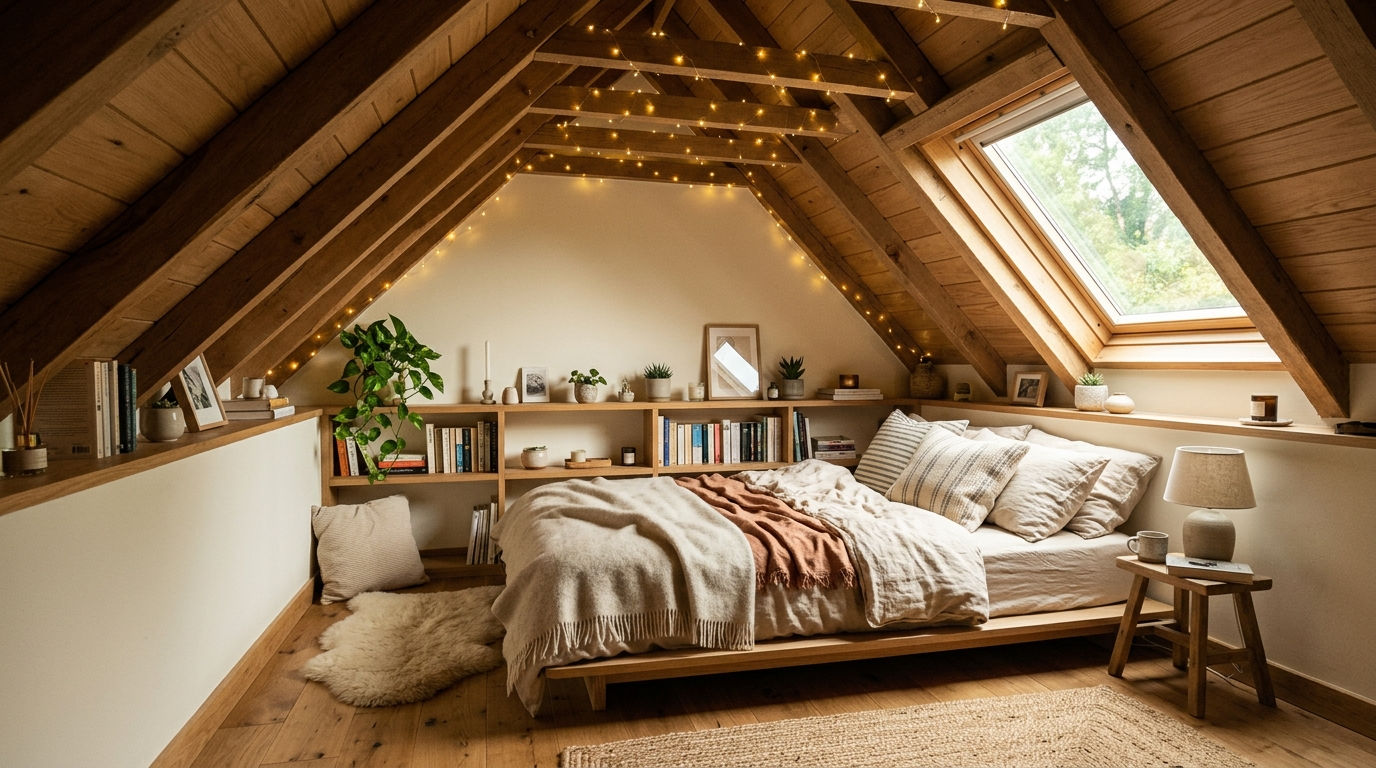
Attic bedrooms come with a distinctive architectural personality: sloped rooflines, knee walls that barely reach your waist, and ceiling angles that no standard decorating rulebook seems to address. But here’s the truth most interior designers know — those very “flaws” are the room’s greatest assets. When you stop fighting the slants and start designing with them, an attic bedroom becomes one of the most intimate, character-rich spaces in any home.
This guide covers everything you need to know, from furniture placement and storage hacks to lighting tricks and color strategies, so you can make the most of every angular inch.
Understanding the Unique Challenges of Attic Bedrooms
Before you pick up a paintbrush or order furniture, it helps to understand exactly what you’re working with. Attic bedrooms typically present three interconnected challenges:
Slanted ceilings follow the pitch of the roof, which means ceiling height varies dramatically across the room. You might have eight feet of clearance in the center but only four feet at the edges.
Low knee walls are the short vertical walls (usually two to four feet tall) that run along the sides of the room before the ceiling begins its slope. These are often the most underused spaces in the home.
Irregular floor plans frequently accompany sloped rooms — dormer windows, support beams, and awkward corners are common. Standard furniture arrangements rarely work as intended.
The good news: every one of these challenges has a design solution. Better yet, they often unlock decorating possibilities that flat-ceilinged rooms simply can’t offer.
Strategic Furniture Placement: Work With the Angles, Not Against Them
Place the Bed Under the Peak
The single most important furniture decision in a sloped-ceiling bedroom is where to put the bed. The answer is almost always: directly under the highest point, which is typically the center of the room along the ridge line.
Positioning the headboard against the wall under the peak gives you the maximum vertical clearance where you need it most — when you’re sitting up in bed. It also creates a natural focal point and a sense of shelter, almost like sleeping in a canopy without the fabric.
If your room has a dormer window, placing the bed inside or facing the dormer is an equally powerful option. The alcove-like effect feels intentional and cozy rather than cramped.
Keep Low-Profile Furniture Along the Sloped Walls
Reserve the areas where the ceiling drops for furniture that doesn’t require standing clearance. Platform beds, low dressers, storage benches, and daybeds work beautifully along knee walls and sloped sections. A rule of thumb: if you don’t need to stand next to it to use it, it can go under the slope.
Avoid placing tall wardrobes or bookshelves where the ceiling is low — not just for practical reasons, but because tall pieces in low spaces create visual tension that makes the room feel more cramped, not less.
Use Modular and Custom-Scaled Pieces
Standard furniture dimensions are designed for eight-foot ceilings. In an attic, slightly scaled-down pieces often look and function better. A bed frame that sits six inches lower to the ground, a nightstand that’s just a touch shorter, a dresser that’s long rather than tall — these proportional adjustments make the space feel considered and harmonious rather than accidentally squeezed.
Mastering Built-In Storage for Low Walls and Knee Walls
Knee walls are arguably the most valuable real estate in an attic bedroom, and most people leave them completely blank. Don’t.
Built-In Drawers and Cabinets
The space behind knee walls is typically accessible and structurally sound — perfect for recessed storage. A carpenter can build pull-out drawers or hinged cabinet doors directly into the knee wall, giving you dresser-level storage without consuming a single square foot of floor space. This is ideal for clothing, bedding, seasonal items, and anything else you’d normally store in a chest of drawers.
Reading Nooks and Alcove Seating
Where the ceiling meets the knee wall, you have a natural alcove. Add a cushioned bench with storage underneath and you’ve created one of the most desirable spots in the entire home — a window seat, a reading nook, a morning coffee perch. Add a single sconce or pendant light above it, and the nook becomes its own destination.
Floating Shelves at Sloped Heights
Rather than trying to fit standard shelving units against sloped walls, use floating shelves mounted at angles that follow the pitch of the ceiling. This technique looks intentional and architectural, and it keeps books, plants, and decorative objects visible without fighting the geometry.
Lighting an Attic Bedroom: Layers Are Everything
Attic rooms are particularly sensitive to lighting because the unusual geometry can create deep shadows in corners and under eaves. A single overhead fixture will never be enough.
Embrace Recessed Lighting Along the Slope
Recessed can lights installed directly into sloped ceilings are one of the cleanest solutions available. They sit flush with the surface, eliminate the visual clutter of hanging fixtures, and can be angled to direct light where you need it. Use them to wash the walls with light, which visually expands the space.
Add Sconces at Knee-Wall Height
Wall sconces installed at knee-wall level serve double duty: they provide reading and ambient light, and they draw the eye downward, which paradoxically makes low-ceilinged spaces feel more expansive and intentional. Choose sconces with adjustable arms for maximum flexibility.
Use Floor and Table Lamps Strategically
Tall floor lamps belong in the center of the room where the ceiling is highest. At the room’s lower edges, table lamps or small rechargeable lamps on low nightstands are more proportionate. The layering of light at different heights creates warmth and dimension that a single overhead source never can.
Consider Rope Lights or LED Strips
LED strip lighting installed along the ridge beam, tucked under a shelf, or running along the base of a knee wall creates an ambient glow that makes the architecture feel deliberate and dramatic. It’s especially effective in the evening and works beautifully in teen bedrooms or cozy adult retreats alike.
Color Strategy: How to Make Low Ceilings Feel Taller
Color is one of the most powerful and affordable tools in an attic bedroom, and the rules here differ significantly from conventional rooms.
Paint the Ceiling and Walls the Same Color
This is the single most effective trick for making a sloped room feel larger and more cohesive. When the ceiling is a different color from the walls, your eye reads the boundary between them — and that boundary is irregular, which emphasizes the room’s awkward angles. When everything is one continuous color, the room reads as a unified volume rather than a collection of awkward planes.
Light, warm neutrals work exceptionally well: soft whites, warm creams, pale greiges, and dusty sage. Cool grays can work but tend to feel cold in small spaces.
Use Dark Colors to Create Intimacy (When That’s the Goal)
Counterintuitively, a very deep color — a moody navy, a forest green, a charcoal — painted ceiling-to-floor can make a low attic room feel deliberately cozy rather than cramped. This approach works best when the room has good natural light and you’re leaning into the intimate, cabin-like quality of the space rather than trying to visually expand it.
Keep the Floor Light If You Want Visual Height
Dark floors absorb light and can make low-ceilinged rooms feel heavy. Light wood tones, pale rugs, and whitewashed flooring reflect light upward, adding perceived height without changing the architecture at all.
Window Treatments for Dormer and Attic Windows
Attic windows are often smaller than windows in the rest of the house, which means every inch of natural light matters. Window treatments should enhance rather than compete with the light.
Go Minimal or Go Roman
Heavy drapes and layered curtain panels are too bulky for small dormer windows — they overwhelm the opening and block light. Instead, opt for simple Roman shades, inside-mount roller shades, or cellular shades that sit flush within the window frame. They provide privacy and light control without eating into the visual space.
Let the Architecture Frame the Window
If your dormer creates a natural recess around the window, resist the urge to cover it with fabric. Paint the inside of the dormer a crisp white or a slightly lighter shade than the surrounding wall. This frames the window like a picture, draws attention to the view, and bounces light into the room.
Add Sheer Panels for Softness
If you want some fabric at the window for softness, a single sheer panel on a slim rod is all you need. Linen sheers in a warm natural tone add texture and gentle diffusion without the heaviness of full curtain pairs.
Rugs and Flooring: Anchoring the Space
In a room defined by converging angles, the floor is the one surface that stays flat and predictable. Use it to anchor the room and establish a sense of order.
Define the Sleeping Zone with a Large Rug
A large area rug placed under the bed and extending at least two feet on either side creates a “room within the room” effect. It grounds the sleeping area and provides a visual anchor even when the ceiling above is doing something unconventional. In attic bedrooms, this grounding quality is particularly valuable.
Choose Rugs with Linear Patterns
Geometric patterns, subtle stripes, or simple linear designs work especially well in attic rooms because they create visual structure that balances the organic lines of the sloped ceiling. Avoid very busy or circular patterns, which can feel chaotic in angular spaces.
Decor and Styling: Lean Into the Cozy Aesthetic
An attic bedroom is not a grand hotel suite — and that’s a feature, not a bug. The most successful attic room designs lean into warmth, texture, and intimate scale rather than trying to achieve the look of a large, airy space.
Layer Textiles Generously
Linen duvet covers, chunky knit throws, layered pillows in varying textures — attic rooms are naturally suited to hygge-style layering. The low ceiling creates an enclosed feeling that is most comfortable when the textiles are warm and inviting. Don’t be afraid of mixing textures: a smooth linen duvet with a waffle-knit throw and velvet accent pillows reads rich rather than excessive.
Use Mirrors to Expand the Space
A large mirror placed on the tallest wall of the room (typically the gable end, if there is one) reflects light and doubles the perceived depth of the space. Lean a full-length mirror rather than hanging one — the casual placement feels appropriate for the cozy scale of the room.
Add Plants at Varying Heights
Trailing plants hung near dormer windows, a small succulent on a knee-wall shelf, a taller plant in the center of the room — greenery at multiple heights draws the eye through the space vertically and horizontally, making the room feel more dynamic and alive.
Keep Clutter Minimal
Attic bedrooms are unforgiving of clutter. Because the space is naturally enclosed and the walls converge, visual noise amplifies quickly. Prioritize the storage solutions described earlier (built-ins, under-bed storage, knee-wall cabinets) so that surfaces remain clear. A well-edited attic room with intentional objects feels curated and calm; an overcrowded one feels oppressive.
Design Styles That Work Especially Well in Attic Bedrooms
Not every interior style translates equally to attic spaces. These styles tend to work particularly well with the architectural personality of a sloped-ceiling room:
Scandinavian/Nordic: Clean lines, neutral palettes, natural wood, and a commitment to functional simplicity suit the intimate scale of attic rooms perfectly. The emphasis on coziness (or hygge) is a natural fit.
Cottage and Farmhouse: Shiplap, vintage textiles, painted wood furniture, and soft whites all feel at home under sloped ceilings. The charming irregularity of the architecture matches the casual, lived-in quality of cottage style.
Bohemian: Layered textiles, macramé wall hangings, woven baskets, and eclectic collections thrive in attic rooms because the intimate scale allows each object to be seen and appreciated. The bohemian embrace of pattern and texture offsets any concern about low ceilings.
Minimalist Japanese (Japandi): Low furniture, natural materials, a muted palette, and a reverence for negative space translate beautifully to attic rooms. The low ceiling becomes an intentional design element rather than a limitation.
Common Mistakes to Avoid
Hanging curtains at standard height: In rooms with sloped ceilings, hanging curtains at ceiling height — as conventional wisdom suggests — often means the rod is at an awkward slant. Mount rods inside the window frame or at the top of the window opening itself.
Choosing furniture that’s too tall: A six-foot wardrobe in a five-foot knee-wall zone is an obvious problem. But even furniture that technically fits can feel oppressive if it’s the tallest piece in the room. Scale matters.
Ignoring the ventilation: Attics can be hot in summer and cold in winter. Before finalizing your design, ensure adequate insulation, ventilation, and ideally a ceiling fan positioned at the peak. Comfort is always the foundation of a good bedroom design.
Over-lighting with a single overhead fixture: One chandelier or pendant does very little in an attic bedroom. Always plan for layered light sources from multiple directions and heights.
Painting the ceiling white automatically: The reflex to paint ceilings white comes from flat-ceiling rooms where the contrast provides height. In sloped rooms, a bright white ceiling against colored walls actually highlights every angle change. Test a unified tone instead.
Final Thoughts: Embrace What Makes Your Attic Bedroom Unique
The best attic bedrooms don’t look like they’re trying to be something else. They look like rooms that have fully embraced their own architecture — the slopes, the nooks, the low walls — and turned those features into assets.
When you work with the angles instead of against them, you end up with a room that no ground-floor bedroom can replicate: a private, enveloping retreat with a personality that feels entirely its own. That sense of discovery — of arriving at a special place set apart from the rest of the house — is something you can only find at the top of the stairs.
Start with the furniture placement, build your storage into the walls, layer your light sources, and choose a color palette that unifies rather than divides. The rest is a matter of adding the textiles, objects, and personal touches that make the space feel like yours.
Your attic bedroom isn’t a compromise. It might just be the best room in the house.

Sarah Rose writes for EcoGardeningHub, sharing eco home decor ideas, sustainable styling tips, and simple ways to create beautiful, nature-inspired living spaces with a mindful, environmentally friendly approach.