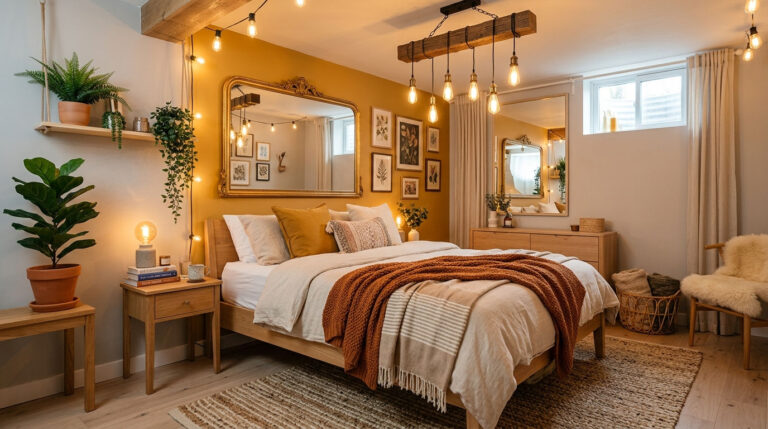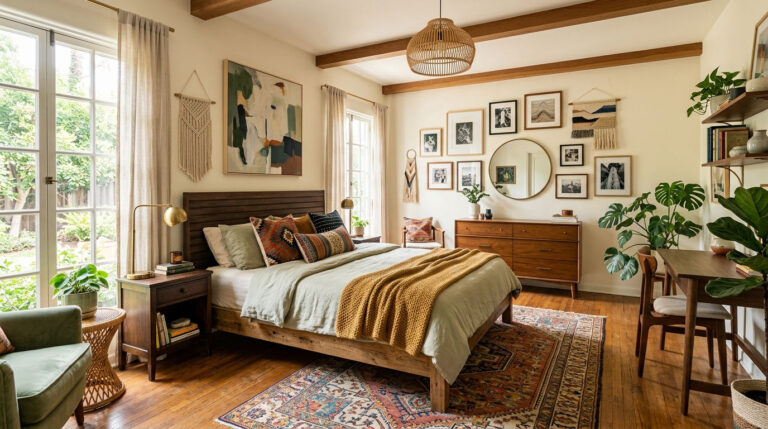
What Size Area Rug Fits Best in a Master Bedroom with a King Bed?
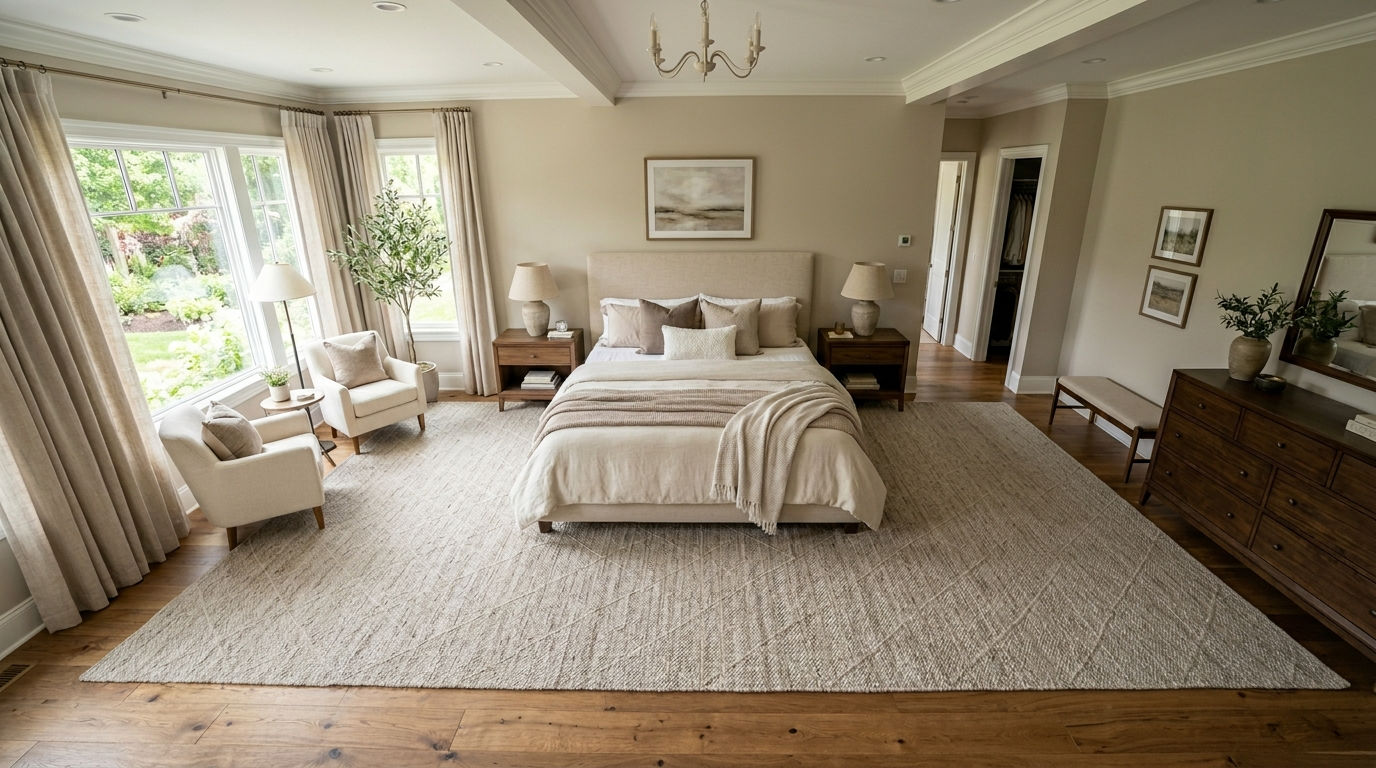
Choosing the right rug size can transform your master bedroom from ordinary to extraordinary — but get it wrong, and even the most beautiful rug will look awkward and out of place.
Why Rug Size Matters More Than You Think
When it comes to bedroom design, the area rug is one of the most impactful decisions you’ll make — and one of the most misunderstood. A rug that’s too small floats like an island in the middle of the room, making the space feel disjointed and the furniture disconnected. A rug that’s too large overwhelms the room and hides the flooring you paid good money for.
In a master bedroom anchored by a king bed, the stakes are even higher. A king bed measures 76 inches wide by 80 inches long — it’s a commanding piece of furniture that demands a rug that can hold its own visually while also complementing the room’s proportions.
The good news? There are clear, designer-approved guidelines for getting this right. Whether you’re working with a cozy 12×12 master suite or a sprawling 20×20 primary bedroom, this guide covers everything you need to know.
Standard King Bed Dimensions: Know What You’re Working With
Before choosing a rug, it helps to understand the footprint you’re dealing with.
- King bed frame: approximately 76″ wide × 80″ long (with frame, closer to 78–82″ wide × 83–85″ long)
- California King bed frame: approximately 72″ wide × 84″ long
These dimensions will guide how much rug you need extending beyond the bed on each side — which is the core principle behind every sizing recommendation that follows.
The Golden Rule: How Much Rug Should Show?
Interior designers generally agree on one foundational rule: at least 18–24 inches of rug should extend beyond the sides and foot of the bed.
This exposed rug border serves two critical functions:
- Visual grounding — It anchors the bed and nightstands within a defined zone, making the furniture arrangement look intentional.
- Comfort underfoot — When you step out of bed in the morning, your feet land on soft rug rather than cold hardwood or tile.
Some designers push for 24 inches on each side for a more luxurious, hotel-like aesthetic. Others are comfortable with 18 inches for smaller rooms. Going below 18 inches tends to look too skimpy, especially under a king bed.
The Best Rug Sizes for a King Bed
Here are the most commonly recommended rug sizes for a master bedroom with a king bed, ranked from most versatile to most luxurious.
1. 9×12 Feet — The Most Popular Choice
Best for rooms: 12×14 feet and larger
The 9×12 rug is widely considered the gold standard for king beds, and for good reason. At 108 inches wide and 144 inches long, it provides:
- 16 inches of rug on each side of a standard king bed (close to the ideal 18″)
- 64 inches of rug extending beyond the foot — plenty for a bench, ottoman, or simply visual breathing room
- Enough coverage to anchor both nightstands fully on the rug
In rooms that are 12×14 or 13×15 feet, the 9×12 leaves a clean border of bare floor around the perimeter (typically 18–24 inches on each wall), which is the ideal layout for most bedrooms.
Pro Tip: If your room is exactly 12 feet wide, a 9×12 rug still works beautifully — you’ll have about 18 inches of floor visible on each side wall, which is perfect.
2. 8×10 Feet — The Practical Runner-Up
Best for rooms: 11×13 feet and smaller
The 8×10 rug is the second most common choice, and it works in rooms where a 9×12 might feel too large or leave insufficient floor border around the edges.
At 96 inches wide and 120 inches long, an 8×10 rug under a king bed will:
- Extend roughly 10 inches on each side of the bed — technically below the 18-inch guideline
- Extend 40 inches beyond the foot of the bed
This is where placement strategy becomes critical (more on that below). With the right positioning — specifically, sliding the rug further under the bed — you can still achieve a polished look in tighter rooms.
Honest Assessment: In a master bedroom with a king bed, an 8×10 is the minimum size you should consider. Anything smaller will look like an afterthought.
3. 10×14 Feet — The Luxury Statement
Best for rooms: 14×16 feet and larger
If you have the square footage, a 10×14 rug is breathtaking under a king bed. At 120 inches wide and 168 inches long, it creates a true “rug as room” aesthetic:
- 22 inches of rug on each side of the bed — comfortably exceeding the 18-inch minimum
- 88 inches of rug extending past the foot — room for a full seating area, loveseat, or substantial bench
- Both nightstands sit entirely on the rug, reinforcing the furniture grouping
This size is especially effective in open-concept master suites where the bedroom doesn’t have four defined walls — the large rug creates a defined sleeping zone within a larger space.
4. 9×13 or 10×13 Feet — The Hidden Gems
Best for rooms with unusual proportions
These less-common sizes are worth hunting for if your room is slightly longer than wide, or if you want more coverage than a 9×12 but can’t accommodate a full 10×14.
A 9×13 works particularly well in master bedrooms that are narrow but long — think 12 feet wide by 16 feet deep — where the extra length lets the rug extend gracefully toward a sitting area or window at the far end of the room.
Rug Placement: The Secret Weapon
Even a perfectly sized rug can look wrong with poor placement. Here are the three most popular placement strategies for king beds:
Option 1: All Legs On (Full Coverage)
All four legs of the bed — and both nightstands — rest completely on the rug. This requires a large rug (typically 10×14 or larger) but creates the most unified, cohesive look. It works particularly well in minimalist or hotel-inspired bedrooms.
Option 2: Front Legs Off (Most Common)
The two legs at the head of the bed are on the rug, while the two front legs (at the foot) are also on the rug — but the headboard legs may float just past the rug’s edge. This is the most popular placement strategy because it works with a wider range of rug sizes, including the 9×12.
Wait — let’s be more precise. The standard recommendation is:
- Head of the bed: The rug slides partially under the bed, with 12–18 inches tucked beneath the frame
- Foot of the bed: The rug extends 18–24 inches beyond the mattress edge
- Sides: The rug extends 18–24 inches beyond the bed frame on both sides
This placement maximizes the exposed rug area where you actually walk and stand.
Option 3: Two-Thirds Rule
The rug extends two-thirds of the way under the bed — from the foot of the bed toward the head. This means roughly the bottom half of the bed sits over the rug, with the headboard area floating on bare floor.
This works well when you want the warmth and comfort of a rug underfoot without a large rug dominating the room visually.
Room Size Guide: Which Rug to Choose
Use this quick reference to match your room size to the ideal rug:
| Room Size | Recommended Rug Size | Notes |
|---|---|---|
| 10×10 ft | 8×10 ft | Push rug 1/3 under bed |
| 11×12 ft | 8×10 ft | Tight but workable |
| 12×14 ft | 9×12 ft | Ideal proportions |
| 13×15 ft | 9×12 or 9×13 ft | Both work well |
| 14×16 ft | 9×12 or 10×14 ft | Go larger for luxury feel |
| 15×18 ft | 10×14 ft | Perfect for large suites |
| 16×20 ft | 10×14 or 12×15 ft | Consider two rugs |
What About Running Two Rugs?
In very large master bedrooms (16 feet or wider), some designers opt for two smaller rugs placed on either side of the bed rather than one large rug. Typically two 3×5 or 4×6 runners or accent rugs are placed symmetrically beside the bed.
Pros: More affordable, easier to find, creates a balanced look
Cons: Less cohesive than a single rug, can look busy if patterns clash, harder to get right proportionally
If you go this route, make sure both rugs are identical — same size, color, and pattern — and placed perfectly symmetrically. Even a few inches of misalignment will look sloppy.
How Rug Shape Affects King Bed Placement
While rectangular rugs are the default for good reason, you have other options worth considering.
Round Rugs
A round rug under a king bed is a bold, unconventional choice that can work beautifully — but requires careful sizing. You’ll want a diameter of at least 9–10 feet (108–120 inches). A round rug placed at the foot of the bed (not centered under it) can create a striking focal point, especially in rooms with curved architectural details or circular pendant lighting.
Square Rugs
An 8×8 or 9×9 square rug can work in square master bedrooms, though they’re less common. The equal proportions can feel static, so this shape works best in minimalist, symmetrical room designs.
Runners
Two parallel runners flanking the bed (one on each side) is a trend that’s gained popularity in Scandinavian and minimalist bedroom design. Look for runners that are at least 2.5–3 feet wide and long enough to extend from the nightstand area to the foot of the bed — typically 8–10 feet long.
Rug Material Matters in the Bedroom
Size is only part of the equation. In a master bedroom, you’ll want a rug that feels as good as it looks underfoot, especially first thing in the morning.
Best Materials for Bedroom Rugs
- Wool: The gold standard — naturally soft, durable, temperature-regulating, and stain-resistant. Ideal for high-use master bedrooms.
- Viscose/Bamboo Silk: Exceptionally soft with a luxurious sheen. Best in low-traffic areas since it’s less durable than wool.
- Polypropylene (Synthetic): Budget-friendly, stain-resistant, and easy to clean — a good choice for families with pets or children.
- Cotton: Lightweight and washable, though less plush than wool or viscose.
- Shag/High-Pile: Maximum underfoot comfort. Keep in mind these require more maintenance and can trap allergens.
What to Avoid
Natural fibers like jute, sisal, and seagrass are beautiful but rough underfoot — they’re better suited to living rooms and dining areas than bedrooms where bare-foot comfort is paramount.
How Pile Height Affects Rug Sizing and Furniture Placement
One factor many buyers overlook: pile height affects how furniture sits on the rug.
- Low pile (under 0.5 inches): Furniture legs sit flat; no wobbling; easy to vacuum
- Medium pile (0.5–0.75 inches): Standard; slight cushion under furniture legs
- High pile (over 1 inch): Furniture can feel unstable; legs may sink in; harder to move furniture
For king beds with heavy frames, a low to medium pile rug is usually the safest choice — especially if your bed frame has thin or tapered legs that could dig into a thick shag.
The Rug Pad: Non-Negotiable
No matter what size rug you choose, always use a rug pad underneath. Here’s why:
- Safety: Prevents slipping — especially important when stepping out of bed half-asleep
- Longevity: Reduces wear by cushioning the rug from below
- Comfort: Adds an extra layer of softness
- Floor protection: Prevents rubber-backed rugs from staining hardwood
Choose a rug pad that’s 1–2 inches smaller than your rug on all sides so the pad stays hidden. For bedroom rugs, a felt-and-rubber combination pad offers the best blend of grip and cushion.
Budget Considerations by Rug Size
Rug prices vary enormously by material, construction method, and brand, but here’s a general range to help you budget:
| Rug Size | Budget Range | Mid-Range | High-End |
|---|---|---|---|
| 8×10 ft | $150–$400 | $400–$1,200 | $1,200–$5,000+ |
| 9×12 ft | $200–$600 | $600–$2,000 | $2,000–$8,000+ |
| 10×14 ft | $300–$900 | $900–$3,500 | $3,500–$15,000+ |
Hand-knotted wool rugs in larger sizes can run into the tens of thousands — but for most master bedrooms, a quality machine-made or hand-tufted rug in the mid-range delivers excellent results.
Common Mistakes to Avoid
Even with the right rug size, these mistakes can undermine the final look.
1. Centering the rug in the room instead of under the bed The rug should be anchored to the bed, not the room. Center the rug relative to the bed, not the four walls.
2. Buying too small to save money A 5×8 rug under a king bed is one of the most common and cringe-worthy decorating mistakes. If budget is tight, save up and wait — or choose a simpler material in the right size rather than a luxurious material in the wrong size.
3. Ignoring the nightstand relationship Ideally, at least the front two legs of your nightstands should rest on the rug. If your nightstands float on bare floor while the bed is on the rug, the furniture grouping feels disconnected.
4. Forgetting about the rug’s visual weight A heavily patterned 9×12 rug in a small room can feel overwhelming. In compact master bedrooms, opt for solid colors, subtle textures, or low-contrast patterns that add warmth without visual noise.
5. Not accounting for bed skirts or platform bases If your king bed has a low platform frame, a high-pile shag rug will look odd beneath it — the pile might actually touch the underside of the frame. Always check the clearance between your bed frame and the floor before choosing pile height.
Quick Sizing Summary
To keep it simple:
- Minimum size for a king bed: 8×10 feet
- Ideal size for most master bedrooms: 9×12 feet
- Luxury option for large suites: 10×14 feet
- Target rug border: 18–24 inches beyond the bed on each side
- Always use a rug pad: Non-negotiable
Final Thoughts
Choosing the right area rug for a master bedroom with a king bed doesn’t have to be complicated — but it does require intentionality. The 9×12 rug hits the sweet spot for most master bedrooms, offering enough coverage to anchor the furniture arrangement without overwhelming the space.
More than any single rule, the key is to think in proportions, not absolute numbers. A rug should make your king bed look grounded and considered, not perched on a postage stamp or swimming in a sea of carpet. When in doubt, size up — a rug that’s slightly too large is always more forgiving than one that’s too small.
Take the time to measure your room, your bed frame, and your nightstands before purchasing. Tape out the rug dimensions on your floor with painter’s tape to visualize the size before you commit. And remember: the right rug doesn’t just decorate a room — it defines it.

Sarah Rose writes for EcoGardeningHub, sharing eco home decor ideas, sustainable styling tips, and simple ways to create beautiful, nature-inspired living spaces with a mindful, environmentally friendly approach.