How to Make a Large Bedroom Feel Cozy and Not Empty (Complete Guide)
A spacious bedroom sounds like a dream — until you’re standing in the middle of it, surrounded by echoing walls and too much empty floor, wondering why it feels more like a hotel lobby than a personal sanctuary. If your large bedroom feels cold, cavernous, or just plain awkward, you’re not alone. Making a big bedroom feel warm and cozy is one of the most common interior design challenges homeowners face.
The good news? With the right strategies, you can transform even the most sprawling bedroom into a cozy, intimate retreat you’ll never want to leave. This guide walks you through every proven technique — from furniture arrangement and layered textiles to lighting tricks and the psychology of color.
Why Large Bedrooms Feel Empty (And What’s Really Going On)
Before diving into solutions, it helps to understand why big rooms feel cold and uncomfortable. It’s rarely just about the size. The real culprits are usually:
- Poor furniture-to-space ratio — a king bed and two nightstands floating in 400 square feet of room
- Flat, single-source lighting — one overhead light that casts harsh, uniform shadows
- Bare walls and floors — hard surfaces that amplify sound and give the eye nowhere to rest
- No defined zones — one giant, undefined open space with no sense of purpose or boundary
- Cool or neutral color palette — whites and grays that feel clinical rather than warm
Once you identify which of these is working against you, the fixes become much more targeted and effective.
1. Anchor the Space with the Right Bed and Headboard
The bed is the centerpiece of any bedroom, and in a large room, it needs to earn that status. A standard queen bed in an oversized room will look like a life raft in the ocean. Here’s how to make your bed the powerful anchor it should be:
Go bigger with your bed frame. If your room is large, a king or California king bed is almost always the right call. It fills the visual space more proportionally and creates a stronger focal point.
Invest in a statement headboard. A tall, upholstered headboard — think tufted velvet, linen, or leather — instantly draws the eye upward and adds visual weight to the room. Opt for floor-to-ceiling headboard panels or a headboard that extends wide beyond the mattress edges for maximum impact.
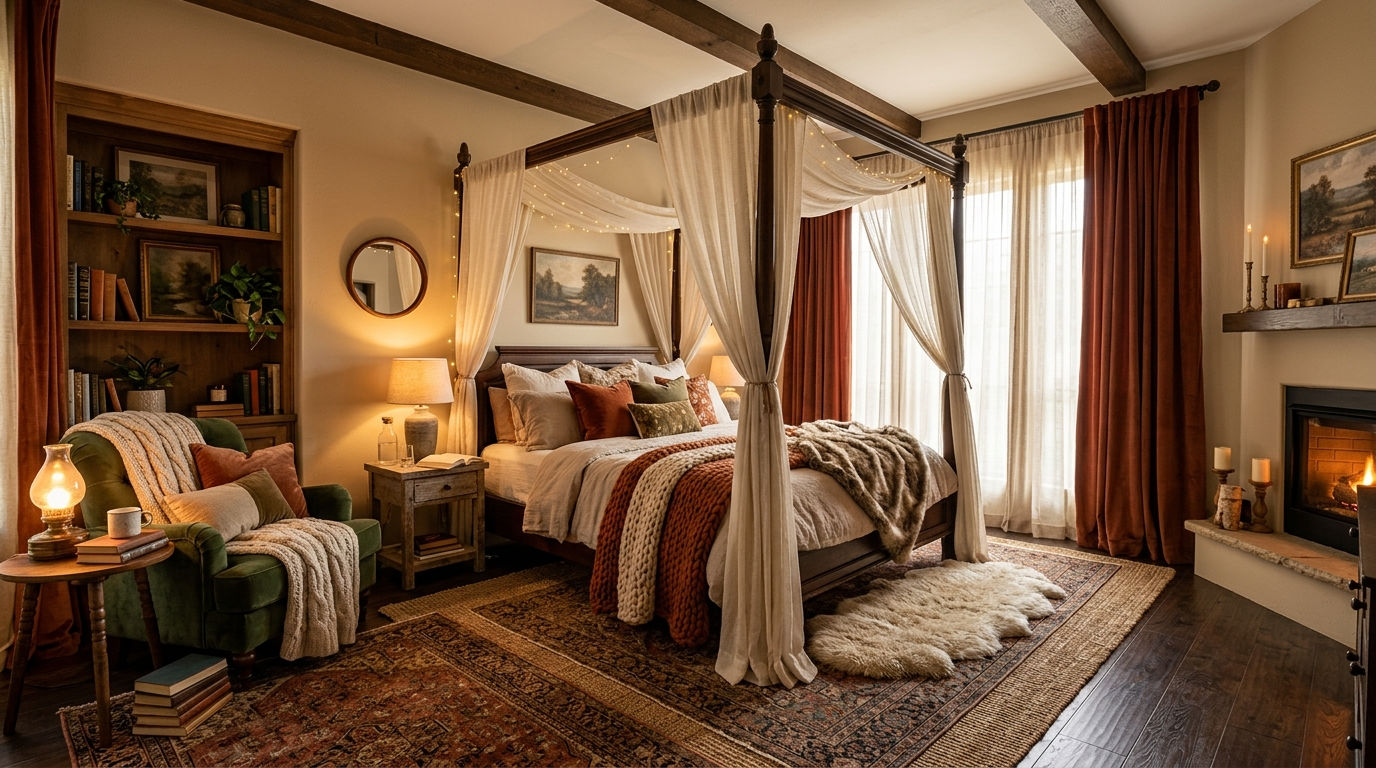
Add a bed canopy or four-poster frame. Nothing makes a large bedroom feel more intimate than a canopy. Whether it’s a full four-poster bed with draped fabric or a minimalist metal frame with sheer curtains, a canopy creates a “room within a room” effect that immediately feels cozy and enclosed.
Use an oversized upholstered bed. Platform beds with thick, padded frames add bulk and warmth that metal or thin-slatted frames simply can’t.
2. Layer Your Textiles Like a Professional
Textiles are your single most powerful weapon against an empty, cold bedroom. Fabric absorbs sound, adds visual richness, and signals comfort in a deeply psychological way. The more intentional layering you do, the cozier the room will feel.
On the Bed
Don’t stop at a duvet and two pillows. Build your bedding in layers:
- Fitted sheet + flat sheet — the foundation
- Duvet or comforter — choose something with visible texture (waffle weave, quilted stitching, boucle)
- Folded throw blanket — draped casually across the foot of the bed
- Euro shams (26×26″) — two or three set behind your sleeping pillows
- Standard sleeping pillows — two to four, depending on bed size
- Decorative accent pillows — one to three in mixed textures (velvet, linen, knit)
This intentional layering creates depth and richness that makes the bed — and by extension, the room — feel full and inviting.
On the Floor
A large area rug is non-negotiable in a big bedroom. Without one, the floor reads as an endless expanse of hard surface that makes everything feel cold and disconnected. Follow these rules:
- Go bigger than you think you need. In a large bedroom, an 8×10 rug is often the minimum. A 9×12 or even 10×14 is usually ideal. The rug should extend at least 18–24 inches beyond each side of the bed.
- Choose plush, high-pile textures. Shag, Moroccan wool, or chunky hand-knotted rugs add warmth underfoot and visually soften the room.
- Layer rugs for extra coziness. Place a smaller, textured rug on top of a larger neutral jute or sisal base rug for added dimension.
On the Windows
Floor-to-ceiling curtains do more for a bedroom than almost any other single element. They add height, warmth, softness, and drama simultaneously. Choose heavy fabrics like velvet, linen, or interlined blackout curtains in warm tones. Hang the rod as close to the ceiling as possible and let the curtains puddle slightly on the floor for a luxurious, enveloping feel.
3. Use Lighting to Create Warmth and Intimacy
Lighting is transformative, and it’s one of the most underutilized tools in bedroom design. The key principle: layer your light sources and never rely on a single overhead fixture.
The Lighting Layers You Need
Ambient lighting — the base layer. Instead of a harsh overhead light, try a chandelier or pendant with a dimmer switch. Frosted glass, fabric shades, and warm-toned bulbs (2700K–3000K) all soften the light considerably.
Task lighting — bedside lamps for reading. Choose lamps with fabric shades that diffuse light warmly rather than harsh bare bulbs. Wall-mounted swing-arm sconces free up nightstand space and look intentional.
Accent lighting — the magic maker. This is where coziness is created:
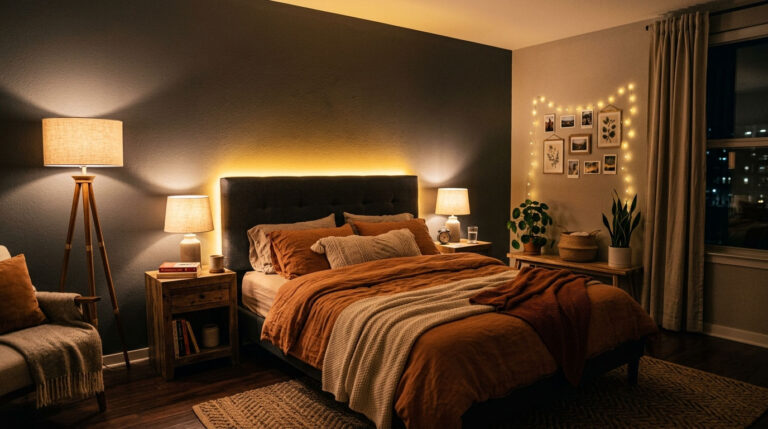
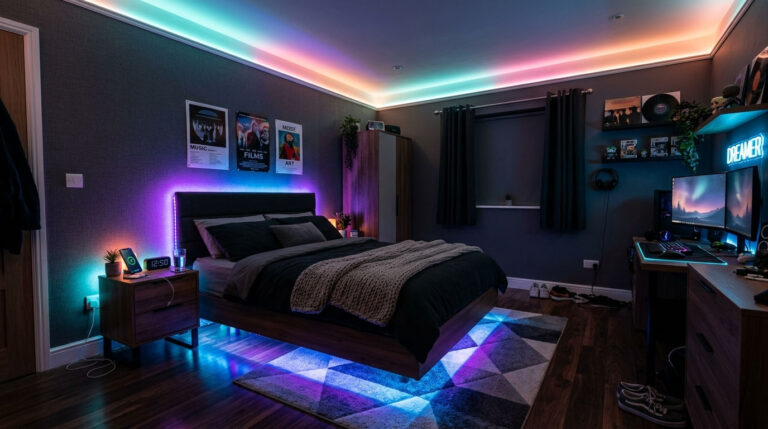
- LED strip lights tucked behind the headboard or under the bed frame for a warm glow
- Fairy lights draped over a canopy or through sheer curtains
- A table lamp or lantern on a dresser or in a reading corner
- Candles or flameless LED candles on a tray
The goal is to have at least four to six distinct light sources that you can mix and match based on mood. A bedroom lit by three warm lamps and some accent lights feels infinitely cozier than the same room lit by a single overhead fixture.
4. Create Zones to Break Up the Space
One of the most effective ways to make a large bedroom feel less empty is to stop treating it as a single room. Instead, design it as a collection of smaller, purposeful zones. This is called zoning, and it’s a fundamental principle of interior design for large spaces.
Common Bedroom Zones
The sleeping zone — the bed and its immediate surroundings, defined by the area rug, nightstands, and lighting.
The reading or lounge zone — a pair of armchairs or a chaise lounge with a floor lamp and a small side table. This is perhaps the single most transformative addition to a large bedroom. A tucked-away seating area feels luxurious, purposeful, and immediately makes the room feel like a thoughtfully designed suite rather than just a place to sleep.
The dressing zone — a vanity table, a full-length mirror, and a decorative stool or ottoman. Placing a vanity in a corner gives you a functional area that also fills dead space beautifully.
The workspace zone — if you work from home, a small desk in the bedroom can work if it’s visually separated from the sleeping area. Use a bookshelf, a room divider, or even a change in rug to define the boundary.
Each zone is defined by its own furniture grouping, rug, and lighting, creating a sense of multiple smaller, intimate spaces within the larger room.
5. Embrace Warm, Enveloping Colors
Color has a profound psychological effect on how a space feels. Cool, pale, or overly neutral palettes tend to make large rooms feel even more vast and impersonal. Warm, rich colors pull the walls in visually and create an enveloping, cocoon-like atmosphere.
Colors That Make Large Bedrooms Feel Cozy
Deep, saturated neutrals — charcoal, warm gray, taupe, and greige create a sophisticated, moody backdrop without feeling dark or depressing.
Warm earth tones — terracotta, rust, warm brown, camel, and clay add organic warmth that feels grounded and inviting.
Rich jewel tones — deep teal, forest green, navy, plum, or burgundy on an accent wall or as a full wrap creates a cocoon-like intimacy that works beautifully in large bedrooms.
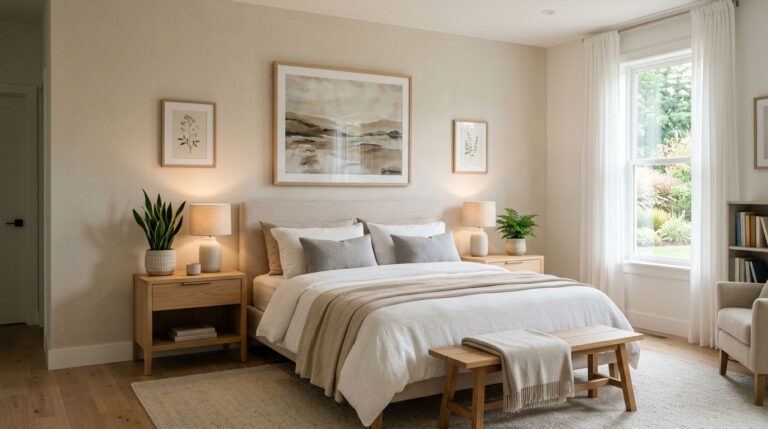
Warm whites — if you prefer a lighter palette, opt for warm whites with yellow or pink undertones (like Benjamin Moore White Dove or Sherwin-Williams Alabaster) rather than bright, blue-toned whites that feel clinical.
The Power of an Accent Wall
If full-color commitment feels overwhelming, an accent wall behind the bed is your best friend. A deeply saturated headboard wall instantly draws focus, creates a visual boundary, and makes the bed feel more intimate and enclosed. Consider:
- Paint in a deep, moody hue
- Limewash or plaster finish for organic texture
- Wallpaper with a botanical, geometric, or abstract pattern
- Vertical shiplap or wood paneling for warmth and texture
6. Fill the Walls Intentionally
Bare walls in a large bedroom feel cold and institutional. Art, mirrors, and wall decor are essential for filling vertical space and creating visual interest that makes a room feel lived-in and personal.
Wall Decor Strategies for Large Bedrooms
Gallery walls — a curated collection of framed art, photographs, and prints arranged in a cohesive grouping creates a focal point that draws the eye and fills a large expanse of wall meaningfully.
Oversized statement art — one large-scale piece (think 40×50 inches or bigger) above the bed or on a prominent wall is far more impactful than several small pieces scattered around.
Mirrors — a large decorative mirror (especially leaning floor mirrors or ornate framed mirrors) reflects light, adds depth, and makes a room feel more dynamic without adding visual clutter.
Architectural details — if your budget allows, adding molding, wainscoting, or board-and-batten paneling to the walls adds texture and character that bare walls simply lack.
Tapestries and wall textiles — a large woven tapestry or macramé wall hanging adds warmth, texture, and sound absorption that hard-surfaced art cannot.
7. Bring in Nature with Plants and Organic Elements
Plants are one of the most underrated tools for making a large bedroom feel alive, warm, and inviting. A room with greenery feels inhabited and cared-for in a way that even the most beautifully furnished room without plants often doesn’t.
Go big with floor plants. In a large bedroom, a single fiddle-leaf fig, monstera, or olive tree in a statement pot can fill an empty corner beautifully while adding life and color.
Use plants to define zones. A cluster of plants can serve as a natural divider between bedroom zones, adding an organic, living boundary.
Incorporate natural materials throughout. Beyond plants, bring in other organic elements — a wooden tray, rattan baskets, linen lampshades, jute rugs, clay pots, driftwood, and woven throws all add natural texture and warmth that synthetic materials can’t replicate.
8. Use Furniture Strategically to Fill Dead Space
A common mistake in large bedrooms is using too little furniture. While you don’t want to overcrowd a space, in a large bedroom, strategically placed furniture fills dead space and makes the room feel purposefully designed.
Furniture That Works Hard in Big Bedrooms
A bench at the foot of the bed — a tufted or upholstered bench grounds the bed visually, adds seating, and fills the space between the bed and the room.
A dresser or armoire — large, statement-making storage pieces fill wall space while being deeply functional.
Nightstands with substance — avoid tiny, floating nightstands. Choose nightstands that have visual weight — drawers, curved legs, interesting materials.
A room divider or bookshelf — a tall bookshelf filled with books, objects, and art immediately makes a room feel layered and personal. A decorative room divider can create zones while adding visual interest.
An upholstered ottoman or chaise — placed at the foot of the bed or in a seating corner, these pieces add luxury and fill space that would otherwise feel empty.
9. Don’t Forget the Ceiling
In large bedrooms, the ceiling is often the most ignored surface — but it’s a powerful opportunity. A plain white ceiling in a large room can feel cold and distant. Consider:
- Painting the ceiling a warm or contrasting color — a warm cream, blush, or even the same deep color as your accent wall can make the ceiling feel lower and more intimate.
- Adding a ceiling medallion — especially effective around a pendant light or chandelier.
- Wood beam accents — faux or real wood beams across the ceiling add enormous warmth and architectural character.
- Wallpaper the ceiling — a botanical print or subtle geometric pattern on the ceiling creates a dramatic, cocooning effect.
10. Incorporate Scent and Sound for a Fully Sensory Cozy Experience
Coziness isn’t purely visual. The most inviting bedrooms appeal to all the senses. Two often-overlooked elements:
Scent — a signature room scent makes a space feel personal and comforting. Reed diffusers, candles, linen sprays, or a small essential oil diffuser with lavender, cedarwood, or sandalwood can make a large bedroom feel like a warm, familiar retreat the moment you walk in.
Sound — large rooms with hard floors and bare walls are acoustically cold. Rugs, curtains, upholstered furniture, and soft furnishings all absorb sound and reduce echo. A small Bluetooth speaker tucked on a shelf for ambient music or white noise adds another layer of warmth and intimacy.
Quick Recap: The Cozy Large Bedroom Checklist
To make a large bedroom feel cozy and not empty, focus on these key strategies:
- Scale up your bed — king size with a tall, substantial headboard
- Layer textiles — bedding, throw pillows, area rugs, and floor-length curtains
- Use multiple light sources — dimmable overhead, bedside lamps, and accent lighting
- Create distinct zones — sleeping, lounging, dressing, and working areas
- Choose warm, enveloping colors — deep neutrals, earth tones, or jewel tones
- Fill the walls — with large art, gallery walls, mirrors, or architectural detail
- Add living greenery — floor plants and natural organic materials
- Use substantial furniture — bench at the foot of the bed, statement dresser, bookcase
- Attend to the ceiling — warm paint color, beams, or wallpaper
- Engage all the senses — scent and sound complete the cozy picture
Final Thoughts
A large bedroom is an incredible canvas — the challenge is simply knowing how to work with the scale rather than against it. The secret is layering: multiple textiles, multiple light sources, multiple zones, and multiple sensory elements that together create a space that feels rich, warm, and intentionally designed.
You don’t need to do everything at once. Start with the biggest impact items — a statement headboard, an oversized area rug, and layered lighting — and build from there. Each addition will bring the room closer to the cozy sanctuary it has the potential to be.
The goal isn’t to make the room feel smaller. It’s to make it feel full — full of warmth, personality, texture, and life.

Sarah Rose writes for EcoGardeningHub, sharing eco home decor ideas, sustainable styling tips, and simple ways to create beautiful, nature-inspired living spaces with a mindful, environmentally friendly approach.