How to Deep Clean a Messy Bedroom Fast: Step-by-Step Checklist
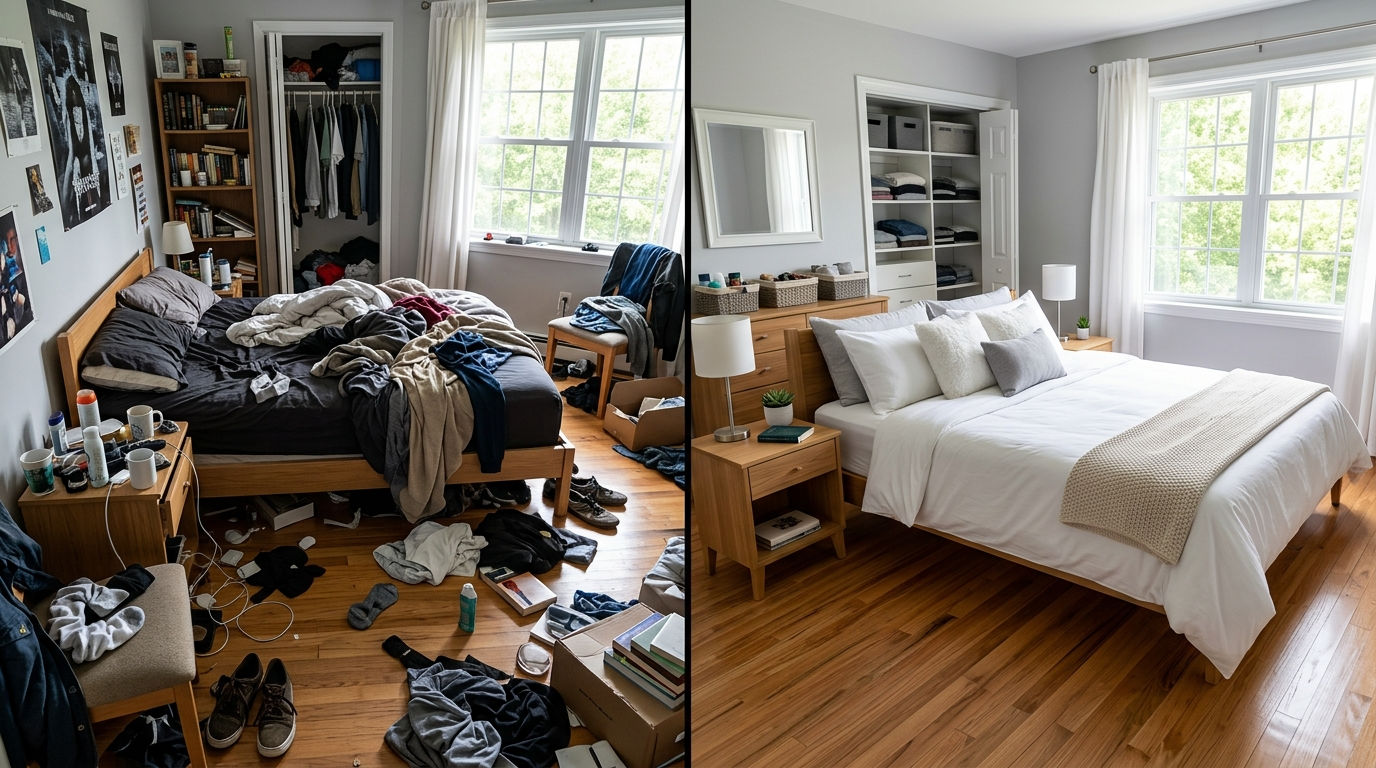
We’ve all been there. Life gets busy, the bedroom gets neglected, and one day you look around and realize the situation has escalated well beyond a quick tidy. Clothes everywhere, dust on every surface, something mysterious under the bed, and a floor you haven’t fully seen in weeks.
The good news: even a genuinely messy bedroom can be deep cleaned in a single focused session. Not a half-hearted surface tidy — a real, thorough, top-to-bottom clean that leaves the room feeling fresh, organized, and actually restful again.
The key is working in the right order, having the right supplies on hand, and resisting the urge to stop and reorganize everything perfectly along the way. Speed and thoroughness are both possible — but only if you have a system.
This guide gives you that system: a complete, step-by-step deep cleaning process with a printable-style checklist you can work through from start to finish.
Before You Start: Gather Your Supplies
Nothing kills cleaning momentum like stopping mid-task to hunt for a trash bag or discover you’re out of all-purpose spray. Collect everything before you begin.
Your Deep Clean Supply Kit
For trash and sorting:
- Several trash bags (at least 2–3)
- A laundry basket or hamper
- A box or bag for items that belong in other rooms
- A donation bag for things to give away
For surfaces and dusting:
- Microfiber cloths (at least 4–6)
- A duster or duster wand (extendable is helpful for ceiling fans and high surfaces)
- All-purpose cleaner spray
- Glass cleaner for mirrors and screens
- Wood cleaner or furniture polish if you have wood furniture
For floors:
- Vacuum cleaner with attachments (upholstery, crevice, and brush attachments)
- Mop and bucket (for hard floors)
- Floor cleaner appropriate to your floor type
For the bed:
- Fresh bed linens (sheets, pillowcases, duvet cover)
- Mattress cleaner or a box of baking soda
For air and smell:
- A candle, reed diffuser, or room spray for the finish
- A fabric refresher spray (like Febreze) for upholstered items
Optional but useful:
- Rubber gloves
- A step stool for high surfaces
- A lint roller
Once everything is gathered and within reach, set a timer if you like. Many people find that giving themselves a defined time window — say, 2–3 hours for a thorough deep clean — keeps them focused and prevents the session from drifting into an all-day reorganization spiral.
The Golden Rule of Fast Deep Cleaning
Before the checklist, one principle makes everything faster: work top to bottom, and dirty to clean.
Top to bottom means you always clean higher surfaces before lower ones. Dust and debris fall downward. If you vacuum the floor before dusting the shelves, the dust you knock off the shelves lands on your clean floor and you’ve doubled your work.
Dirty to clean means you tackle the grossest tasks first, while your energy and motivation are highest. Getting the hard stuff out of the way early makes the rest feel easy.
Follow these two rules throughout and you’ll move significantly faster than the average person who cleans in random order.
Step 1: Clear the Room of Trash First
Time estimate: 10–15 minutes
This is your starting gun. Before anything else, do one focused pass through the entire room with a trash bag and collect every piece of actual garbage.
Look for: empty water bottles and glasses, food wrappers, receipts, old tissues, expired products, dead batteries, packaging you never threw away, and anything else that belongs in the bin.
Don’t stop to make decisions about anything that isn’t obviously trash. This step is only about garbage — fast, decisive, no pausing to reorganize.
Check:
- [ ] Floor and under furniture
- [ ] Nightstand surface and drawers
- [ ] Dresser top
- [ ] Desk or vanity area
- [ ] Windowsill
- [ ] Any bags or tote bags hanging around
- [ ] Under the bed (get a flashlight if needed — it’s always worse than you expect)
- [ ] Inside and around the closet entrance
Once the trash is bagged and out of the room, you’ll be surprised by how much better the room already looks — and how much easier the rest of the clean feels.
Step 2: Strip the Bed and Start Laundry
Time estimate: 5 minutes
Strip everything off the bed: sheets, pillowcases, duvet cover, any mattress protector. Take them directly to the washing machine and start a wash cycle now.
The reason to do this early is simple: laundry takes time to run, and if you start it at step 2, it will be done (or nearly done) by the time you finish the rest of the room. Starting it late means you finish the room but the bed isn’t ready.
While you’re at it, grab any dirty clothes from the floor, chair, or other surfaces and add them to the laundry or hamper.
- [ ] Duvet cover removed and in the wash
- [ ] Sheets stripped and in the wash
- [ ] Pillowcases removed and in the wash
- [ ] Mattress protector washed if needed
- [ ] Dirty clothes collected and sorted
Step 3: Declutter and Return Items to Their Homes
Time estimate: 15–25 minutes
This step separates deep cleaning from surface tidying. You’re going to address the clutter — but you’re going to do it quickly and categorically, not one item at a time.
Pick up your “return to other rooms” box/bag and walk the room, collecting everything that doesn’t belong in the bedroom. Books that belong in the living room. Cups and plates that belong in the kitchen. Mail that belongs on the desk in the hallway. Tools, bags, sports gear — anything that has a home somewhere else.
Don’t deliver them yet. Just collect them into the box. You’ll take one trip at the end.
Then, for items that do belong in the bedroom but are out of place, return them to their designated spots. Clothes hung or folded and put away. Accessories in their storage. Books on the shelf.
For the things you’re unsure about — items that maybe belong in the bedroom but have no real place — make a quick call: is this something you use and want here? If yes, find it a spot. If no, it goes in the donation bag or goes elsewhere.
- [ ] Non-bedroom items collected in the return box
- [ ] Clothes folded or hung and put away
- [ ] Accessories, jewelry, and small items returned to storage
- [ ] Books and magazines sorted
- [ ] Flat surfaces cleared and edited
- [ ] Donation bag filled with anything you no longer want
Important: Don’t get sucked into reorganizing drawers or the closet during this step. The goal right now is to get everything off surfaces and floors so you can clean them. Deep organization is a separate project for another day.
Step 4: Dust Everything From Top to Bottom
Time estimate: 15–20 minutes
Now the room is clear enough to actually clean. Start at the highest point in the room and work your way down.
Ceiling and Upper Walls
Use an extendable duster to sweep along the ceiling line — this is where cobwebs live. Check the ceiling corners especially. Also dust the tops of door frames, curtain rods, and the tops of any tall furniture.
- [ ] Ceiling corners swept for cobwebs
- [ ] Tops of door frames and window frames dusted
- [ ] Ceiling fan blades dusted (do this over a drop cloth or old sheet to catch fallout)
- [ ] Light fixture or ceiling light dusted
Walls and Windows
Wipe any visible marks or scuffs off walls with a barely damp microfiber cloth. Clean the window glass inside and out if accessible. Wipe window sills — they accumulate surprising amounts of dust and debris.
- [ ] Window glass cleaned (inside)
- [ ] Window sill wiped down
- [ ] Visible wall scuffs addressed
- [ ] Blinds or shutters dusted (use a microfiber cloth or a damp cloth for each slat)
Furniture Surfaces
Working from tallest to shortest, dust and wipe every surface.
- [ ] Top of wardrobe or dresser (often the dustiest spot in the room)
- [ ] Bookshelf (remove items, dust the shelf, replace items)
- [ ] Dresser surface wiped down
- [ ] Nightstand(s) wiped down — including the shelf or drawer handles
- [ ] Desk surface cleaned
- [ ] Mirror cleaned with glass cleaner
- [ ] Lamp bases and shades dusted (vacuum the shade gently if fabric)
- [ ] Picture frames and wall art dusted
- [ ] Electronics: TV screen wiped with appropriate cloth, TV unit dusted
- [ ] Any decorative objects dusted and replaced
Baseboards and Lower Walls
These are almost always skipped in regular cleaning and show it. Use a damp microfiber cloth to wipe baseboards along each wall.
- [ ] Baseboards wiped along all walls
Step 5: Clean the Mattress
Time estimate: 10 minutes active, then leave to sit
With the bed stripped and laundry running, the mattress is exposed. Don’t waste this opportunity — mattress cleaning is rarely done and makes a meaningful difference to both hygiene and sleep quality.
How to clean the mattress:
First, vacuum the entire surface using the upholstery attachment. This removes dust, dead skin cells, and any debris. Pay special attention to the seams and edges.
Then, sprinkle a thin layer of baking soda over the entire surface and let it sit for at least 30 minutes (longer is better — up to several hours if you have time). Baking soda absorbs odors and moisture.
While the baking soda sits, you’ll be doing other steps in the room. At the end of the clean, vacuum it all off.
- [ ] Mattress vacuumed (upholstery attachment)
- [ ] Mattress inspected for stains — treat any stains with appropriate cleaner
- [ ] Baking soda applied and left to sit
- [ ] Mattress flipped or rotated if it’s a double-sided or rotation-recommended mattress
Step 6: Clean the Closet Area
Time estimate: 10–20 minutes
You don’t need to reorganize the entire closet during a deep clean — but you should clean it.
Remove anything that’s fallen off hangers or piled up on the closet floor. Vacuum the floor. Wipe the shelf surfaces. Wipe light switches and door handles.
If there are items in the closet that you know don’t belong there or that you never use, this is a good moment for a quick declutter — but keep it fast. You’re cleaning, not reorganizing.
- [ ] Closet floor cleared and vacuumed
- [ ] Closet shelves wiped down
- [ ] Fallen or misplaced items returned to hangers or shelves
- [ ] Closet door handle wiped
Step 7: Wipe High-Touch Points
Time estimate: 5 minutes
High-touch surfaces are the things you touch every day — and they’re reliably the germiest surfaces in any room. They need specific attention during a deep clean.
Use a disinfecting spray or wipe for these, not just a dry dusting cloth.
- [ ] Door handles (bedroom door and closet)
- [ ] Light switches
- [ ] Lamp switches and pull cords
- [ ] Nightstand drawer handles
- [ ] Dresser drawer handles
- [ ] Remote controls
- [ ] Phone charging cable and phone (wipe the back of your phone — it’s one of the germiest objects you own)
- [ ] Alarm clock buttons
- [ ] Headboard (particularly if upholstered)
Step 8: Vacuum the Floor Thoroughly
Time estimate: 10–15 minutes
This step goes fast now that the floor is clear. Vacuum the entire floor — and don’t rush through it.
Use the crevice attachment to get along all the baseboards, into corners, and under furniture where the main head won’t reach. Use the upholstery attachment on any fabric furniture.
Move lightweight furniture if you can — bedside tables, small chairs, ottomans — to vacuum underneath rather than around.
- [ ] Main floor area vacuumed
- [ ] Corners and baseboards vacuumed with crevice tool
- [ ] Under the bed vacuumed
- [ ] Under the dresser vacuumed
- [ ] Rug vacuumed (both sides if it’s a small rug — flip it, vacuum the back, flip it back)
- [ ] Upholstered furniture vacuumed (headboard, chair, ottoman)
- [ ] Mattress baking soda vacuumed off (if it’s had time to sit)
Step 9: Mop Hard Floors (If Applicable)
Time estimate: 5–10 minutes
If your bedroom has hardwood, laminate, tile, or vinyl flooring, mop after vacuuming. Vacuuming first is essential — mopping over crumbs and debris just smears them around.
Use a cleaning solution appropriate to your floor type. Wring the mop well — hard floors should be damp-mopped, not soaking wet. Excess water damages hardwood and takes forever to dry.
- [ ] Floor mopped with appropriate solution
- [ ] Floor allowed to dry before walking on it (or use dry socks)
Step 10: Make the Bed with Fresh Linens
Time estimate: 5–10 minutes
By now your laundry should be done or nearly done. Put fresh sheets on the mattress, slide clean pillowcases on, and make the bed properly — not just thrown together.
A well-made bed is the visual anchor of a bedroom. Even in a room that’s only 80% clean, a made bed makes it look 100% better. It’s also one of the most psychologically satisfying moments in the entire cleaning process.
If the laundry isn’t done yet, put a clean flat sheet over the mattress and come back to finish when it is. Don’t leave the mattress completely bare — it signals “unfinished” and kills the momentum of the clean.
- [ ] Mattress protector replaced (washed or new)
- [ ] Fresh fitted sheet on
- [ ] Fresh flat sheet on (if you use one)
- [ ] Fresh pillowcases on all pillows
- [ ] Duvet or comforter covered and placed
- [ ] Bed made neatly
- [ ] Decorative pillows and throws arranged
Step 11: Final Touches and Finishing Details
Time estimate: 10 minutes
The room is clean. This final step turns “clean” into “feels amazing.”
Return Out-of-Room Items
Take your box of items that belong in other rooms and deliver them now. Do a single circuit of the apartment and put each item in its proper place.
Air Out the Room
Open the window for 10–15 minutes if weather allows. Fresh air after a deep clean makes an extraordinary difference — it removes the smell of cleaning products and replaces the stale air that was trapped in the room.
Add a Pleasant Scent
Light a candle, turn on a reed diffuser, or mist a linen spray over the made bed. Scent is deeply connected to our sense of comfort and “home.” A room that smells clean and pleasant feels better than a room that’s visually clean but smells like nothing or worse.
Final Visual Check
Stand in the doorway and look at the room with fresh eyes. Is there anything you missed? Any surface that still looks cluttered? Any visual element that’s off?
This doorway view is how visitors and, more importantly, you will experience the room every day. It should feel calm, clear, and inviting.
- [ ] Out-of-room items delivered
- [ ] Window opened briefly for fresh air
- [ ] Pleasant scent added
- [ ] Trash bags taken out
- [ ] Laundry basket relocated
- [ ] Final visual check from the doorway done
- [ ] Lights turned off and on to check if anything was missed under different lighting
The Complete Deep Clean Checklist (Master List)
Here’s the full checklist pulled together in order — print it or screenshot it for your next clean.
Supplies
- [ ] Trash bags (2–3)
- [ ] Laundry basket
- [ ] Return-items box
- [ ] Donation bag
- [ ] Microfiber cloths (4–6)
- [ ] Extendable duster
- [ ] All-purpose cleaner
- [ ] Glass cleaner
- [ ] Disinfecting wipes or spray
- [ ] Vacuum with attachments
- [ ] Mop and floor cleaner (if needed)
- [ ] Fresh bed linens
- [ ] Baking soda
Step 1 — Remove Trash
- [ ] Trash collected from all surfaces, floor, and under furniture
Step 2 — Strip Bed and Start Laundry
- [ ] All linens stripped and in wash
- [ ] Dirty clothes collected
Step 3 — Declutter
- [ ] Non-bedroom items in return box
- [ ] Clothes and accessories put away
- [ ] Surfaces cleared
- [ ] Donation bag filled
Step 4 — Dust Top to Bottom
- [ ] Ceiling corners and fan
- [ ] Light fixtures
- [ ] Window glass, sill, and blinds
- [ ] Tops of tall furniture
- [ ] Bookshelves
- [ ] All surface furniture
- [ ] Mirror and electronics
- [ ] Decorative items
- [ ] Baseboards
Step 5 — Clean Mattress
- [ ] Vacuumed
- [ ] Stains treated
- [ ] Baking soda applied
Step 6 — Clean Closet Area
- [ ] Floor vacuumed
- [ ] Shelves wiped
Step 7 — Wipe High-Touch Points
- [ ] Door handles, light switches, remote controls, drawer handles
Step 8 — Vacuum Floor
- [ ] Full floor, corners, under furniture, rug, upholstery
Step 9 — Mop Hard Floors
- [ ] Mopped and dried
Step 10 — Make Bed With Fresh Linens
- [ ] Full bedmaking complete
Step 11 — Final Touches
- [ ] Out-of-room items delivered
- [ ] Window aired
- [ ] Scent added
- [ ] Trash out
- [ ] Final check from doorway
How Long Does a Full Deep Clean Take?
For a genuinely messy 10×12–12×12 bedroom, here’s a realistic time breakdown:
| Task | Time Estimate |
|---|---|
| Gather supplies | 5–10 min |
| Remove trash | 10–15 min |
| Strip bed and start laundry | 5 min |
| Declutter and return items | 15–25 min |
| Dust top to bottom | 15–20 min |
| Clean mattress | 10 min active |
| Clean closet area | 10–20 min |
| Wipe high-touch points | 5 min |
| Vacuum | 10–15 min |
| Mop (if applicable) | 5–10 min |
| Make bed | 5–10 min |
| Final touches | 10 min |
| Total | ~2 to 2.5 hours |
If the room is extremely messy, add 30–60 minutes for the decluttering step. If it’s moderately messy and well-supplied, you can finish in under 2 hours. The more regularly you deep clean, the faster each session becomes.
How to Keep the Bedroom Clean After Deep Cleaning
Deep cleaning is satisfying, but the real goal is doing it less often. A few habits dramatically reduce how quickly your bedroom returns to chaos.
Make the bed every morning. It takes two minutes and sets the tone for the entire room. A made bed is the easiest way to make a bedroom look put-together even when it isn’t.
Do a 5-minute nightly reset. Before bed each night, spend five minutes returning items to their places: clothes hung or in the hamper, glasses and cups back to the kitchen, surfaces cleared. This prevents the accumulation that leads to needing a full deep clean.
Deal with laundry on the same day. The biggest source of bedroom clutter for most people is clothing. Establish a consistent laundry routine so clean clothes are put away and dirty clothes go directly to the hamper rather than the floor or chair.
Have a home for everything. Clutter accumulates fastest when items don’t have a designated place. If every object in your bedroom has a specific, accessible spot to live, it’s much easier to put things away rather than setting them down wherever.
Deep clean on a schedule. If you do a thorough deep clean every 6–8 weeks, it never gets to the truly overwhelming stage. Put it on the calendar the same way you would any other recurring obligation.
Final Thoughts
A messy bedroom is one of those problems that feels bigger than it is. Once you break it into clear steps — trash, laundry, declutter, dust, clean, vacuum, finish — it becomes completely manageable. The system does the thinking so you can just follow the steps.
The first deep clean after a long neglected period is always the hardest. But you’ll finish it, stand in the doorway of a clean room, and remember why it matters: because where you sleep affects how you feel, and a clean, calm bedroom is one of the simplest and most accessible ways to take care of yourself.
Now stop reading and start with the trash bags.

Sarah Rose writes for EcoGardeningHub, sharing eco home decor ideas, sustainable styling tips, and simple ways to create beautiful, nature-inspired living spaces with a mindful, environmentally friendly approach.