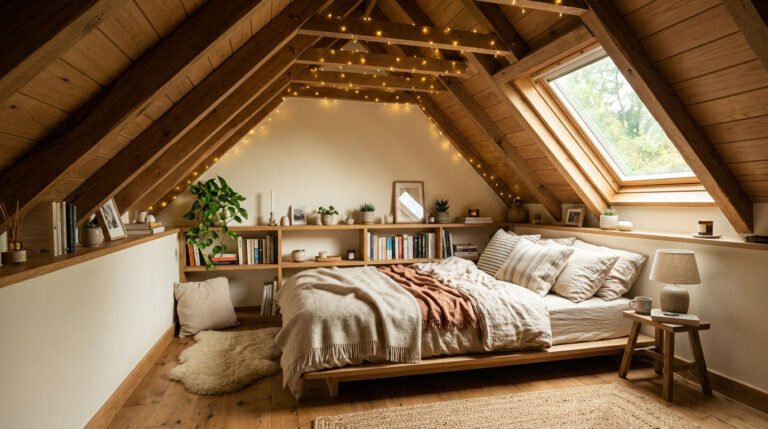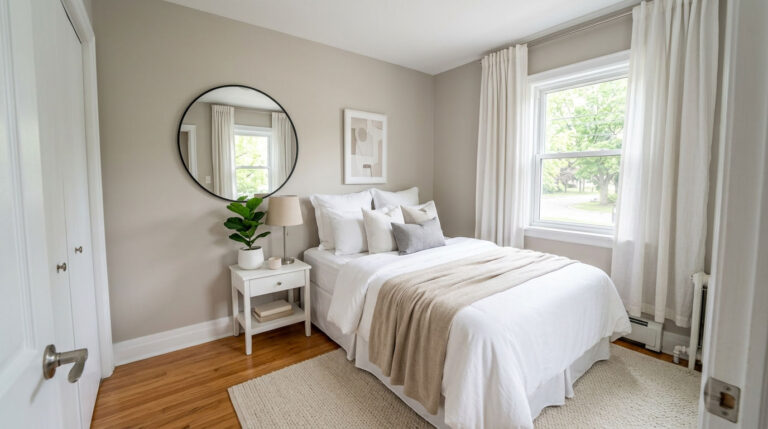
How to Hang LED Strip Lights in a Bedroom Without Damaging Walls
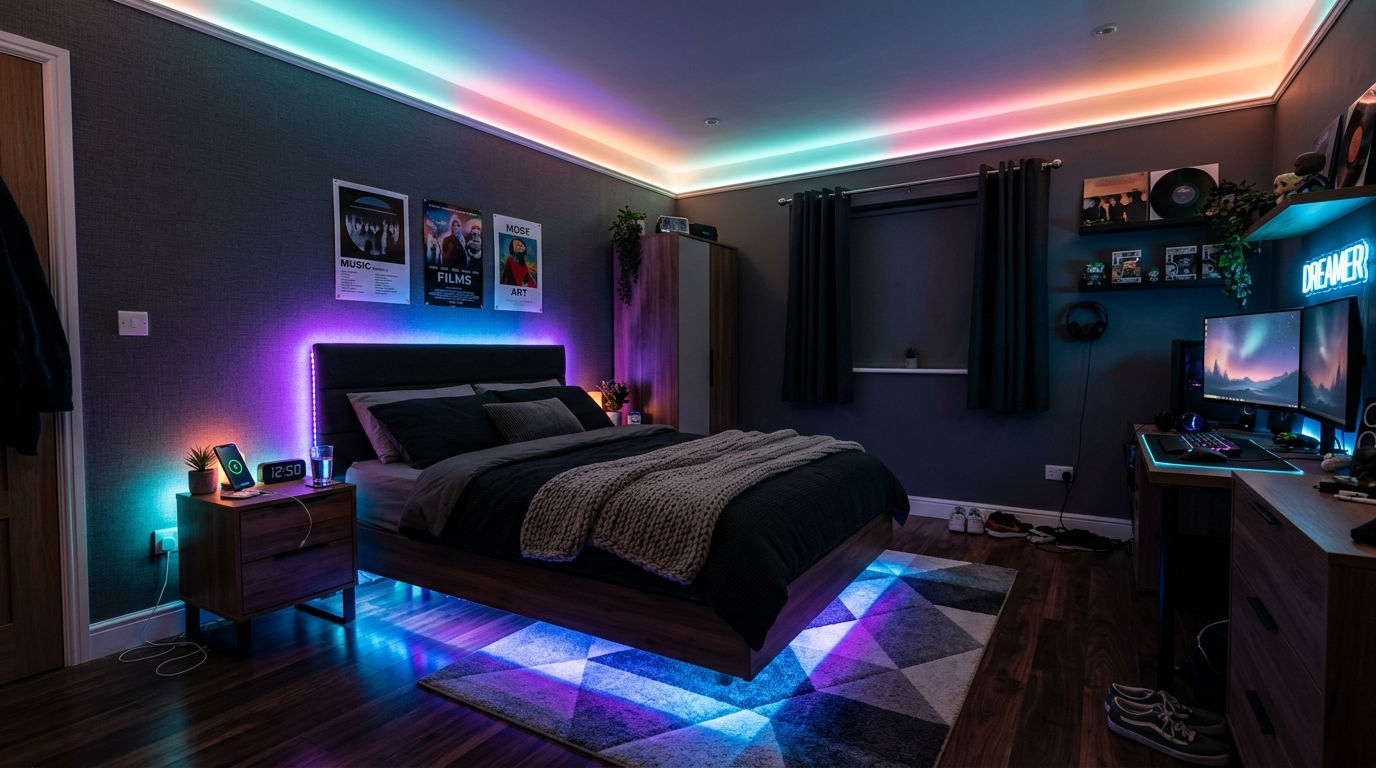
LED strip lights have become one of the most popular bedroom décor upgrades of the last decade — and it’s easy to understand why. They’re affordable, endlessly versatile, energy-efficient, and capable of completely transforming the atmosphere of a room at the flip of a switch. From a soft warm glow behind the headboard to a colorful, app-controlled light show along the ceiling, LED strip lights deliver a level of ambiance that used to require expensive professional lighting installations.
But there’s a problem that almost every first-time installer runs into: the adhesive backing that comes on most LED strip lights is notoriously unreliable. It works well for a few weeks, and then — one morning — you wake up to find a sagging strip of lights drooping off the wall, leaving behind a sticky residue that pulls paint off when you try to remove it, or worse, leaves a permanent mark on the wall.
For renters, this is an especially urgent issue. Damaged walls mean lost security deposits. For homeowners, it’s simply an avoidable headache. Either way, there’s a better approach — and that’s exactly what this guide covers.
You’ll find everything you need here: the right surfaces and preparation techniques, the best damage-free mounting methods, the most common placement ideas for bedrooms, and how to troubleshoot the problems that most installation guides gloss over. By the end, you’ll have lights that stay up, look great, and come down cleanly when you want them to.
1. Understanding LED Strip Lights Before You Buy
Before you install anything, it pays to understand what you’re working with. Not all LED strip lights are the same, and the type you choose affects both how you install them and how good they look.
Types of LED Strip Lights
Single-color strips — These emit one fixed color, typically warm white, cool white, or daylight. They’re the simplest and most affordable option and work beautifully for accent lighting behind furniture or along ceilings.
RGB strips — Red, Green, Blue. These can produce millions of colors and are controlled by a remote or app. They’re the most popular choice for bedroom mood lighting and gaming setups.
RGBW strips — RGB plus a dedicated white LED. The addition of a true white LED means these strips produce a much cleaner, more accurate white light than standard RGB strips, which tend to look slightly pink or purple when set to “white.”
Tunable white strips — These shift between warm and cool white tones without producing color. Ideal for people who want atmospheric flexibility without color-changing effects.
Key Specifications to Understand
Density (LEDs per meter) — Higher density means smoother, more even light with fewer visible individual dots. For bedroom accent lighting where the strip itself may be partially visible, choose strips with at least 60 LEDs per meter. For hidden installations where only the glow shows, lower density works fine.
Wattage — Higher wattage means brighter light. For bedroom ambient lighting, moderate wattage is typically sufficient. Very high wattage strips can get warm to the touch, which is worth considering for enclosed installations.
IP rating — The IP (Ingress Protection) rating tells you how resistant the strip is to moisture. For a standard bedroom, a basic IP20 (no moisture protection) is sufficient. For installations near windows or in humid climates, IP44 or higher offers added protection.
Voltage — Most consumer LED strips run on 12V or 24V DC via an included power adapter. 24V strips tend to have less voltage drop over longer runs, meaning the light stays consistent across the full length.
How Long a Strip Do You Need?
Measure your intended installation path before purchasing. Add 10–15% to your measurement to account for corners and any adjustments. Most LED strips come in standard lengths — 5 meters (about 16.4 feet) is the most common — and can be cut at designated cut points (marked on the strip) to fit your exact space.
2. Why the Stock Adhesive Backing Usually Fails
Understanding why LED strip lights fall off walls is the first step to preventing it.
Most LED strip lights come with a 3M adhesive tape backing — and in theory, 3M adhesive is excellent. In practice, several factors combine to make this backing insufficient on its own:
Surface texture — The adhesive backing requires a smooth, clean surface to bond properly. On textured walls (the orange-peel or knockdown texture found in most American homes), the tape only contacts the high points of the texture, dramatically reducing the contact area and therefore the holding strength.
Paint type — Flat and matte paints have microscopic pores that prevent adhesive from bonding fully. Eggshell, satin, and semi-gloss paints provide better surfaces, but even these can fail under the weight and heat of a long strip.
Dust and oils — Even a thin film of dust or skin oil on a wall surface can prevent adhesive from bonding properly. Most people stick lights directly onto walls they haven’t cleaned, setting themselves up for failure.
Heat — LED strips generate some heat during operation, especially higher-wattage strips. This heat softens adhesive over time, reducing its holding strength — particularly in warmer rooms or during summer months.
Weight and length — A long strip of LED lights is heavier than it looks, especially with its power cable and controller. The longer the run, the more total weight the adhesive must support, and the more likely it is to fail at a weak point.
The solution isn’t to use more tape. It’s to use the right mounting strategy for your specific surface and installation.
3. Preparing the Surface: The Step Most People Skip
Proper surface preparation is the single most important factor in a successful, damage-free LED strip installation — and it’s the step that most installation guides barely mention.
Regardless of which mounting method you use, always prepare the surface first.
Step 1: Clean the surface thoroughly
Use isopropyl alcohol (rubbing alcohol, at least 70% concentration) on a lint-free cloth to wipe down the entire installation path. This removes dust, grease, skin oils, and any residue from previous adhesives. Allow the surface to dry completely before proceeding — typically 5 to 10 minutes.
Do not use water or general-purpose cleaners for this step. Water can raise paint slightly, and many cleaners leave a residue that interferes with adhesion. Isopropyl alcohol evaporates cleanly and leaves no film.
Step 2: Assess the surface texture
Run your fingertip along the installation path. Is it perfectly smooth? Lightly textured? Heavily textured? This assessment determines which mounting method will work best (covered in detail in the next section).
Step 3: Let the wall reach room temperature
Cold surfaces dramatically reduce adhesive performance. If your bedroom runs cold, allow the room to warm to normal living temperature before applying any adhesive. Ideal application temperature is between 65°F and 80°F (18°C–27°C).
Step 4: Do a test strip
Before committing to a full installation, apply a short test section and press it firmly into place. Check after 24 hours to see how well it’s holding. This small test can save you from a failed installation across the entire room.
4. The Best Damage-Free Mounting Methods
Here is the core of this guide — a complete breakdown of every reliable, damage-free method for mounting LED strip lights in a bedroom. Each has its ideal use cases, and the best installations often combine more than one method.
Method 1: Command Strips and Mounting Clips
Best for: Textured walls, painted drywall, smooth plaster, most standard bedroom walls
What you need: 3M Command strips (small or medium), or LED-specific mounting clips that use Command-style adhesive
This is the most universally recommended method for damage-free LED strip light installation, and it’s the approach that works best on the widest range of surfaces.
Instead of relying on the LED strip’s built-in adhesive to contact the wall directly, you use small plastic mounting clips — spaced every 6 to 12 inches along the installation path — that hold the strip in place. These clips attach to the wall with Command-strip-style adhesive pads that bond strongly to the wall surface and remove cleanly by stretching the tab downward.
How to install:
- Clean the wall surface with isopropyl alcohol and allow to dry
- Mark the installation path lightly with a pencil or painter’s tape so your line is straight
- Attach the mounting clips to the wall at regular intervals (6 inches for curves or corners, 8–12 inches for straight runs) using the adhesive pad on each clip — press firmly for 30 seconds per clip
- Allow the clips to cure for at least 1 hour before loading them with the LED strip (Command adhesive reaches full strength after 24 hours)
- Snap the LED strip into each clip, starting from the power supply end
- Route the power cable to your outlet, using additional clips or cord clips to keep it tidy
Removal: Pull the Command strip tab straight down, slowly and parallel to the wall. The clip pops off cleanly. Any residue from the LED strip’s own adhesive can be removed with a rubber eraser or a small amount of isopropyl alcohol.
What to watch for: Don’t overload the clips. If your strip is particularly heavy (thicker strips with dense LEDs and metal backing), use clips every 6 inches rather than every 12.
Method 2: Channel Mounting (Aluminum LED Channels)
Best for: Permanent or semi-permanent installations, ceilings, under-bed lighting, behind headboards, high-end finished looks
What you need: Aluminum LED channel extrusions with diffuser covers, mounting screws or adhesive-backed channels
Aluminum LED channels are U-shaped extrusions designed specifically to house LED strip lights. They serve several functions simultaneously: they protect the strip from dust and physical damage, they diffuse the light so individual LEDs aren’t visible (creating a smooth, even glow rather than a dotted effect), they dissipate heat (extending the strip’s lifespan), and they give the entire installation a polished, professional appearance.
Channels attach to surfaces in one of two ways: with small mounting screws (which do create small holes but are much less damaging than you might think — the holes are tiny and easily filled with spackling when you move out), or with heavy-duty double-sided tape designed for the channel’s flat metal backing (which bonds more effectively than tape applied directly to the strip).
For a truly damage-free approach, use adhesive-backed channels and mount them to flat, smooth surfaces. On textured walls, screw mounting is more reliable.
The diffuser cover — The frosted plastic cover that snaps onto the channel is what creates the beautifully smooth, continuous glow. Without it, you see individual LED dots. With it, you see a clean line of light. For any installation where the strip itself is partially visible, a diffused channel is a significant upgrade in appearance.
Where channels work especially well in bedrooms:
- Along the top edge of a bed frame or headboard
- Underneath a floating bed frame for under-bed glow
- Along the top edge of a wardrobe or closet
- In a ceiling cove or along the upper perimeter of a room
- Under shelving for illuminated display areas
Method 3: Double-Sided Foam Tape (Upgrade from Stock Adhesive)
Best for: Smooth painted surfaces, furniture surfaces, smooth trim and molding
What you need: 3M VHB (Very High Bond) double-sided foam tape, or similar premium mounting tape
The stock adhesive on most LED strips is functional but thin. Replacing it — or augmenting it — with 3M VHB tape dramatically improves holding strength on smooth surfaces.
VHB tape is the same adhesive technology used to mount body panels on vehicles and glass panels on skyscrapers. A strip of VHB tape on a clean, smooth surface will hold for years. The trade-off is that it holds almost too well — removing it from a painted surface can pull paint. This makes it best suited for surfaces where you’re less concerned about the finish (the back of furniture, the inside of a shelf, or surfaces with satin/semi-gloss paint that’s well-bonded to the wall).
How to use it: Remove the LED strip’s factory backing tape. Apply a length of VHB tape to the back of the strip, pressing firmly along its full length. Then apply the strip to the cleaned wall surface, pressing firmly with your thumb for at least 30 seconds per foot of strip. Allow to cure for 24 hours before testing.
Method 4: Magnetic Mounting Systems
Best for: Metal surfaces, metal bed frames, metal shelving units, installations you want to reposition frequently
What you need: Magnetic LED strip system, or neodymium magnets with metal strip backing
If you have metal surfaces in your bedroom — a metal bed frame, a metal wardrobe, a steel shelving unit — magnetic mounting is an elegant, completely damage-free solution. Some LED strip systems are sold with magnetic backing specifically for this purpose. Alternatively, you can attach small neodymium magnets to the back of a standard strip and mount corresponding metal plates on the surface.
The primary advantage of magnetic mounting beyond being damage-free is flexibility: you can reposition, remove, and reattach the strips as often as you like without any degradation in holding strength.
Method 5: Tension and Friction Mounting
Best for: Around headboards, bed frames, window frames, door frames, and furniture with defined edges
What you need: No additional hardware in many cases
For installations that run around furniture rather than on walls — along the top rail of a headboard, around the perimeter of a bed frame, along the top edge of a bookshelf — the strip can sometimes be held in place by the natural tension of running it around corners and edges, supplemented by minimal clips or tape at key anchor points.
This method works best for strips that run in a U-shape or around a rectangular form, where the strip’s own stiffness and the direction changes provide friction. It’s not appropriate for long straight runs on flat surfaces, but for furniture-mounted lighting, it can be surprisingly effective and completely damage-free.
5. Popular LED Strip Light Placements in Bedrooms
Now that you know how to mount them safely, here are the most popular and most effective placement ideas for LED strip lights in a bedroom — along with specific tips for each.
Behind the Headboard (Headboard Backlighting)
This is the most popular bedroom LED strip placement, and for good reason. A warm glow emanating from behind the headboard creates a halo effect that makes the bed look like the focal point of a professionally designed room. It adds depth, warmth, and a sense of luxury that’s hard to achieve any other way.
How to do it without damaging walls: Mount the strip on the back of the headboard itself — not on the wall. Use VHB tape on the smooth rear surface of the headboard, or use mounting clips. The headboard sits a few inches away from the wall, allowing the light to spill onto the wall behind it and create the halo effect without anything touching the wall at all.
Color recommendation: Warm white (2700K–3000K) or soft amber for relaxation. If you want color-changing capability, an RGBW strip gives you both the warm white option and full color range.
Along the Ceiling Perimeter (Cove Lighting)
LED strip lights running along the top perimeter of a bedroom wall — tucked into the gap between the wall and ceiling, or mounted along the top of a crown molding profile — create a floating, indirect glow that makes ceilings appear higher and suffuses the room in warm, even light.
This is the most sophisticated-looking LED installation and the one most associated with professional interior design. It requires slightly more planning than other placements because the strip needs to turn four corners, and the light must be directed upward toward the ceiling (not visible when you’re standing in the room).
Damage-free approach: Mount an aluminum channel along the top of the wall where it meets the ceiling using Command-style adhesive clips. The channel holds the strip directed upward, and the diffuser spreads the light evenly. Alternatively, install a thin ledge or wooden batten along the top of the wall and mount the strip on top of it, out of direct sightlines.
Under the Bed (Floating Bed Effect)
Under-bed LED lighting creates the illusion that the bed is floating above the floor — a dramatic effect that looks striking in modern and contemporary bedrooms. It also provides a practical night light function: a dim glow under the bed illuminates the floor enough to navigate safely without turning on a main light.
How to mount: Attach strips to the underside of the bed frame using mounting clips or VHB tape on the frame itself. Nothing touches the wall or floor. Route the power cable up the inside of a bed leg or along the back of the frame, out of sight.
Color recommendation: Cool white or blue for a modern, dramatic look. Warm amber for something cozier and less dramatic.
Along Shelving and Bookcases
LED strips mounted underneath the shelves of a bookcase or floating shelf unit illuminate whatever is displayed on the shelf below — books, plants, photos, decorative objects — creating a beautiful museum-like presentation.
Mounting approach: Attach strips to the underside of each shelf using mounting clips or VHB tape on the shelf’s smooth underside. Since you’re mounting to furniture rather than walls, damage concerns are minimal, and removal is simple.
Around Windows and Door Frames
Running an LED strip around the perimeter of a bedroom window or door frame creates a framed, glowing effect that’s particularly striking in darker rooms or at night. This is one of the easiest installations because door and window frames are typically made of smooth-painted wood trim — an ideal surface for adhesive mounting.
Tip: Use a warm white or tunable white strip here rather than color-changing RGB. The goal is to frame the architectural feature, not compete with it visually.
Behind the TV or Monitor
If your bedroom includes a television or monitor, backlighting the screen is one of the most functional LED strip installations you can do. It reduces eye strain by raising the ambient light level around the screen, and it creates a beautiful halo effect that looks professional and intentional.
Mounting approach: Attach strips directly to the back of the TV or monitor using the stock adhesive or VHB tape. Route the cable to a USB port on the TV for power — many smart TVs can power LED strips directly, which means no separate power supply needed.
6. Managing Power Cables Neatly
The lights themselves are only half the installation challenge. The power cables — from the strip to the controller, and from the controller to the outlet — can quickly undermine an otherwise clean installation if not managed thoughtfully.
Cable channels and raceways — Plastic cable raceways are U-shaped channels that adhere to the wall and conceal cables inside them. They’re painted to match the wall (or painted after installation) and make cable runs virtually invisible. They mount with adhesive backing and are completely removable.
Cord clips — Small adhesive-backed clips that hold cables flat against the wall or baseboard. Less invisible than a full raceway but faster to install and easier to remove.
Running cables behind furniture — Route power cables behind the headboard, along the back of a dresser, or underneath the bed to keep them out of sight without touching the wall at all.
Wireless or rechargeable strips — For the most truly cable-free installation, some LED strip systems now include rechargeable battery packs. These are ideal for shorter runs (typically up to 1–2 meters) where cable management would be particularly difficult.
Strategically placing the controller — The LED controller (the small box that connects the strip to the power supply) should be placed in a location that’s easy to access but not visually prominent. Tuck it behind the headboard, inside a shelf, or behind a nightstand.
7. Removing LED Strip Lights Without Damaging Walls
Whether you’re moving out of a rental, redecorating, or simply upgrading to a new system, knowing how to remove LED strip lights without damaging the wall is just as important as installing them correctly.
For Command-strip mounted clips: Pull each Command strip tab straight down, slowly and parallel to the wall surface. Never pull outward or at an angle — this is what causes damage. The tabs stretch and release without taking paint with them. After removing the clip, any residue can be rolled off with a clean finger or a rubber eraser.
For VHB tape or adhesive-backed strips: This is trickier. Use a hair dryer or heat gun on low setting to gently warm the adhesive — heat softens it and makes it much easier to remove without pulling paint. Work slowly, sliding dental floss or a thin plastic card (like an old gift card) behind the strip as you warm it, using the card to separate the adhesive from the wall gradually. Never yank or peel quickly.
For any remaining adhesive residue: Apply a small amount of Goo Gone, isopropyl alcohol, or cooking oil to a soft cloth and rub gently. Allow it to sit for 30–60 seconds before rubbing. Test on an inconspicuous area first if you’re concerned about paint finish.
For screw-mounted aluminum channels: Remove the screws, then fill the screw holes with lightweight spackling compound. Allow to dry, sand smooth, and touch up with matching paint. These small repairs are virtually invisible and take under 10 minutes total.
8. Troubleshooting Common LED Strip Light Problems
The Strip Keeps Falling Off the Wall
This is the most common complaint, and the solution almost always comes down to surface preparation. Strip the installation, clean the wall thoroughly with isopropyl alcohol, allow to dry completely, and switch to a better mounting method (Command clips or VHB tape rather than stock adhesive). Also check that you’re not exceeding the maximum run length for the strip without a signal amplifier.
The Lights Have Dark Spots or Uneven Brightness
This is usually caused by voltage drop — the LEDs at the far end of a long run receive less power than those near the power supply and appear dimmer. Solutions: power the strip from both ends using a parallel connection, add a voltage amplifier midway through the run, or switch to 24V strips (which are less susceptible to voltage drop than 12V).
The Colors Look Inconsistent or Wrong
On RGB and RGBW strips, color inconsistency usually indicates a loose connection at one of the strip connectors. Check that all snap connectors are fully seated. If you’ve cut and reconnected the strip, ensure the connection is tight and the polarity is correct (red to red, black to black).
The Adhesive Left a Mark on the Wall
Apply isopropyl alcohol or Goo Gone to the residue, allow to soak for a minute, and gently rub with a soft cloth. For marks that have been there a long time and have dried hard, a small amount of cooking oil left to soak for several minutes can break down the adhesive effectively. Never scrub hard or use abrasive materials.
The Strip Keeps Turning Off Randomly
This typically indicates either an overloaded power supply or a loose connection. Check that your power supply’s wattage rating exceeds the total wattage of your strip. A strip drawing more power than the supply can provide will cause the supply to cut out as a protective measure.
9. Safety Considerations You Shouldn’t Skip
LED strip lights are among the safest lighting products available, but a few common-sense precautions apply.
Buy from reputable sources — Cheap, unbranded LED strips from unknown sellers often lack proper safety certifications. Look for UL-listed products from established brands. Poorly made strips can overheat or have inconsistent power regulation.
Don’t exceed maximum run lengths — Every LED strip has a maximum recommended run length before voltage drop becomes significant. For most 12V strips, this is around 5 meters (16.4 feet). Longer runs require either powering from both ends or using a 24V system.
Ensure proper power supply rating — Calculate the total wattage of your strips (watts per meter × total meters) and choose a power supply rated for at least 20% more than that total. Running a supply at 100% of its rated capacity shortens its lifespan and can cause overheating.
Don’t enclose high-wattage strips without ventilation — If mounting strips inside a tight aluminum channel or behind furniture, ensure there’s some airflow. Higher-wattage strips generate meaningful heat and need to dissipate it.
Keep away from flammable materials — Don’t mount LED strips in direct contact with fabric, paper, or other flammable materials, particularly at higher wattages.
Putting It All Together: A Step-by-Step Installation Checklist
Use this checklist for a smooth, damage-free installation from start to finish:
Before You Begin
- [ ] Decided on placement and measured the total run length
- [ ] Purchased the correct length of LED strip (plus 10–15% extra)
- [ ] Chosen the appropriate mounting method for your surface type
- [ ] Gathered supplies: isopropyl alcohol, lint-free cloth, mounting clips or tape, cable management solution
Surface Preparation
- [ ] Cleaned the full installation path with isopropyl alcohol
- [ ] Allowed the surface to dry completely (5–10 minutes)
- [ ] Confirmed the room is at a comfortable temperature (above 65°F / 18°C)
Installation
- [ ] Marked the installation path with painter’s tape for a straight guideline
- [ ] Mounted clips or channel first, allowing adhesive to cure before loading strip
- [ ] Installed the strip from the power supply end outward
- [ ] Routed and concealed power cables using clips or a cable raceway
- [ ] Connected the controller and power supply
Testing
- [ ] Turned on the lights and checked for consistent brightness along the full run
- [ ] Checked all connections for secure fit
- [ ] Confirmed the remote or app control is functioning correctly
Final Check (24 Hours Later)
- [ ] Inspected all mounting points for any signs of slipping
- [ ] Added additional clips if any sections show movement
Final Thoughts: Patience Pays Off
The difference between LED strip lights that look like a $10 DIY job and ones that look like a professional lighting installation comes down almost entirely to preparation and mounting method — not the cost of the lights themselves.
Take the time to clean the surface. Use proper mounting clips or channels rather than relying on the stock adhesive alone. Plan your cable routing before you start. And do a test section before committing to the full installation.
Done right, LED strip lights are one of the highest-impact, lowest-cost bedroom upgrades available. They can make an ordinary bedroom feel like a boutique hotel room, a cozy retreat, or a dynamic, color-filled personal sanctuary — all without a single nail hole, a single stripped screw, or a single dollar lost from your security deposit.
The glow is worth it. Take your time and do it right.

Sarah Rose writes for EcoGardeningHub, sharing eco home decor ideas, sustainable styling tips, and simple ways to create beautiful, nature-inspired living spaces with a mindful, environmentally friendly approach.