How to Decorate a Very Small Bedroom in a One-Bedroom Apartment (Complete Guide)
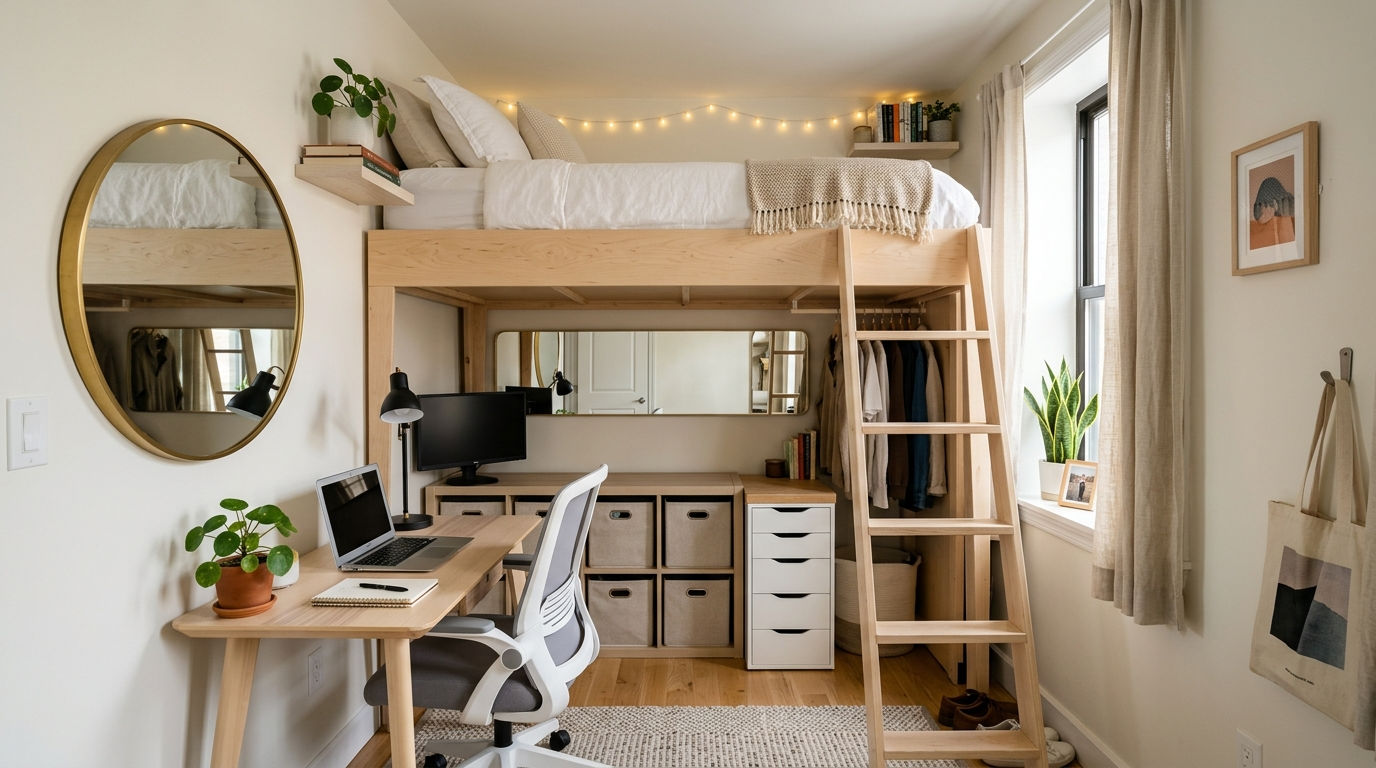
Small bedroom, big expectations. If you’re living in a one-bedroom apartment, your bedroom isn’t just where you sleep — it’s your retreat, your dressing room, sometimes your home office, and the one space in your home that’s entirely yours. The pressure to make it feel good is real, and so is the challenge when you’re working with a room that might be 100 square feet on a generous day.
Here’s the truth that most decorating advice glosses over: small bedrooms aren’t a problem to solve. They’re a constraint to design within — and constraints, when you work with them rather than against them, produce some of the most thoughtful, personal, and beautiful interiors imaginable.
This guide covers everything you need to know about decorating a very small bedroom in a one-bedroom apartment — from furniture selection and color strategy to lighting, storage, visual tricks, and the finishing details that turn a cramped room into a space that genuinely feels like home.
The Mindset Shift That Changes Everything
Before diving into tactics, there’s a perspective shift worth making. Most people approach a small bedroom trying to make it look bigger. That’s a valid goal, but it’s not the only one — and sometimes it’s not even the most important one.
A small bedroom can look bigger and still feel cold, generic, and uninspiring. What you actually want is a room that feels good. Cozy, personal, calm, beautiful. Sometimes a room that leans into its smallness — layered textiles, warm lighting, intimate scale — feels far better than one that’s been stretched visually with mirrors and pale paint until it feels like a catalog photo.
Keep both goals in mind: yes, use tricks to open the space visually where you can. But don’t sacrifice warmth and personality in the pursuit of “bigger-looking.” The best small bedrooms are the ones that feel like you.
Step 1: Get Clear on How You Use the Room
A bedroom in a one-bedroom apartment often carries more functions than a bedroom in a larger home. Before you decide on furniture, layout, or decor, be honest about how your room needs to work.
Do you work from home? If your bedroom needs to double as a workspace, that changes the furniture equation. You’ll need to plan for a desk, seating, and adequate lighting.
Do you watch TV in bed? If yes, factor in a mount or console. If no, you reclaim a significant amount of visual and physical space by eliminating the TV entirely from the bedroom.
Do you read in bed? Bedside lighting becomes a priority.
Do you get dressed in this room? If your closet is in or adjacent to the bedroom, a well-organized dressing area matters.
Do you entertain occasionally? If a partner or friend sometimes stays over, storage for an extra pillow or blanket becomes relevant.
Getting clear on your actual habits prevents you from furnishing for an imagined version of your life — a common and expensive mistake.
Step 2: Choose the Right Bed (It’s Everything)
In a small bedroom, the bed is almost always the dominant piece of furniture. It will take up the largest footprint, set the visual tone, and determine how much space is left for everything else. Choosing it well is the single most important furniture decision you’ll make.
Sizing the Bed Correctly
There’s a persistent myth that you should always buy the biggest bed you can fit in a room. In a very small bedroom, this is wrong. A bed that fits the room proportionally looks and functions better than a king crammed into a space where it leaves no clearance on the sides.
General clearance guidelines for a small bedroom:
- Minimum 24 inches on each side of the bed you exit from
- Minimum 36 inches at the foot of the bed to a wall or dresser
- 18 inches on a secondary side if space is tight
For a very small room, a full (double) bed often hits the sweet spot — large enough to sleep comfortably, small enough to leave meaningful floor space. A queen works in slightly larger rooms. A king almost never works well in a truly small bedroom.
Bed Frame Style Matters
Platform beds with low profiles are ideal for small rooms. They sit closer to the floor, making the ceiling feel taller and the room feel more spacious. They also often have built-in storage underneath or drawers — invaluable in a small apartment.
Upholstered headboards add warmth and visual softness, but choose one that doesn’t extend above the window line — tall headboards can make a room feel crowded vertically.
Open-frame or cane beds with visual lightness (you can see through them or they have slender lines) take up less visual weight than solid, boxy frames.
Avoid: beds with large, heavy footboards that eat up floor space at the end of the bed. In a small room, a footboard that you’re always squeezing past is an everyday frustration.
Storage Beds Are Worth It
A platform bed with built-in drawers or an ottoman-lift storage bed is one of the best investments you can make in a small bedroom. The storage you gain under the bed can offset the need for a dresser entirely — which frees up significant floor space.
Step 3: Plan Your Layout Before Buying Anything
Layout is everything in a small bedroom. A few extra inches in the wrong direction can make a room feel cramped; the right positioning of the same furniture can make it feel open and functional.
The Most Common Small Bedroom Layouts
Bed against the wall: Pushing the bed into a corner frees up the maximum amount of open floor space. The trade-off is that one side of the bed is against the wall, which can make getting in and out awkward for a couple. For a single sleeper, it’s often the best option.
Bed centered on one wall: The classic placement. Centered on the main wall with a nightstand on each side. Balanced and functional, though it uses more floor space than corner placement.
Bed in front of the window: Generally avoided, but sometimes the only option. If you go this route, choose a low headboard that doesn’t block the window, and use blackout curtains to manage light.
Diagonal placement: Almost never works in a small bedroom. It looks dramatic in large rooms; it just wastes space in small ones.
Use Masking Tape Before You Commit
Before buying any furniture, tape out the dimensions of your planned pieces on the floor. Walk around them. Open imaginary drawers. Sit on the imaginary edge of the bed. This five-minute exercise has saved countless people from expensive furniture mistakes.
Step 4: Choose a Color Strategy That Works for Your Room
Color in a small bedroom is nuanced. The old advice — always paint small rooms white or off-white — is too simplistic and honestly produces a lot of sad, cold-looking small bedrooms.
Light Colors: When They Work
Light, pale colors — soft whites, warm creams, pale grays, dusty blush — genuinely do reflect more light and make a space feel more open. They work best when:
- Your room gets good natural light
- You want a calm, airy feel
- Your furniture and textiles will provide the warmth and color
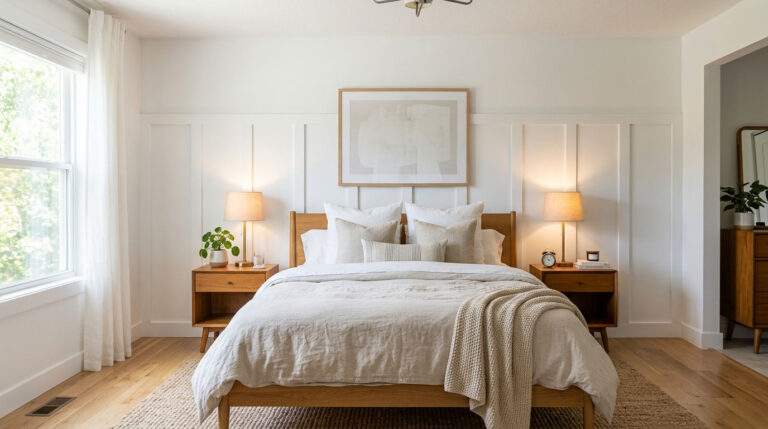
If you go light, use warm whites (with yellow or pink undertones) rather than cool whites (with blue or green undertones). Warm whites feel welcoming; cool whites in a small room can feel clinical.
Dark Colors: The Counterintuitive Option
Painting a small bedroom a deep, rich color — navy, forest green, charcoal, terracotta — is a design choice that confounds people at first and delights them afterward. Dark colors don’t make a small room feel smaller so much as they make it feel intentional. The room becomes a moody, enveloping cocoon rather than a box you’re apologizing for.
This works especially well if your room lacks natural light. Rather than fighting the darkness, lean into it. Deep teal walls with warm lighting, rich textiles, and warm wood tones can transform a dim bedroom into something genuinely beautiful.
The One-Color Approach
One of the most powerful strategies for a small bedroom is painting the walls, ceiling, and trim all the same color or very similar tones. When the eye can’t find where the wall ends and the ceiling begins, the room feels more expansive. This works particularly well with medium tones — dusty blues, sage greens, warm taupes.
Accent Walls
An accent wall — one wall in a contrasting or deeper color — can add personality and visual depth. In a small bedroom, paint the wall behind the headboard as your accent. This frames the bed, creates a focal point, and adds visual interest without overwhelming the space.
Step 5: Get Smarter About Storage
Storage in a one-bedroom apartment bedroom is a genuine challenge. You’re trying to contain clothing, bedding, accessories, and potentially more in a room with limited square footage. The goal is to store as much as possible without the room feeling like storage.
The Hierarchy of Storage in a Small Bedroom
First: Under the bed. This is your most valuable storage real estate. A bed with built-in drawers or a hydraulic lift storage bed can hold a remarkable amount. If your bed doesn’t have built-in storage, use low-profile under-bed containers on wheels.
Second: The closet. Maximize it (as described in the related guide on small closet organization). A well-organized closet can often eliminate the need for a dresser entirely.
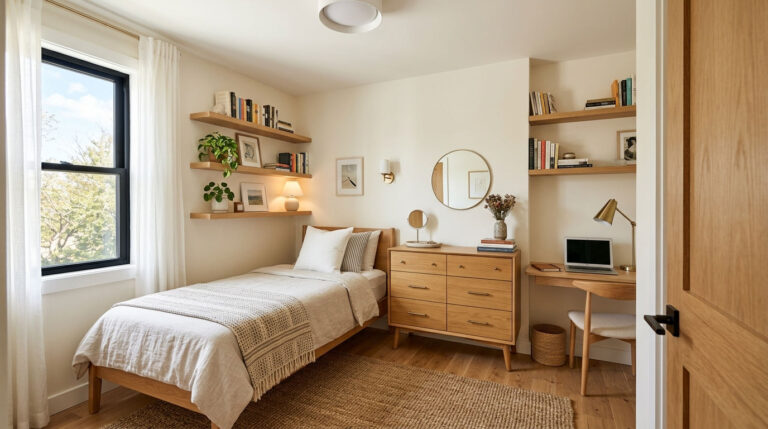
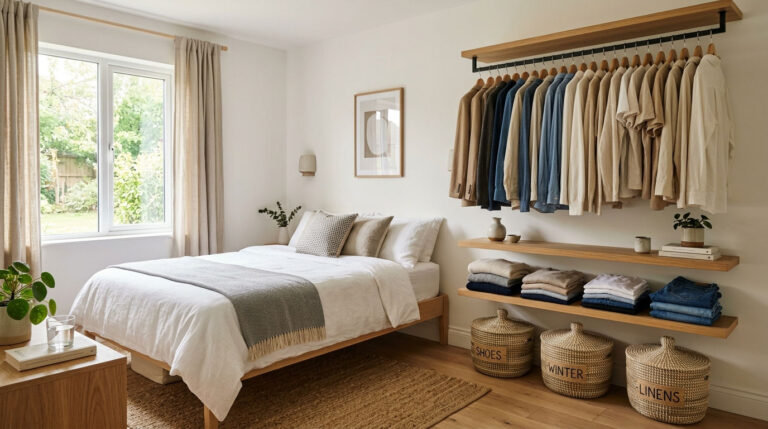
Third: Vertical wall space. Floating shelves, wall-mounted hooks, and tall narrow bookshelves use the wall rather than the floor. Every square inch of wall you use for storage is a square inch of floor you keep clear.
Fourth: Furniture that doubles as storage. Nightstands with drawers, ottomans with interior storage, benches with lift tops at the foot of the bed.
The Dresser Question
Dressers are space-hungry. Before defaulting to one, ask: can your closet, under-bed storage, and a well-organized nightstand cover your needs? If yes, skip the dresser. If no, choose a dresser that’s tall and narrow rather than wide and short — a taller dresser has a smaller floor footprint while offering more storage.
Floating Nightstands
Wall-mounted floating nightstands are one of the cleanest solutions for a small bedroom. They take up zero floor space, can be positioned at exactly the right height, and make the floor look larger by leaving it uninterrupted. A small shelf with a lip, a wall-mounted sconce above it, and a small plant on top — that’s an extremely functional and beautiful bedside setup.
Step 6: Use Lighting to Transform the Room
Lighting might be the most underutilized tool in small bedroom decorating. Good lighting makes any room feel larger, warmer, and more beautiful. Bad lighting — a single overhead bulb, a harsh cool-white fixture — makes even a well-decorated room feel bleak.
Layer Your Lighting
The goal is to have multiple light sources at different heights. This creates depth and atmosphere that overhead-only lighting can never achieve.
Overhead light: Install a dimmer switch if your landlord allows it. Even without changing the fixture, the ability to dim overhead light for evening hours transforms the room’s feel. If you can choose the fixture, a semi-flush mount in a warm material (brushed brass, rattan, black iron) adds character.
Bedside lighting: This is crucial. Options include wall-mounted sconces (space-saving and elegant), clip-on reading lights (minimal and functional), or small table lamps on a floating shelf or nightstand. Choose bulbs in the 2700K range — warm white that mimics candlelight.
Ambient accent lighting: String lights along the headboard wall or under a floating shelf, an LED strip behind a mirror, or a small lamp in a corner all add layers of light that make the room feel multidimensional. This ambient, low-level lighting is what gives a bedroom that “cozy” quality that people always describe but rarely know how to achieve intentionally.
Maximize Natural Light
In a small apartment bedroom, natural light is precious. A few ways to protect and amplify it:
- Hang curtains high and wide. Mount the curtain rod as close to the ceiling as possible, and extend it 6–12 inches beyond the window frame on each side. The curtains frame the window without blocking it, and the room feels taller.
- Use sheer curtains during the day. Sheer panels let light through while still providing privacy and softness.
- Don’t block windows with furniture. Avoid placing the bed, a bookshelf, or a dresser in front of the window.
- Use a mirror strategically. A large mirror placed to catch and reflect natural light amplifies it significantly throughout the room.
Step 7: Visual Tricks That Make the Room Feel Larger
Beyond layout and color, there are several well-established visual techniques for making a small bedroom feel more spacious.
The Rug Rule
A common mistake is choosing a rug that’s too small for the room. A tiny rug in the center of a bedroom looks awkward and actually makes the room feel smaller by breaking up the floor into fragments.
For a small bedroom, one of two approaches works best:
- Go large: A rug that extends beyond the bed on all sides makes the room feel cohesive and intentional. The minimum: the rug should extend at least 18–24 inches beyond the sides and foot of the bed.
- Go none: A completely bare floor (especially in light wood, polished concrete, or pale tile) reads as clean and spacious. If you want warmth, a small bedside runner on each side of the bed is the right compromise.
Mirrors
A well-placed large mirror is the classic small-space trick, and it works. A full-length mirror on the back of a door or leaning against a wall adds depth without taking up floor space. A mirror above the dresser or a large framed mirror on the wall opposite a window bounces light and creates the illusion of a doorway into another space.
Avoid: covering every wall with mirrors. One or two large mirrors is elegant. Mirror overload feels disorienting.
Vertical Lines Draw the Eye Up
Anything that draws the eye upward makes a room feel taller — and a taller room feels more spacious.
- Hang curtains at ceiling height, not window height
- Choose a vertical art arrangement (tall narrow pieces or vertical gallery walls)
- Use tall, narrow bookshelves rather than wide, low ones
- Vertical stripes on a feature wall (wallpaper or painted) can add height
Keep the Floor Visible
The more floor you can see, the larger the room feels. This means:
- Choosing furniture with legs rather than pieces that sit directly on the floor (bed frames with legs, nightstands with legs, chairs with legs)
- Keeping the floor clear of clutter
- Avoiding too many low-to-the-ground items that visually weigh down the space
Step 8: Textiles and Layering — Where Coziness Lives
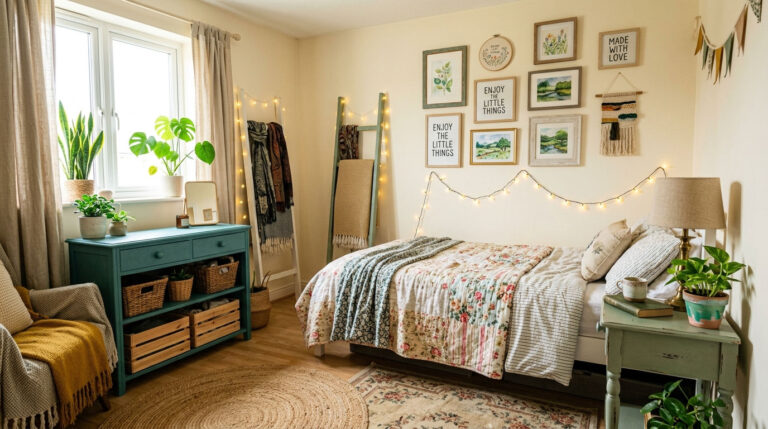
In a small bedroom, textiles do the heavy lifting for warmth, personality, and comfort. A thoughtfully layered bed in a plain room looks infinitely better than an unadorned bed in an elaborately decorated one.
The Bed as Centerpiece
Treat making your bed as an act of self-care and interior design simultaneously. You don’t need to fold everything to hotel precision daily, but a pulled-up duvet and arranged pillows take 90 seconds and transform the room.
A simple, cozy layering formula:
- Fitted sheet in a soft solid color
- Flat sheet or light blanket — can add a second color or subtle pattern
- Duvet or comforter as the main layer
- Two sleeping pillows in coordinated shams
- One or two decorative throw pillows for personality
- A folded throw blanket at the foot of the bed — adds texture and the feeling of abundance
Curtains as Statement
In a small bedroom, curtains often cover a large proportion of the wall. They have enormous visual impact. Use them intentionally:
- Linen curtains in natural tones are the most versatile and beautiful choice for almost any bedroom aesthetic. They hang beautifully, soften light, and work with every color palette.
- Velvet curtains in a rich color add drama and luxury to a small room — especially in jewel tones.
- Sheer curtains maximize light and make the room feel airy, but offer limited privacy.
Always line curtains with blackout lining if sleep quality is a concern. Blackout capability can be added to any curtain panel with separate liner panels.
Step 9: Personalize Without Cluttering
The difference between a decorated small room and a cluttered one often comes down to intention. Every item in a small bedroom needs to earn its place — but that doesn’t mean the room should feel sparse or impersonal.
Art and Wall Decor
Art is the most efficient way to add personality to a small room. A single large-scale print or canvas has more visual impact than a scattering of small frames. Choose pieces that resonate with you personally — not just whatever looks “decorating-appropriate.”
A few approaches that work well in small bedrooms:
- One large anchor piece above or beside the bed — makes a statement without visual clutter
- A small, curated gallery wall above a dresser or along one wall — keep frames consistent in color (all black, all natural wood, all white) for visual cohesion
- Leaned art: A large print or canvas leaned against the wall rather than hung gives a casual, layered feel and is renter-friendly
Plants
A single well-chosen plant adds life, color, and a sense of calm that no inanimate object can replicate. Even a small plant on a floating shelf or window sill makes a difference. Easy-care options for low-light bedrooms: pothos, ZZ plant, snake plant, or peace lily — all of which are nearly impossible to kill and genuinely beautiful.
The “Edit Ruthlessly” Rule
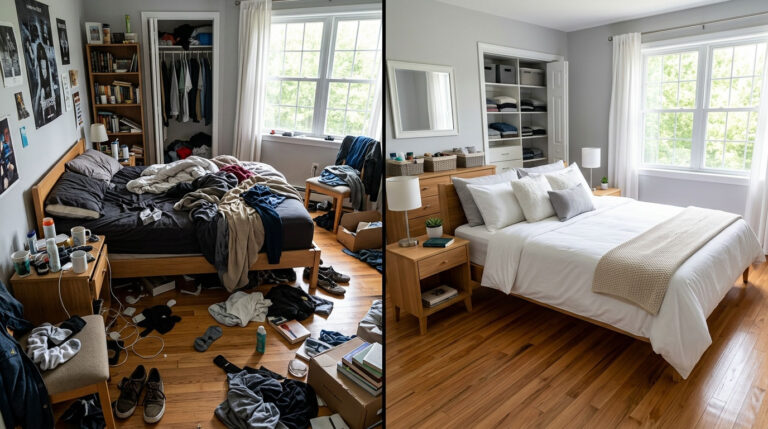
In a small bedroom, everything is visible all the time. There’s nowhere to hide visual noise. Before adding anything to the room, ask: does this add beauty, function, or meaning? If it doesn’t contribute one of those three things, it belongs somewhere else.
A few things on a shelf, beautifully arranged, looks intentional. The same shelf overcrowded looks chaotic. Less, but better.
Step 10: Make It Smell Good
This one sounds small, but it isn’t. Scent is deeply tied to our sense of comfort and being “home.” A bedroom that smells good feels better in a way that’s hard to articulate but impossible to miss.
Simple ways to keep a small bedroom smelling wonderful:
- A reed diffuser on the dresser or shelf (long-lasting, low maintenance)
- A linen spray misted on the pillows and sheets before bed
- A beeswax or soy candle burned for 30 minutes in the evening (never leave unattended)
- Fresh air: even in a small apartment, opening the window for 15–30 minutes daily makes a dramatic difference in how the room smells and feels
Common Decorating Mistakes to Avoid in a Small Bedroom
Learning what not to do is just as useful as knowing what to do.
Buying furniture that’s too large. The most common and most damaging mistake. Measure twice, buy once. A bed or dresser that’s even a few inches too wide can ruin the proportions of a small room.
Overcrowding with too many pieces. A small bedroom needs fewer, better things. Four perfect pieces beat eight mediocre ones every time.
Ignoring the ceiling. A pop of color on the ceiling, a ceiling-mounted canopy above the bed, or simply painting the ceiling the same color as the walls can dramatically change how the room feels.
Using harsh, cool-toned lighting. Cool white bulbs (above 4000K) make any bedroom feel institutional. Always choose warm white for bedroom lighting.
Treating storage as an afterthought. If storage isn’t solved, the room will always feel cluttered no matter how beautifully decorated it is. Solve storage first, then decorate.
Skimping on bedding quality. You spend eight hours in your bed every day. Good quality sheets and a duvet you love are worth every penny. They also look better and last longer.
A Sample Room Plan: Small Bedroom Under 120 Square Feet
To make this concrete, here’s how these principles might come together in practice:
Bed: Full-size platform bed with two built-in drawers, centered on the main wall. Low profile, upholstered headboard in a warm linen fabric.
Wall color: Dusty sage green on all four walls and ceiling. Warm, natural, and enveloping.
Lighting: Dimmer on overhead semi-flush mount. Two wall-mounted sconces flanking the headboard. String lights along the top of the headboard wall. One small lamp in the corner.
Storage: Under-bed drawers for clothing. Maximized closet. Two floating nightstands with a single drawer each.
Window treatment: Linen curtains in natural flax, hung at ceiling height, extending 10 inches beyond the window on each side.
Rug: Warm cream or oatmeal rug extending 24 inches beyond the bed on three sides.
Art: One large-format botanical print in a thin black frame above the headboard.
Textiles: White fitted sheet, soft green flat sheet, cream linen duvet, two sleeping pillows, one woven throw blanket in rust or camel.
Accessories: Three plants in earthy ceramic pots (one on the floating shelf, one on the window sill, one in the corner). Reed diffuser on the nightstand. One small mirror leaned against the wall.
The result: a room that feels calm, personal, cozy, and bigger than its square footage suggests.
Final Thoughts
Decorating a very small bedroom in a one-bedroom apartment is really an exercise in intentionality. When space is limited, every choice matters more — which means the reward for making thoughtful choices is proportionally greater.
You don’t need a large room to have a bedroom that feels luxurious, personal, and genuinely restorative. You need good light, a bed you love, smart storage that doesn’t show, a color palette that fits your personality, and a few carefully chosen pieces that make the space unmistakably yours.
Start with function. Layer in beauty. Edit constantly. The room will thank you.

Sarah Rose writes for EcoGardeningHub, sharing eco home decor ideas, sustainable styling tips, and simple ways to create beautiful, nature-inspired living spaces with a mindful, environmentally friendly approach.