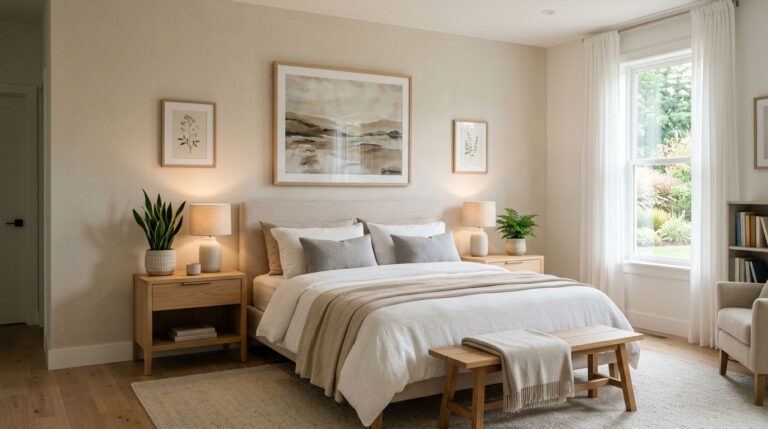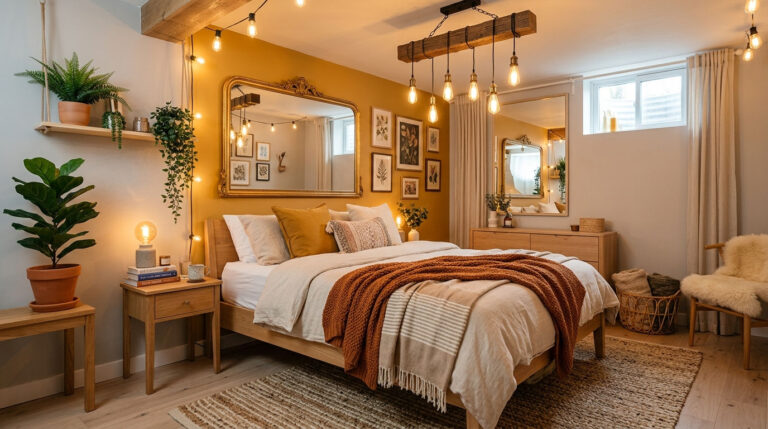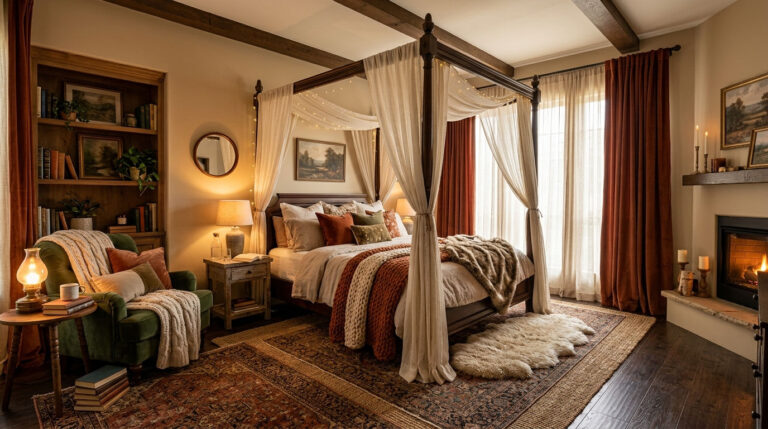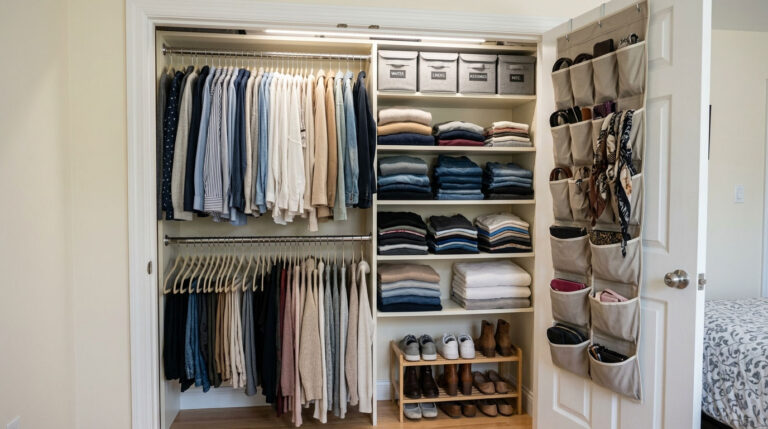
How to Arrange Bedroom Furniture in a 10×10 Small Room (Complete Guide)
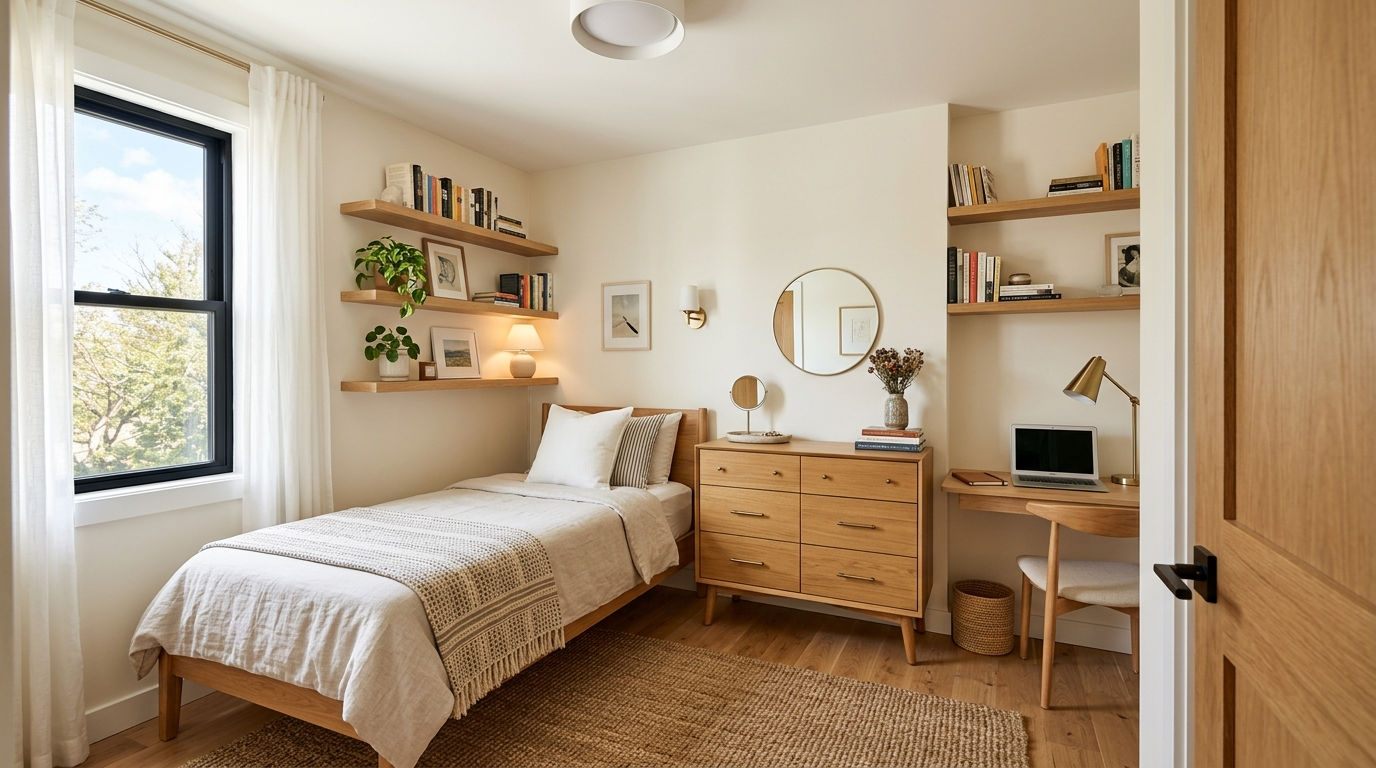
A 10×10 bedroom is exactly 100 square feet. That’s the size of a generous walk-in closet, a small home office, or about a third of the average American living room. And yet millions of people sleep, dress, work, and unwind in rooms exactly this size every single day — in apartments, older homes, college housing, and urban rentals the world over.
The challenge isn’t that 100 square feet is uninhabitable. It’s that most furniture is designed for larger rooms, most layout advice assumes more space, and most people have never been taught how to think through a very constrained floor plan strategically.
Done right, a 10×10 bedroom can feel purposeful, comfortable, and even beautiful. Done wrong — the wrong bed size, the wrong furniture placement, too many pieces — it feels like a storage unit with a mattress in it.
This guide walks you through everything: how to measure and map your room, which furniture to choose and what to skip, every viable layout option for a 10×10 space, and the visual strategies that make 100 square feet feel like more.
Understanding What You’re Working With
Before anything else, let’s be precise about the space.
A 10×10 room gives you 100 square feet of total floor area. But your usable floor area is considerably less once you account for:
- Door swing: A standard interior door swings into a roughly 9-square-foot arc. You can’t place anything in that zone.
- Closet access: If there’s a closet, the area in front of it needs to stay clear — typically 24–36 inches of clearance.
- Window placement: Windows constrain where certain furniture can go and affect how you move around the room.
- Baseboard heaters or radiators: These must stay unobstructed and can’t have furniture directly in front of them.
Sketch a rough map of your room before you do anything else. Mark the door, windows, closet, any built-in features, and the locations of outlets and light switches. This map is the foundation of every layout decision.
The Clearance Numbers to Know
These are the minimum comfortable clearances for a functional bedroom:
- Bed exit side(s): 24 inches minimum, 30–36 inches preferred
- Foot of bed to wall or furniture: 30–36 inches minimum
- Dresser drawer clearance: 36 inches in front of the dresser to open drawers comfortably
- Closet door clearance: 24–36 inches depending on door type
- Walkway between any two pieces: 18 inches minimum, 24 inches preferred
In a 10×10 room, you will not have generous clearances everywhere. The goal is to make sure critical clearances — especially bed exit and main walkway — meet the minimum, and accept tighter clearances elsewhere.
Step 1: Choose the Right Bed Size First
The bed is the dominant piece in any bedroom, but in a 10×10 room it is especially critical because the wrong size can make the rest of the layout impossible.
Bed Sizes and What They Leave You
Let’s look at the actual dimensions and what each size leaves behind in a 10×10 room.
Twin bed (38″ x 75″): Footprint: approximately 3.2 x 6.3 feet Space remaining after placement: generous. A twin bed centered against one wall leaves about 6.8 feet on the opposite side — enough for a dresser, desk, or wardrobe. Ideal for a single sleeper who wants maximum floor space.
Full/Double bed (54″ x 75″): Footprint: approximately 4.5 x 6.3 feet Space remaining: workable. Placed against one wall, a full bed leaves about 5.5 feet on the other side. This is the sweet spot for most single adults in a 10×10 room — enough sleeping space to be comfortable, without sacrificing the room entirely to the bed.
Queen bed (60″ x 80″): Footprint: approximately 5 x 6.7 feet Space remaining: tight but possible. A queen placed against one wall leaves just under 5 feet on the opposite side and very little room on the sides. Navigating around it requires careful layout. Requires compromises — typically the elimination of a dresser or desk.
King bed (76″ x 80″): Footprint: approximately 6.3 x 6.7 feet Space remaining: do not attempt. A king bed in a 10×10 room leaves roughly 3.7 feet of width on one side — not enough for comfortable circulation, and the length nearly spans the room. A king belongs in a room of at least 12×12, ideally larger.
The Honest Recommendation
For most people with a 10×10 bedroom, a full/double bed is the right choice. It sleeps one adult comfortably (and two in a pinch), and it leaves enough space in the room to function as an actual bedroom rather than just a sleeping capsule.
If you share the bed with a partner and a queen is necessary, it’s workable — but you’ll need to accept significant compromises in the rest of the room’s furniture and layout.
Step 2: Map Out Your Layout Options
There are only so many viable ways to arrange furniture in a 10×10 room, and it’s worth understanding all of them before committing. Here are the primary layout configurations:
Layout 1: Bed Against the Center of One Wall
This is the most common and often the most functional layout for a small square bedroom.
How it works: The bed is centered against the wall opposite the door (or one of the side walls, depending on window and closet placement). Nightstands or floating shelves flank each side of the headboard. The opposite wall holds a dresser or desk.
Why it works: Centering the bed creates visual balance. It leaves equal clearance on both sides. The room feels organized around a clear focal point.
Best for: Couples sharing a full or queen bed, or single sleepers who want a balanced, hotel-like arrangement.
Clearances to check: Make sure there’s at least 24 inches between each side of the bed and the wall or furniture. With a full bed centered in a 10-foot wide room, you get approximately 34 inches on each side — comfortable. With a queen, you get about 30 inches on each side — still workable.
Layout 2: Bed in the Corner (L-Shape Placement)
How it works: The bed is pushed into one corner, with the headboard against one wall and one side of the bed against an adjacent wall. Only one side of the bed is accessible.
Why it works: Corner placement is the single biggest floor-space saver in a small bedroom. By occupying a corner, the bed uses two walls as “boundaries” and frees up the entire opposite side of the room for other furniture or open floor space.
Best for: Single sleepers, children’s rooms, or anyone who wants to maximize open floor space. Less ideal for couples since one person has to climb over the other to get in or out.
Clearances to check: The accessible side of the bed needs at least 24 inches of clearance — ideally 30–36. With a full bed in the corner of a 10×10 room, the accessible side has about 66 inches (5.5 feet) of open space — very comfortable.
Visual note: Corner-placed beds can look awkward unless you style them intentionally. Use pillows across the full width, add a small shelf or floating nightstand on the wall above the tucked-in side, and treat the corner as a cozy alcove.
Layout 3: Bed Against a Short Wall (Foot Facing the Door)
How it works: In some 10×10 rooms, the door is on a shorter wall or positioned such that the bed naturally faces the door at its foot. This is sometimes called the “coffin position” in folklore, but functionally it can work well.
Why it works: When the foot of the bed faces the door, the sides of the bed are against the longer walls, which in a square room means good clearance on both sides. The layout feels natural and organized.
Best for: Rooms where the door is on the same wall that would otherwise be the headboard wall.
Clearances to check: You need at least 30 inches between the foot of the bed and the door (or anything the door swings into). With a full bed and a 10-foot room depth, you have 3.75 feet of clearance at the foot — just enough.
Layout 4: Lofted or Elevated Bed
How it works: A loft bed elevates the sleeping surface to 5–6 feet off the floor, using the space underneath for a desk, wardrobe, shelving, or lounge area.
Why it works: It’s the most radical space-multiplier available for a small bedroom. The bed footprint essentially disappears from the floor plan, and the vertical space is doubled in function.
Best for: Single sleepers (especially students or young adults), rooms with ceilings of at least 8 feet, anyone willing to climb a ladder to bed.
Trade-offs: Loft beds are not for everyone. They’re harder to get in and out of, making nighttime bathroom trips or morning grogginess awkward. They’re also not suitable for very young children, people with mobility concerns, or anyone who simply doesn’t like sleeping high up.
If the loft option appeals to you, it is genuinely one of the most effective solutions for a 10×10 bedroom — particularly if you need a dedicated workspace.
Step 3: Decide What Furniture You Actually Need
In a 10×10 room, you do not have space for every piece of furniture a typical bedroom might contain. You need to be deliberate about what earns a place in the room.
The Essential Tier (Most People Need These)
The bed: Non-negotiable, and covered above.
A place to store clothes: This might be a dresser, a wardrobe, or a very well-organized closet. You need one of these, but not all three.
Bedside surface: Some way to put a phone, glass of water, or book within reach of the bed. This can be a proper nightstand, a floating shelf, a wall-mounted sconce with a small ledge, or even a small stool. In a very tight room, floating shelves do the job with zero floor footprint.
The Conditional Tier (Only If You Have Space and Need)
A desk: If you work from home or study, a dedicated workspace in the bedroom may be necessary. In a 10×10 room, a desk competes seriously with other furniture. A wall-mounted fold-down desk, a narrow floating desk shelf (24–30 inches wide), or a corner desk can provide workspace without consuming too much floor area.
A chair or seating: A small accent chair or upholstered bench at the foot of the bed adds comfort and function. In a 10×10 room, it’s a luxury that only works if the rest of the layout is already solved. A bench at the foot of the bed is more space-efficient than a chair because it tucks in neatly without requiring swing clearance.
A wardrobe or armoire: Only necessary if closet space is genuinely insufficient. A wardrobe is a large piece of furniture — consider a tall, narrow unit (24 inches deep, 30–36 inches wide) rather than a full-sized armoire.
The Skip List (Rarely Worth It in a 10×10 Room)
A full-size dresser with a wide footprint: A tall narrow dresser (3-drawer tower, for example) is almost always better than a wide 6-drawer chest in a small room. Same storage, much smaller floor footprint.
A TV console or media unit: Wall-mounting a TV eliminates the console and its footprint entirely. If you have a TV in the bedroom, this is the right approach for a small space.
A vanity with a chair: A beautiful piece, but a significant footprint. A wall-mounted mirror with a small shelf is a far more space-efficient alternative.
Two nightstands when one will do: In a corner bed setup or when space is very tight, one nightstand or floating shelf is enough.
Step 4: The Best Furniture Choices for a 10×10 Room
Beyond which pieces to include, the specific furniture you choose within each category makes a significant difference.
Furniture With Legs
Furniture that sits on legs — visible legs that reveal the floor beneath — makes a room feel more spacious than furniture that sits directly on the floor. The eye can see the floor continuing underneath, which tricks the brain into perceiving more open space.
Apply this to: bed frames, nightstands, dressers, accent chairs. Choose pieces where the legs are visible, not hidden behind a solid skirt or panel that reaches the floor.
Multi-Function Pieces
Every piece of furniture in a 10×10 room should ideally do more than one job.
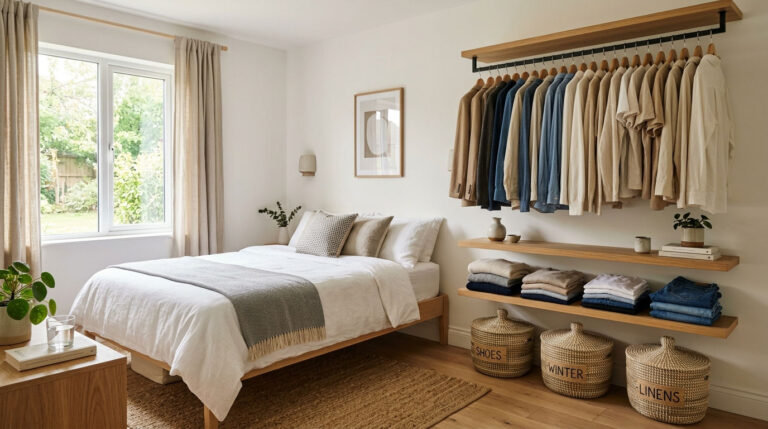
- Storage bed: Sleeping + clothing storage
- Ottoman with interior storage: Seating + blanket/accessory storage
- Nightstand with drawers: Surface + concealed storage
- Desk with shelving above: Work surface + book/accessory storage
- Bench with storage compartment: Seating + storage at foot of bed
Scale Appropriately
Furniture that’s slightly smaller in scale than standard looks proportionate in a small room. Oversized, chunky, heavy-looking furniture is visually oppressive in a 10×10 space. Look for:
- Nightstands that are 18–22 inches wide rather than 26–30 inches
- A dresser that’s 30–36 inches wide rather than 48–60 inches
- A desk that’s 40–48 inches wide rather than 60 inches
- A headboard that is proportionate to the bed — not extending dramatically beyond the mattress edge
Avoid Bulky Footboards
A footboard at the end of the bed consumes the most valuable clearance space in a small bedroom — the area between the foot of the bed and the opposite wall. A bed frame without a footboard, or with a very low, slim footboard, preserves that space and makes moving through the room significantly easier.
Step 5: Use Vertical Space Aggressively
In a 10×10 room, the floor is your most constrained resource. The walls and vertical space above furniture are not. Use them.
Floating Shelves
Wall-mounted shelves provide storage and display space with zero floor footprint. In a 10×10 bedroom, consider:
- Floating shelves on either side of the headboard as nightstand substitutes
- A floating shelf above the desk for books and supplies
- A row of shelves along one wall for books, plants, and objects
- Shelves in the corner above the bed if using a corner placement layout
Tall, Narrow Storage
When choosing a dresser, wardrobe, or bookshelf, prioritize height over width. A piece that’s 60–72 inches tall but only 24–30 inches wide uses far less floor space than a wide, low alternative — and can hold the same or more.
Over-Door Storage
The back of the bedroom door and the backs of closet doors are often completely unused. Over-door organizers can hold shoes, accessories, jewelry, books, or small items without touching the floor.
Wall-Mounted Lighting
Replacing floor lamps and table lamps with wall-mounted sconces eliminates the footprint of the lamp base and clears the surface it was sitting on. Two sconces flanking the headboard are both functional and elegant, and they free up the nightstand surface for other things.
Step 6: Visual Strategies to Make the Room Feel Larger
With layout and furniture sorted, visual strategies are the finishing layer that makes a well-arranged 10×10 room feel genuinely spacious rather than just functional.
Choose a Cohesive Color Palette
The more visual continuity a room has, the more expansive it feels. A 10×10 room with walls, trim, and ceiling all in the same or closely related tones reads as larger than one with lots of contrasting colors breaking up the surfaces.
Best color approaches for a 10×10 bedroom:
- Tone-on-tone: Walls, ceiling, and trim in the same color or very close variants. The eye doesn’t find breaks, so the room feels more continuous and spacious.
- Light neutrals: Soft whites, warm creams, pale greiges. Classic and effective, especially in a room with good natural light.
- One bold wall: Deep, rich color on the headboard wall only. Adds drama and depth while keeping three walls light.
Use One Large Rug Rather Than Multiple Small Ones
A single rug that extends under and around the bed makes the floor feel like one cohesive space. Multiple small rugs chop the floor into fragments and make the room feel busier and smaller.
For a 10×10 room with a full bed, an 8×10 rug or a 6×9 rug (rotated to fit the layout) works well. The rug should extend at least 18–24 inches beyond the sides and foot of the bed.
Strategic Mirror Placement
A large mirror placed on the wall opposite or adjacent to a window reflects light and creates the impression of an opening into additional space. In a 10×10 room, a full-length mirror leaned against or mounted on a wall is one of the highest-impact, lowest-cost visual interventions available.
Avoid: a mirror facing the bed directly (disruptive to sleep, according to many sleep specialists) and multiple small mirrors scattered around the room (the fragmenting effect is the opposite of what you want).
Keep the Sightline From the Door Clear
The first impression of a room is formed in the first second — from the doorway. If the view from the door is a wall of furniture, the room feels cramped immediately. If the sightline from the door reaches across open floor to a window or a visually clear wall, the room feels larger.
Arrange furniture so that when you stand in the doorway, you see the most open part of the room. The bed should ideally be to one side of that sightline rather than directly blocking it.
Hang Curtains at Ceiling Height
Even in a small room, ceiling-height curtains make the walls feel taller and the room feel more expansive. Mount the rod as close to the ceiling as possible (or use ceiling-mounted curtain tracks for a modern look) and let the curtains fall all the way to the floor.
Step 7: Practical Layout Examples for Common Configurations
Example A: Single Sleeper, Full Bed, No Desk Needed
- Full bed in the corner (headboard on the main wall, one side against the side wall)
- Floating nightstand shelf on the wall above the tucked-in side of the bed
- Standard nightstand on the open side
- Tall 3-drawer dresser on the opposite wall, flanked by floating shelves
- 6×9 rug extending from under the bed
- Wall-mounted sconces on either side of the headboard
- Full-length mirror leaned against the dresser wall
Result: Open floor on two sides of the room, clear sightline from the door, storage handled without a large furniture footprint.
Example B: Couple, Queen Bed, Maximum Storage
- Queen bed centered on the main wall
- Floating nightstand shelves on both sides (no floor footprint)
- Tall narrow wardrobe in the corner opposite the bed
- Wall-mounted TV above the wardrobe (no console needed)
- Storage ottoman at the foot of the bed (doubles as seating)
- Wall-mounted sconces replacing table lamps
- 8×10 rug under and around the bed
Result: Tight but functional. Both sides of the bed are accessible. Storage is vertical. The floor stays as clear as possible.
Example C: Single Sleeper, Full Bed, Desk Required
- Full bed against one side wall, pushed to corner
- Narrow floating desk (40 inches wide) on the opposite wall
- Floating shelves above the desk
- Small dresser (3-drawer) beside the desk or in the closet
- Task lamp on the desk; sconce above the bed
- No TV — reclaims wall space and visual calm
Result: The desk and sleeping area feel like distinct zones without actually being separated. The corner bed placement maximizes the open area around the desk.
Common Mistakes to Avoid in a 10×10 Bedroom
Buying a king or oversized queen. This decision poisons every other layout decision. Right-size the bed first.
Placing furniture on every wall. The instinct to use every wall for furniture actually makes a small room feel more cramped. Leave at least one wall relatively clear — this creates breathing room for the eye and the body.
Too many legs and frames competing visually. When every piece has a different style, material, and finish, the room feels chaotic. Choose 2–3 complementary finishes (natural wood + matte black, or white + brass, for example) and stick to them.
Forgetting about the door swing. Nothing is more frustrating than furniture that blocks a door or that you have to squeeze past every time you enter the room. Mark the door arc on your floor plan before placing anything.
Prioritizing looks over circulation. A room that photographs beautifully but requires sideways shuffling to navigate is a failure. Clearances matter more than aesthetics in a 10×10 bedroom.
Skipping the floor plan. It takes 20 minutes to sketch a floor plan and tape out furniture positions. It saves hundreds of dollars in wrong furniture purchases and hours of moving heavy pieces around. Always plan on paper (or a free online tool) before buying.
Quick Reference: 10×10 Bedroom Checklist
Use this before you finalize your layout and furniture choices:
- [ ] Room sketched with door, windows, closet, outlets, and heaters marked
- [ ] Bed size chosen based on actual room proportions (full or queen for most 10×10 rooms)
- [ ] Furniture list limited to essentials only
- [ ] Minimum clearances verified: 24″ bed sides, 30″ bed foot, 36″ dresser front
- [ ] Bed placement decided (centered, corner, or lofted)
- [ ] Storage bed or under-bed storage incorporated
- [ ] Vertical space utilized (floating shelves, tall narrow dresser, wall sconces)
- [ ] Furniture with visible legs chosen where possible
- [ ] Single large rug selected rather than multiple small ones
- [ ] One large mirror placed to reflect light
- [ ] Curtains planned at ceiling height
- [ ] Color palette kept cohesive and continuous
- [ ] Sightline from door kept clear and inviting
Final Thoughts
Arranging bedroom furniture in a 10×10 room is fundamentally a geometry problem — but it’s one that has elegant solutions if you approach it with the right priorities. Get the bed size right. Map your clearances. Choose pieces that earn their square footage. Use the walls. Keep the floor as clear as possible.
The 10×10 bedroom that looks and feels great isn’t the one that fits the most furniture. It’s the one that fits exactly the right furniture, placed with intention, leaving room to breathe.
One hundred square feet is enough. You just have to use it well.

Sarah Rose writes for EcoGardeningHub, sharing eco home decor ideas, sustainable styling tips, and simple ways to create beautiful, nature-inspired living spaces with a mindful, environmentally friendly approach.