How to Organize a Very Small Bedroom Closet With No Space (Complete Guide)
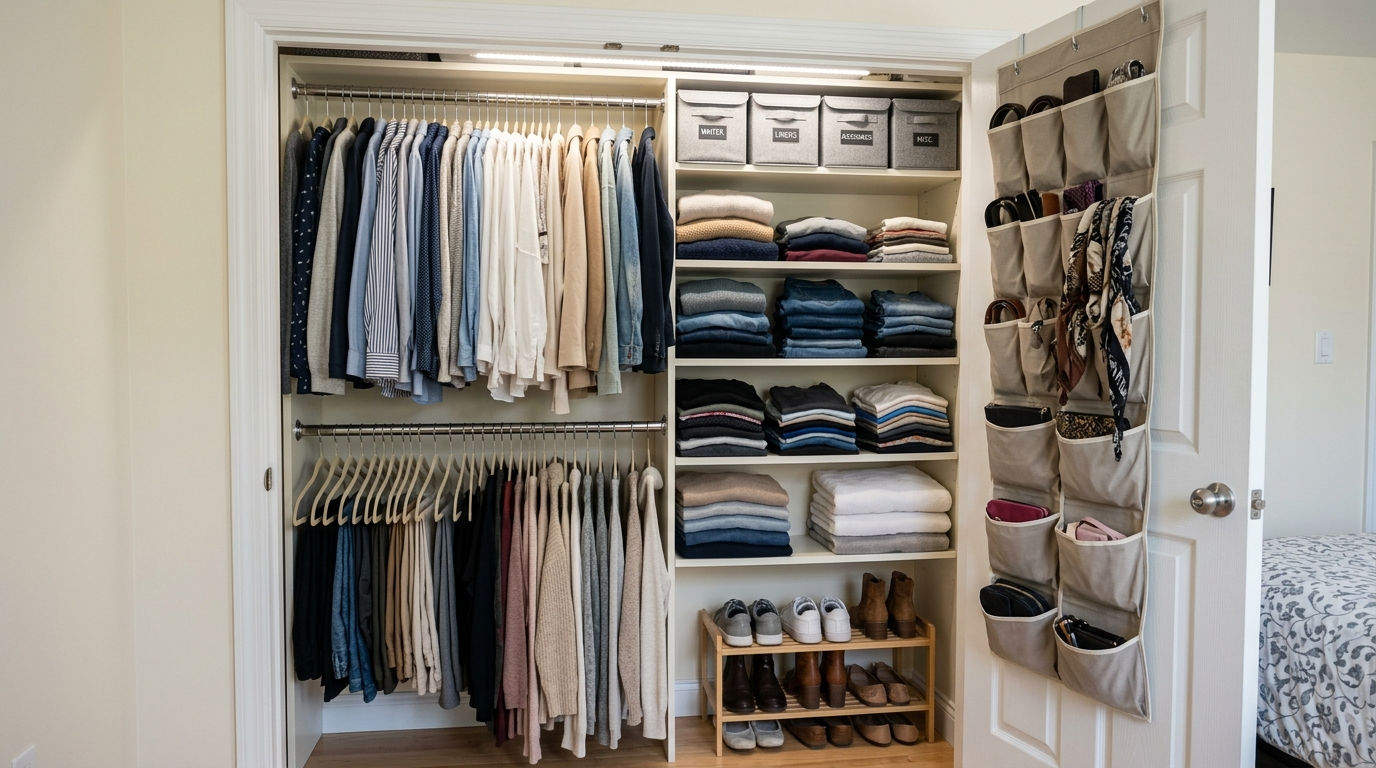
Does your bedroom closet feel like a game of Tetris you can never win? You open the door, something falls out, and you close it again hoping for the best. If you’re working with a tiny closet — or barely any closet at all — you already know that standard organization advice doesn’t always cut it.
The good news? A small closet doesn’t have to mean chaos. With the right strategy, the right tools, and a willingness to rethink how you use every single inch, even the most cramped closet can become a functional, stress-free storage space.
This guide covers everything you need to know about organizing a very small bedroom closet with no space — from decluttering tactics and smart storage products to vertical hacks and outside-the-closet solutions.
Why Small Closet Organization Matters More Than You Think
When your closet is disorganized, the problem doesn’t stay inside the closet. Clothes end up on chairs. You can’t find anything in the morning. Getting dressed becomes a source of low-grade daily stress.
Studies in environmental psychology have shown that cluttered spaces elevate cortisol levels — the stress hormone. Your bedroom is supposed to be a sanctuary, and a chaotic closet actively works against that.
Beyond your mental health, a poorly organized closet also costs you money. When you can’t see what you own, you buy duplicates. Items get lost, damaged, or forgotten at the back. A well-organized small closet helps you shop smarter and get more use out of what you already have.
Step 1: Declutter Before You Organize Anything
This is the most important step, and the one most people want to skip. Do not skip it.
No organizational system works if there’s too much stuff to fit. Before you buy a single shelf, hook, or storage bin, you need to reduce the volume of what you’re working with.
The “Touch Everything Once” Method
Pull everything out of the closet completely. Yes, everything. Lay it all on your bed or floor so you can see the full picture. Then go through each item one by one and ask:
- Have I worn or used this in the past 12 months?
- Does it fit me right now?
- Is it in good condition?
- Would I buy it again today?
If the answer to any of these is “no,” it goes in a donate, sell, or discard pile.
The Categories to Tackle
Clothing: Be ruthless. Sentimental attachment is real, but ask yourself: is it living in a box at the back of the closet, or is it being enjoyed? If it’s the former, photograph it and let it go.
Shoes: Shoes are notoriously hard to pare down. Start by eliminating shoes that hurt, shoes that are worn out, and shoes for activities you no longer do.
Accessories and extras: Old belts, scarves, hats, bags you haven’t touched in years — these quietly eat up space. Keep only what you actually use.
Out-of-season items: These don’t necessarily need to leave, but they don’t need to be in your primary closet. We’ll talk about where to put them shortly.
A realistic goal: reduce your closet contents by 20–30% before you start organizing. This makes every organizing step significantly easier.
Step 2: Measure Everything and Plan Your Layout
Before buying any organizers, measure your closet carefully. This sounds obvious, but most people skip it and end up returning products that don’t fit.
What to Measure
- Width: Measure wall to wall at shelf height and at floor level (walls aren’t always perfectly straight).
- Depth: Standard closets are 24 inches deep, but older homes often have shallower closets.
- Height: Floor to ceiling. This is where most people leave massive amounts of wasted space.
- Existing rod height: If you have a single hanging rod, note how high it sits.
- Door type: Bifold, sliding, or hinged doors all affect how you access the closet and what products you can use on the back of the door.
Sketch a Simple Layout
You don’t need design software. A rough sketch on paper is fine. Mark where your hanging zone will be, where shelves will go, and what you’re storing where (folded items, shoes, accessories, etc.).
Think about your habits: what do you reach for most often should be at eye level or just below. Less-used items can go higher up or lower down.
Step 3: Maximize Vertical Space
In a small closet, vertical space is your best friend and the most underused resource. Most closets have a single rod and a single shelf above it — which uses maybe 40% of the available space. The rest is dead air.
Double Your Hanging Space With a Second Rod
If you have a lot of tops, blazers, folded pants, or short dresses, install a second hanging rod below the existing one. This effectively doubles your hanging capacity at very low cost.
You can buy hanging rod extenders that clip onto your existing rod — no drilling required. These are perfect for renters. Alternatively, a second rod can be mounted permanently if you own your space.
Pro tip: Dedicate one side of the closet to full-length items (dresses, long coats) and the other side to double-hang shorter items. This is the most efficient split for a standard rectangular closet.
Add Shelves Above the Existing Shelf
The space between your top shelf and the ceiling is often 12–24 inches of completely wasted real estate. Install one or two additional shelves up there for items you don’t need frequently — extra blankets, seasonal accessories, shoe boxes, or bags.
Floating wall shelves are inexpensive and easy to install. For renters, freestanding shelf units designed to fit in closets can work too.
Use Stackable Shelf Risers
Shelf risers sit on your existing shelves and essentially turn one shelf into two. They’re great for folded t-shirts, jeans, sweaters, and other items that don’t need to be very tall.
Step 4: Make Smart Use of Every Zone
Think of your closet in zones — not just as one big space. Each zone has different characteristics and should hold different types of items.
The High Zone (Above Eye Level)
Use this for items you need infrequently: out-of-season clothing, spare linens, travel bags, or bulky items like winter coats in summer. Clear bins with labels are ideal here — you can see what’s inside without dragging everything down.
Tip: Use uniform boxes or bins in this zone. Matching containers make any space look more organized and allow you to stack them efficiently.
The Primary Zone (Eye Level to Waist)
This is your prime real estate. Everything you use regularly should live here. Your most-worn clothes on the hanging rod, your most-used shoes at the front, your everyday accessories within easy reach.
Don’t overstuff this zone. It should feel relatively easy to access.
The Low Zone (Floor Level)
The floor of a small closet is often a jumble. Used intentionally, it’s great for shoes, bins, and short shelving units.
A shoe rack — either a flat multi-tier rack or an over-door hanging organizer — can dramatically improve floor organization. Angled shoe racks take up less depth than flat ones and can hold more pairs per square foot.
If you don’t have room for a full shoe rack, store shoes in clear stackable boxes. You can see the contents at a glance, and they stack neatly.
Step 5: Use the Back of the Door
The back of your closet door is prime storage space that most people completely ignore.
Over-the-Door Organizers
Over-the-door pocket organizers are inexpensive, require no installation, and add a surprising amount of capacity. They work well for:
- Shoes (especially flats, sandals, and sneakers)
- Accessories (belts, scarves, jewelry)
- Small folded items
- Cleaning supplies or small household items
Make sure to measure your door and check the organizer dimensions — if your closet door swings inward, you’ll need enough clearance that the organizer doesn’t hit the inside shelves.
Hooks on the Door
A few simple hooks mounted on the back of the door (or a hook strip that hangs over the door) are great for bags, robes, frequently worn jackets, or tomorrow’s outfit.
This is a particularly useful trick: hang your outfit for the next day on a hook the night before. It keeps your closet from being torn apart every morning.
Step 6: Upgrade Your Hangers
This one sounds minor but makes a real difference.
Swap bulky plastic hangers for slim velvet hangers. Velvet hangers are roughly a quarter of the width of standard plastic ones. Making this swap alone can free up 30–40% more rod space in your closet.
Velvet hangers also grip fabric well, so clothes don’t slide off or bunch up. They’re widely available and inexpensive. This is one of the highest return-on-investment upgrades you can make to any small closet.
If you have a lot of bottoms, use tiered pants hangers that hold multiple pairs in the vertical space of one regular hanger.
Step 7: Folding Strategies for Shelved Items
How you fold matters when space is tight. The goal is to maximize visibility and capacity at the same time.
File Folding (Vertical Folding)
Made popular by organizing consultant Marie Kondo, file folding means folding items so they stand upright in a drawer or bin — like files in a filing cabinet — rather than stacking them flat.
The advantage: you can see every item at a glance without disturbing the others. No more digging through a pile to find the shirt at the bottom.
This works best in drawers or bins rather than open shelves, since the items need something to lean against.
The KonMari Rectangle Fold
For shelf storage, fold clothing into neat rectangles that can stand on edge. Jeans, t-shirts, and sweaters all fold well this way. The result is a visually tidy shelf where you can see every item.
Don’t Stack Too High
When stacking folded clothes on shelves, keep stacks at a manageable height — generally no more than 5–6 items. Tall stacks are unstable and become impossible to maintain because pulling one item from the middle destroys the whole pile.
Step 8: Smart Storage Products for Tiny Closets
You don’t need to spend a fortune to organize a small closet, but a few targeted purchases can make a big difference. Here are the most useful products for extremely tight spaces:
Slim velvet hangers — As mentioned, these are non-negotiable for tight rods.
Clear stackable shoe boxes — Keeps shoes visible, dust-free, and stackable.
Over-door shoe/pocket organizer — Uses the door without consuming floor or shelf space.
Hanging shelf dividers — Clip onto existing shelves to separate stacks and prevent toppling.
Hanging closet organizer with shelves — Hangs from the rod and provides multiple cubby shelves below, great for folded items.
S-hooks — Versatile for hanging bags, belts, or accessories from the rod.
Stackable bins or baskets — Great for grouping similar items (gym clothes, underwear, accessories) in clearly defined sections.
Label maker or label tags — Labels are underrated. They make it easy to maintain your system and help other household members put things back correctly.
Step 9: Store Out-of-Season Items Elsewhere
One of the biggest mistakes in a small closet is trying to store everything for all seasons in one place. You simply don’t have the room.
Rotate your wardrobe seasonally. When summer arrives, move your winter coats, heavy sweaters, and boots to secondary storage. When winter comes, swap them back in.
Secondary Storage Options for Small Bedrooms
Under the bed: Flat storage containers designed for under-bed storage are excellent for out-of-season clothes, extra bedding, or shoes. Opt for containers with wheels for easy access.
Vacuum storage bags: These compress bulky items like comforters, winter coats, and sweaters to a fraction of their size. A bag of sweaters takes up a quarter of the shelf space once vacuumed down.
High shelves in other rooms: The top shelf in a hallway closet, a shelf in a storage room, or a shelf in an entryway closet can all absorb overflow from your bedroom.
Under-bed bed frames with built-in drawers: If you’re in the market for a new bed, consider a platform bed with built-in drawers. This adds enormous storage capacity without taking up any additional floor space.
Step 10: Maintain Your System
The best organization system in the world falls apart without maintenance. Small closets are especially vulnerable because they have no tolerance for drift — one week of laziness and the system collapses.
Build Maintenance Into Your Routine
- The “one in, one out” rule: Every time you buy a new clothing item, donate or discard one. This keeps the volume from creeping back up.
- Monthly quick reset: Once a month, take five minutes to re-fold anything that’s gotten messy, return items to their designated spots, and make sure nothing is building up that shouldn’t be there.
- Seasonal deep clean: Twice a year (spring and fall work well), do a full review. Try on questionable items, reassess what you’re keeping, and update the system as needed.
When Your Closet Is Truly Too Small: Creative Overflow Solutions
Sometimes a closet is just too small, full stop. Even after decluttering and maximizing every inch, there still isn’t enough room. Here’s what to do when you’ve maxed out your closet:
Freestanding Wardrobe or Armoire
A freestanding wardrobe functions as a second closet. Modern options range from minimal open clothing racks to fully enclosed wardrobes with hanging space, drawers, and shelves. These work especially well in larger bedrooms where you can spare a section of wall.
A Clothing Rack
An open clothing rack takes up minimal floor space and can hold a surprising number of garments. It works particularly well for everyday items you wear frequently. The downside is that it’s visible, so you’ll want to keep it curated — but this can actually be a feature, acting as a functional display of your most-used pieces.
Use Bedroom Wall Space
Floating wall shelves, pegboards, and wall-mounted hooks can store items that would otherwise crowd your closet. A pegboard above a dresser can hold jewelry, scarves, hats, and bags. Floating shelves can hold shoes, folded items, or bins.
Repurpose a Corner
Corner spaces in bedrooms are often wasted. A corner shelving unit or a triangular shelf tower can add meaningful storage without eating up square footage along the main walls.
Quick Reference: Small Closet Organization Checklist
Before you finish, run through this checklist to make sure you haven’t missed anything:
- [ ] Decluttered and reduced volume by at least 20%
- [ ] Measured closet dimensions
- [ ] Planned layout with zones (high, primary, low)
- [ ] Added second hanging rod if applicable
- [ ] Used vertical space above existing shelf
- [ ] Installed back-of-door organizer
- [ ] Swapped to slim velvet hangers
- [ ] Switched to file-folding method for shelved items
- [ ] Out-of-season items in secondary storage
- [ ] Labeled all bins and containers
- [ ] Established a maintenance routine
Final Thoughts
Organizing a very small bedroom closet isn’t about finding a magic product or a one-size-fits-all system. It’s about getting clear on what you own, being intentional about what stays in your primary closet, and making every inch count through smart vertical and door use.
The process takes a few hours upfront, but the payoff is every single morning — a calmer start to the day, less time searching for things, and a bedroom that finally feels like the retreat it’s supposed to be.
Start with the declutter. Everything else gets easier from there.

Sarah Rose writes for EcoGardeningHub, sharing eco home decor ideas, sustainable styling tips, and simple ways to create beautiful, nature-inspired living spaces with a mindful, environmentally friendly approach.