How to Stage a Small Bedroom to Sell Your House for More Money
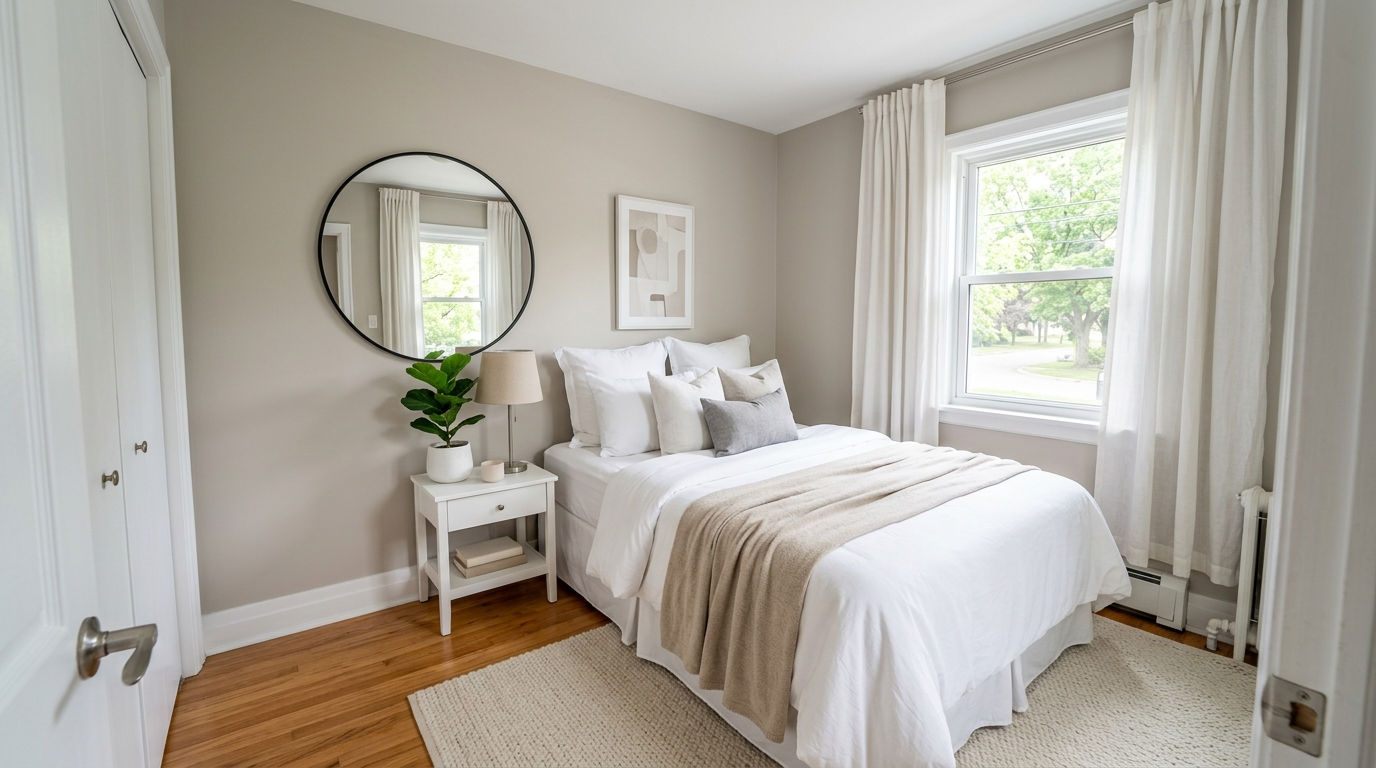
If you’re preparing to list your home, the bedroom — especially a small one — can quietly make or break your sale. Buyers walk through a cramped, cluttered room and mentally slash thousands off their offer. But walk them through a thoughtfully staged small bedroom, and suddenly they’re imagining themselves waking up there. That emotional connection translates directly into higher offers and faster closings.
This guide walks you through exactly how to stage a small bedroom to maximize your home’s sale price — no expensive interior designer required.
Why Bedroom Staging Matters More Than You Think
According to the National Association of Realtors, staged homes sell faster and for more money than non-staged homes. The bedroom is one of the top three rooms buyers say most influences their decision, right alongside the kitchen and the living room.
The challenge with small bedrooms is that most sellers either over-furnish them (making them feel suffocating) or under-furnish them (making them feel bare and uninspiring). The goal of staging is to hit the sweet spot: a room that feels spacious, purposeful, and move-in ready.
Step 1: Ruthlessly Declutter Before Anything Else
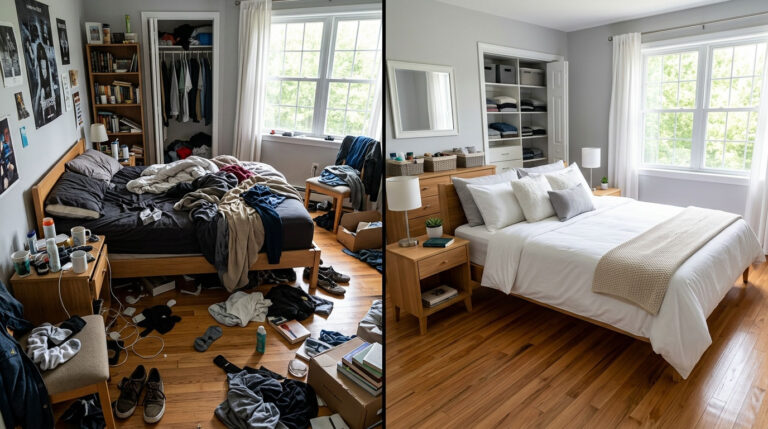
Before you move a single piece of furniture or buy a single throw pillow, you need to declutter. This is the highest-leverage thing you can do, and it costs nothing.
Remove everything that doesn’t serve a clear purpose in the room:
- Personal photos and memorabilia
- Excess books, magazines, and trinkets on nightstands
- Clothing draped over chairs or door hooks
- Childhood trophies or sentimental wall hangings
- Exercise equipment that’s migrated into the bedroom
- Extra pillows, blankets, and stuffed animals piled on the bed
The rule of thumb for staging: if it’s not doing visual work for you, it’s working against you. Pack it up, store it offsite, or donate it. Buyers need to envision their life in this space — not yours.
Pro tip: Clear out at least 50% of what’s currently in the room. It will feel extreme. It will look great in photos.
Step 2: Deep Clean Every Surface and Corner
A small room amplifies everything — including dirt, scuffs, and odors. Buyers will notice.
Work through this checklist:
- Walls: Wipe down scuffs and touch up paint where needed. Fresh paint is one of the cheapest ways to transform a room.
- Baseboards: Dust and wipe them down. They’re low to the ground and visible in listing photos.
- Windows: Clean inside and out. Natural light is your best friend in a small bedroom.
- Floors: Vacuum carpets thoroughly or have them professionally cleaned. Mop hardwood floors so they shine.
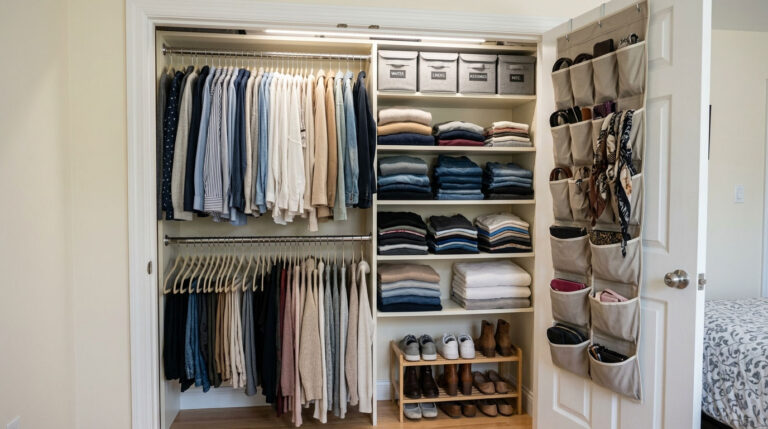
- Closet: Yes, buyers open closets. Organize and edit down the contents so it looks spacious, not stuffed.
- Ceiling fan or light fixture: Dust the blades, clean the glass, replace any burnt-out bulbs.
Odors are a silent deal-breaker. If there’s any mustiness, pet smell, or stale air, address the source — don’t mask it with heavy air fresheners, which can signal to buyers that something is being hidden.
Step 3: Choose the Right Size Bed and Furniture
One of the most common staging mistakes in small bedrooms is keeping an oversized bed that eats the entire room. A king bed in a 10×11 bedroom signals to buyers that this room is barely functional.
Here’s a general guide:
- Small bedroom (under 100 sq ft): Use a twin or full/double bed
- Medium-small bedroom (100–120 sq ft): A queen bed usually works well
- Secondary bedrooms: Always size down from what you’d personally use
If you can’t or don’t want to swap your bed frame, at minimum remove any large, bulky headboard that’s making the wall feel closed in.
Furniture rules for small bedroom staging:
- Keep only the essential pieces: bed, one or two nightstands, a dresser or small chest
- Remove any pieces that don’t fit comfortably with clear walking paths on all sides of the bed
- Avoid anything with legs that are too short or too tall — both create awkward visual proportions in photos
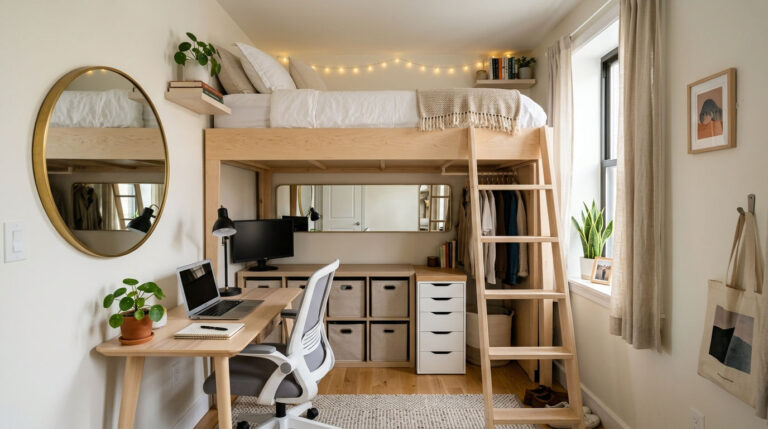
- Floating nightstands or wall-mounted shelves are a great way to free up floor space
Step 4: Pull Furniture Away from the Walls
This sounds counterintuitive, but pushing all your furniture against the walls actually makes a small room feel smaller. Interior designers call this “hugging the walls,” and it’s one of the most common mistakes homeowners make.
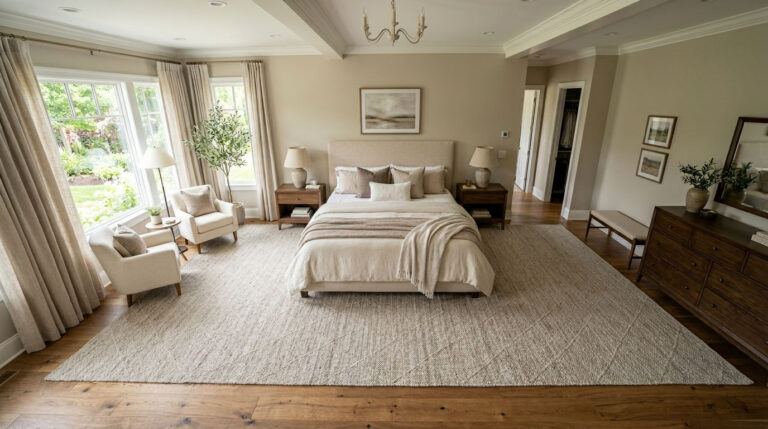
Instead, float the bed slightly away from the wall (even a few inches matters), and angle or position nightstands so there’s visual breathing room. This creates the illusion of more space and gives the room a more curated, intentional look.
Step 5: Make the Bed Look Like a Luxury Hotel
The bed is the focal point of the room. When buyers look at your listing photos and walk through your home, the bed is what they’re looking at first. Invest some effort here.
The hotel bed formula:
- Start with clean, pressed, white or neutral-toned bedding. White reads as fresh and luxurious.
- Add a textured duvet or quilt for visual interest and depth.
- Layer pillows: sleeping pillows in shams, two standard decorative pillows, and one or two accent pillows.
- Add a folded throw blanket at the foot of the bed.
- Tuck and smooth everything so there are no lumps or wrinkles.
You don’t need to spend a fortune. A crisp white duvet cover from a budget retailer can look just as good in photos as an expensive set. What matters most is that it’s clean, pressed, and neatly arranged every single time a buyer comes through.
Step 6: Maximize Light — Natural and Artificial
Light is the number one way to make a small space feel larger. Buyers are drawn to bright, airy rooms and instinctively feel cramped in dark ones.
Natural light:
- Open all curtains and blinds to their maximum during showings and for listing photos
- If your window treatments are heavy or dark, swap them for sheer white or linen panels that let light filter through
- Clean the windows so light isn’t dulled by streaks or dust
Artificial light:
- Make sure every light fixture has working bulbs at full wattage
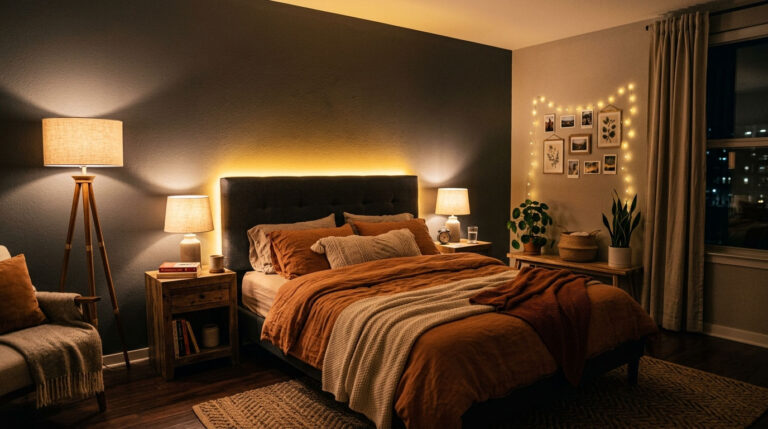
- Choose warm white or soft white bulbs (2700K–3000K range) for a cozy, inviting glow
- Add a table lamp to each nightstand if you don’t already have them — layered lighting makes a room feel more designed
- Consider a mirror positioned to reflect natural light from the window — it expands the sense of space significantly
Step 7: Use a Mirror Strategically
A well-placed mirror is one of the most powerful tools in small-room staging. It reflects light, creates depth, and visually doubles the perceived size of the room.
Options that work well:
- A tall leaning mirror in a corner or against one wall
- A dresser mirror that reflects the window and natural light
- A gallery wall with a large central mirror mixed with neutral art prints
Avoid placing mirrors where they’ll reflect clutter, a toilet (if there’s an en-suite), or a closet full of stuff. Mirrors amplify whatever is in front of them.
Step 8: Neutralize the Color Palette
Buyers need to be able to project themselves into the space. A bedroom painted in a bold personal color — deep navy, bright yellow, or chili red — may be your style, but it costs buyers the mental effort of reimagining it, and many simply won’t bother.
Repaint in a neutral, buyer-friendly palette if needed:
- Warm whites: Benjamin Moore White Dove, Sherwin-Williams Alabaster
- Greige (gray-beige): Accessible Beige, Agreeable Gray
- Soft sage or muted blue-gray: These can feel serene and modern without being polarizing
Match the wall color to a light, neutral bedding set and you’ll have a cohesive, calming room that photographs beautifully.
Step 9: Add Strategic Decor — But Keep It Minimal
A completely bare room looks sad in listing photos and feels cold during showings. A few well-chosen decorative items make the space feel curated and livable.
For a small bedroom, stick to:
- One piece of wall art above the bed, proportionate to the headboard width
- One small plant or succulent on a nightstand or dresser — greenery adds life and warmth
- One or two small decorative objects on the dresser (a tray, a candle, a small vase)
- A textured rug under the bed if the floor is hardwood — this anchors the space and adds warmth
Less is always more. If you’re second-guessing whether to include something, leave it out.
Step 10: Style the Closet Like a Boutique
Buyers open every closet. Every. Single. One. A small bedroom with a messy, overstuffed closet feels like a storage problem, not a bedroom.
To stage a small bedroom closet:
- Remove at least half the items stored inside
- Organize what remains by category and color (this looks great and photographs well)
- Use matching hangers — this one small change creates a massive visual improvement
- Leave visible floor space and shelf space to signal abundance
- Add a simple closet organizer if the space is disorganized by nature
If the closet has a mirror on the door, make sure it’s clean and smudge-free.
Step 11: Don’t Neglect the Staging for Photos
At least 90% of buyers find their home online first. Your listing photos are doing more work than any open house. Make sure you stage specifically for the camera:
- Shoot during the day when natural light is at its peak
- Use a wide-angle lens — most professional real estate photographers use one; it’s worth hiring one
- Remove all small personal items from nightstands and dressers — they look like clutter on camera
- Make the bed again right before photos, even if it already looks made
- Stage the view from the doorway — that’s the hero shot most photographers take first
If your agent doesn’t offer professional photography, consider paying for it yourself. It typically costs $150–$300 and has been shown to result in significantly more online views and showings.
Bonus: Staging a Small Bedroom That Has to Function as a Guest Room or Home Office
If the small bedroom in question serves double duty — as a home office or guest room — staging it well requires a clear decision: pick one identity for it and commit.
Guest room staging:
- Keep the bed and remove all office equipment
- Style it as a clean, welcoming retreat
- A small luggage rack adds a hotel-like touch
Home office/bedroom combo:
- If keeping a desk, make it minimal and organized
- Position it away from the bed so the room doesn’t feel chaotic
- Make sure the desk doesn’t overwhelm the sleeping area in scale
Buyers are imaginative but not endlessly so. A room that’s clearly “for” something sells better than one that’s trying to be everything.
How Much Can Staging a Small Bedroom Actually Increase Your Sale Price?
Results vary based on market, price point, and the overall condition of your home — but the data is encouraging. The Real Estate Staging Association has reported that staged homes can sell for 5–20% more than comparable non-staged homes. Even at the conservative end, on a $350,000 home, that’s $17,500.
The cost of staging a small bedroom yourself is typically under $500 if you already have most of the furniture. Even if you rent furniture or hire a partial staging service, the return on investment is almost always positive in a competitive market.
Final Checklist: Small Bedroom Staging Before Every Showing
Use this as your pre-showing walkthrough:
- [ ] Bed is made with clean, wrinkle-free bedding and styled pillows
- [ ] All personal photos and clutter removed from surfaces
- [ ] Nightstands have only one or two minimal items each
- [ ] Floors are vacuumed or mopped
- [ ] Curtains are open, blinds raised
- [ ] All lights are on and working
- [ ] Mirror is smudge-free
- [ ] Closet is organized and not overstuffed
- [ ] Room smells fresh and neutral
- [ ] Throw blanket is folded neatly at foot of bed
The Bottom Line
Staging a small bedroom doesn’t require a big budget or professional help — it requires discipline, an objective eye, and a willingness to temporarily depersonalize a space that feels very personal. The payoff is real: better photos, more showings, stronger offers, and a faster sale.
Think of it this way: you’re not staging your bedroom. You’re staging your future buyer’s bedroom. Make them fall in love with it, and they’ll pay you accordingly.

Sarah Rose writes for EcoGardeningHub, sharing eco home decor ideas, sustainable styling tips, and simple ways to create beautiful, nature-inspired living spaces with a mindful, environmentally friendly approach.